Mount Dukono eruption kills 3, traps 20 hikers in Indonesia
Synopsis
Mount Dukono's violent eruption on 8 May killed three people and trapped roughly 20 hikers on Halmahera Island, shooting ash 10 km skyward. With an orange-level aviation warning in force and mudflow risks rising, this is Indonesia's deadliest volcanic event in months — and the second eruption at Dukono alone in 2025.
Key Takeaways
Mount Dukono erupted at 7:40 am local time on 8 May 2025 in North Maluku province, Indonesia .
Three people were killed and approximately 20 hikers were trapped, with rescue operations underway.
The ash column reached up to 10 km into the sky; residents warned to stay within a 4-km exclusion zone around the crater.
A VONA orange-level aviation warning was issued, barring aircraft from flying below 5 km near the volcano.
Mount Dukono had previously erupted in February 2025 ; Mount Semeru also erupted on 6 April 2025 , reflecting Indonesia's sustained volcanic activity.
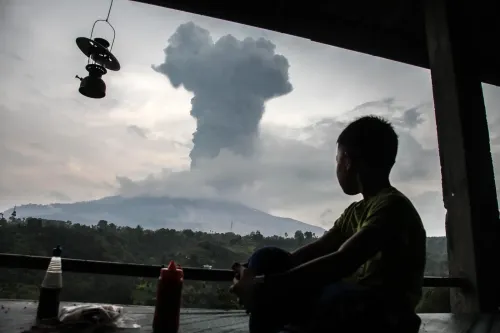
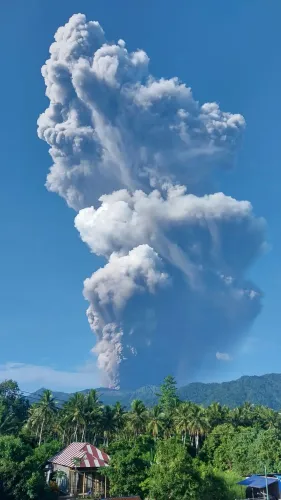
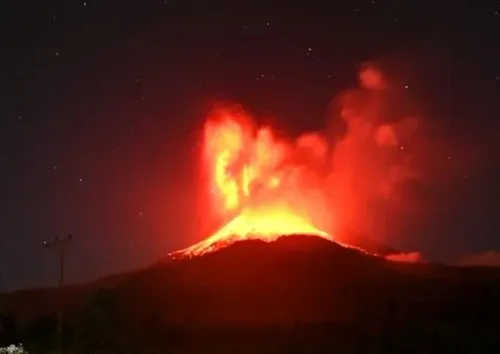
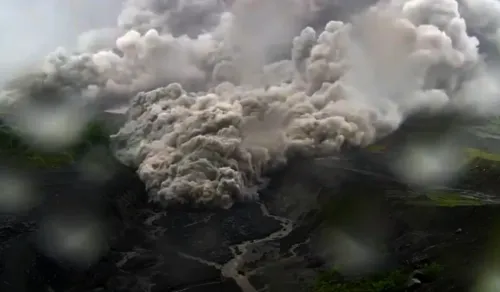
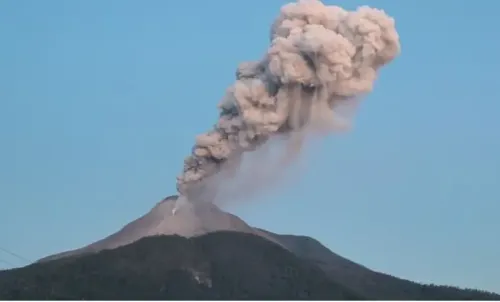
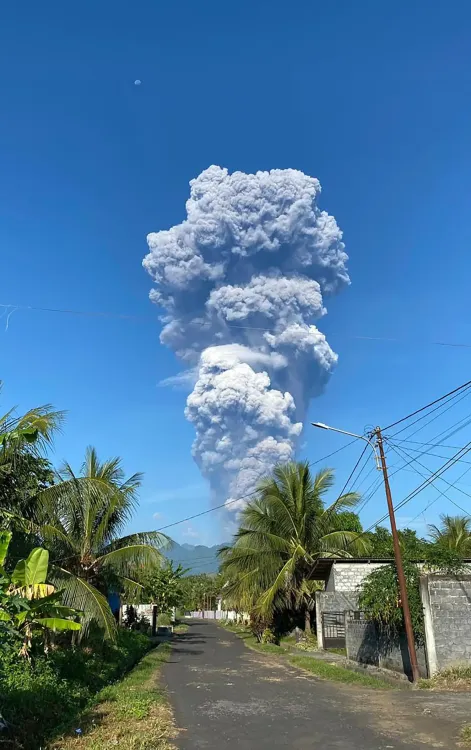
Mount Dukono erupted in Indonesia's North Maluku province on Friday, 8 May, killing three people and trapping approximately 20 hikers, local police confirmed. The volcano sent a column of volcanic ash soaring up to 10 km into the sky at around 7:40 am local time, triggering emergency evacuations and aviation warnings.
Rescue Operations Underway
Search and rescue authorities deployed teams to evacuate the roughly 20 hikers stranded by the eruption. Rescue operations were ongoing as of Friday, with officials coordinating efforts across the affected zone on Halmahera Island. Local rescue authorities warned residents to avoid all activities within a 4-km radius of the crater, and cautioned that volcanic mudflows could occur during rainfall.
Scale of the Eruption
The eruption produced thick white-to-grey ash clouds that drifted south of the crater. Authorities issued a Volcano Observatory Notice for Aviation (VONA) at the orange level — the second-highest warning — prohibiting aircraft from flying below 5 km around the volcano. Pilots in the region were advised to exercise caution due to the risk of ash cloud interference with flight operations.
Safety Advisories for Residents and Tourists
Residents, visitors, and tourists were advised to stay clear of the Malupang Warirang crater, an active crater on the volcano, within the designated 4-km exclusion zone. Authorities urged people living near the volcano to keep face masks readily available to guard against respiratory hazards from volcanic ash inhalation.
History of Eruptions at Mount Dukono
Mount Dukono, standing 1,087 metres above sea level, is one of Indonesia's 127 active volcanoes. The mountain had also erupted in February 2025, prompting the country's Volcanology and Geological Disaster Mitigation Centre to issue an aviation warning at the time, with ash columns reaching up to 2,000 metres. This comes amid a broader pattern of volcanic activity across the Indonesian archipelago — last month, Mount Semeru in East Java province erupted several times on 6 April, sending thick ash up to 1,100 metres above its summit, according to the Centre for Volcanology and Geological Hazard Mitigation. Indonesia sits on the Pacific Ring of Fire, making it one of the world's most volcanically active nations. The death toll and evacuation status are expected to be updated as rescue operations continue.
Point of View
The presence of 20 trapped visitors raises questions about trail access protocols during elevated alert periods. The February 2025 eruption at the same volcano should have sharpened those protocols — the fact that hikers were on the mountain again during a fresh eruption suggests enforcement gaps. As climate patterns intensify rainfall around volcanic zones, the mudflow warning is not a footnote but a compounding threat that deserves equal attention.
NationPress
21 Sept 2026
Frequently Asked Questions
What happened at Mount Dukono in Indonesia?
Mount Dukono erupted on 8 May 2025 in North Maluku province, Indonesia, killing three people and trapping around 20 hikers. The eruption sent a volcanic ash column up to 10 km into the sky at approximately 7:40 am local time.
How many people were trapped in the Mount Dukono eruption?
Approximately 20 hikers were trapped by the eruption, according to search and rescue authorities. Rescue teams were deployed to evacuate them as operations continued on Friday.
What aviation warning was issued after the Mount Dukono eruption?
A Volcano Observatory Notice for Aviation (VONA) at the orange level — the second-highest warning — was issued, prohibiting aircraft from flying below 5 km around the volcano. Pilots were also cautioned about ash cloud disruption to flight operations.
Has Mount Dukono erupted before?
Yes, Mount Dukono erupted earlier in February 2025, prompting an aviation warning from Indonesia's Volcanology and Geological Disaster Mitigation Centre. The volcano, standing 1,087 metres above sea level, is one of Indonesia's 127 active volcanoes.
What safety measures have been advised for residents near Mount Dukono?
Authorities have advised residents, visitors, and tourists to avoid all activities within a 4-km radius of the Malupang Warirang crater. People living near the volcano are also encouraged to keep face masks available to protect against respiratory hazards from volcanic ash.