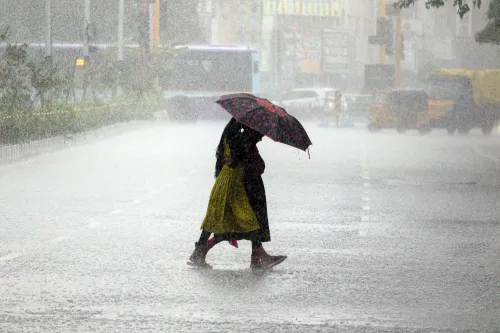
MP records 24% excess rainfall in early June, thunderstorms alert for 20+ districts
Synopsis
Madhya Pradesh has already beaten its early-June rainfall average by 24 per cent, with Neemuch crossing 2.5 inches and thunderstorm alerts now covering more than 20 districts. The southwest monsoon is expected to arrive between June 15 and 18 — on schedule — raising early hopes for a strong kharif season across rain-fed central India.
Key Takeaways
Madhya Pradesh received 24% excess rainfall above the long-period average between 1 June and 8 June 2025 .
The state logged over 12.7 mm against an LPA of 8.3 mm for this period.
Neemuch recorded the highest rainfall at more than 2.5 inches ; Bhopal , Agar-Malwa , and Shajapur each received around 2 inches .
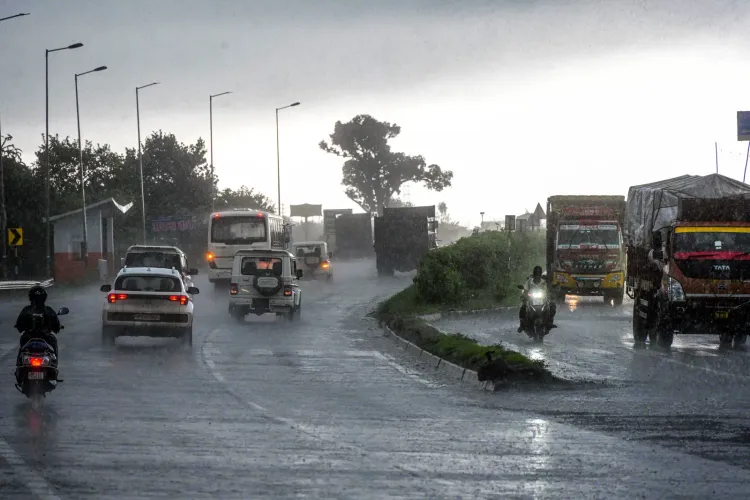
The Bhopal weather centre has issued a thunderstorm and lightning alert with winds up to 40 kmph for 20+ districts .
The southwest monsoon is expected to enter Madhya Pradesh between 15 June and 18 June , consistent with last year's 16 June arrival.
Officials have advised farmers to guard against waterlogging and lightning risks in coming days.
Madhya Pradesh received 24 per cent more rainfall than the long-period average (LPA) between 1 June and 8 June, the state's Meteorological Department confirmed on Monday, offering early relief to farmers and signalling a potentially strong monsoon season ahead. The LPA for this eight-day window stands at 8.3 mm, but the state has already logged over 12.7 mm — more than half an inch.
District-wise Rainfall Distribution
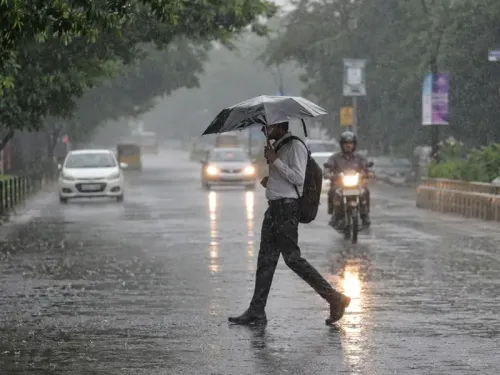
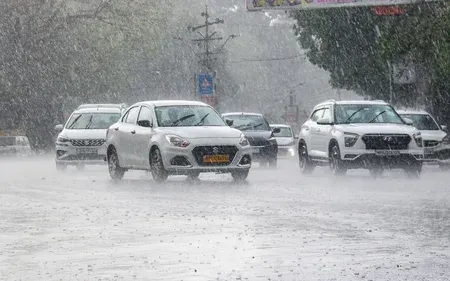
Heavy showers have been widespread across the state. Bhopal, Agar-Malwa, and Shajapur each received approximately 2 inches (50 mm) of rain, while Neemuch recorded more than 2.5 inches. Rainfall was also reported across Satna, Sidhi, Raisen, Rajgarh, Ratlam, Sehore, Sheopur, Harda, Burhanpur, and several other districts, with many locations recording at least 1 inch (25 mm).
In the 24 hours preceding the department's update, significant rainfall was recorded in Sehore (36 mm), Khategaon (27 mm), Dewas (12–4 mm), and parts of Vidisha, Khargone, and Khandwa.
Thunderstorm Warning Across Eastern and Central Districts
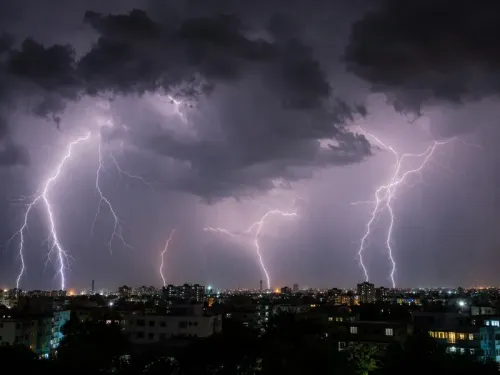
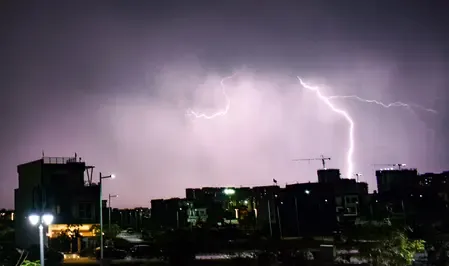
The Bhopal weather centre has issued a warning for light to moderate thunderstorms, accompanied by lightning and gusty winds of up to 40 kmph, likely during afternoon and evening hours across more than 20 districts. These include Vidisha, Ashoknagar, Sagar, Panna, Satna, Rewa, Maihar, Mauganj, Katni, Jabalpur, Umaria, Seoni, Balaghat, Mandla, Dindori, Anuppur, Shahdol, Sidhi, Singrauli, and Damoh.
Thunderstorms and rain were already reported in the preceding day across Bhopal division (excluding Bhopal city), Khargone, Khandwa, Chhindwara, Jabalpur, and Singrauli.
Monsoon Arrival Expected Between June 15 and 18
With the southwest monsoon advancing into Maharashtra on Sunday, weather experts expect it to enter Madhya Pradesh between 15 June and 18 June — broadly in line with the normal schedule. Last year, the monsoon arrived in the state on 16 June. The current showers are classified as pre-monsoon activity, though they are being counted toward the overall June–September monsoon rainfall tally.
Impact on Agriculture and Farmer Advisory
The surplus rainfall has bolstered agricultural prospects across the state, particularly in rain-fed regions that depend heavily on early June showers for soil moisture before sowing. Officials, however, have advised farmers to remain cautious of potential waterlogging and lightning risks in the days ahead. This comes amid growing optimism about the kharif season, with early pre-monsoon rains historically correlating with stronger crop output in central India.
Point of View
But it is pre-monsoon activity — not the monsoon itself. The real agricultural story will be written between June 15 and the end of July, when sowing decisions are made. Central India's rain-fed districts are structurally vulnerable to both deficit and excess — a pattern that has repeated itself across several recent kharif cycles. The thunderstorm alerts across 20-plus districts also serve as a reminder that early surplus rainfall carries its own risks: lightning fatalities and crop damage from hailstorms are historically undercounted in state-level rainfall tallies. Officials would do well to pair the optimistic surplus headline with a sharper ground-level advisory system.
NationPress
26 Oct 2026
Frequently Asked Questions
How much excess rainfall has Madhya Pradesh received in early June 2025?
Madhya Pradesh received 24 per cent more rainfall than the long-period average between 1 June and 8 June 2025, logging over 12.7 mm against an LPA of 8.3 mm for this period.
Which districts in MP are under thunderstorm alert on June 8?
The Bhopal weather centre has issued a thunderstorm and lightning warning for more than 20 districts, including Jabalpur, Sagar, Rewa, Satna, Balaghat, Mandla, Shahdol, Singrauli, Damoh, and Vidisha, among others. Gusty winds of up to 40 kmph are expected during afternoon and evening hours.
When is the monsoon expected to arrive in Madhya Pradesh in 2025?
Weather experts expect the southwest monsoon to enter Madhya Pradesh between 15 June and 18 June 2025, which is in line with the normal schedule. Last year, it arrived on 16 June.
How does the early rainfall affect farmers in Madhya Pradesh?
The surplus pre-monsoon rainfall has improved soil moisture and raised agricultural prospects, particularly in rain-fed regions ahead of the kharif sowing season. However, officials have cautioned farmers about waterlogging and lightning risks in the coming days.
Are the current rains in MP counted as monsoon rainfall?
The current showers are classified as pre-monsoon activity, but they are being included in the overall June–September monsoon rainfall tally for Madhya Pradesh.