Will MP Govt Waive Land Registration Fees for Tribal Families Displaced by Sardar Sarovar?
Synopsis
In a landmark decision, the Madhya Pradesh government has waived land registration fees for over 25,000 tribal families displaced by the Sardar Sarovar Project. This initiative aims to provide these families with a pathway to land ownership, stability, and improved agricultural productivity through extensive irrigation projects.
Key Takeaways
Madhya Pradesh waives land registration fees for tribal families.
Over 25,000 families to benefit from this decision.
New irrigation projects aim to enhance agricultural productivity.
Government focuses on inclusive growth and welfare programs.
Flower festival organized to promote diversified farming.
Bhopal, Feb 3 (NationPress) A significant relief initiative has been approved for tribal families impacted by the Sardar Sarovar Project.
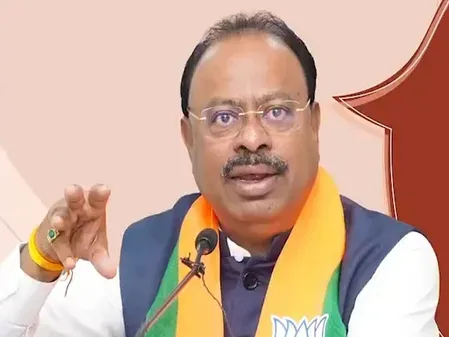
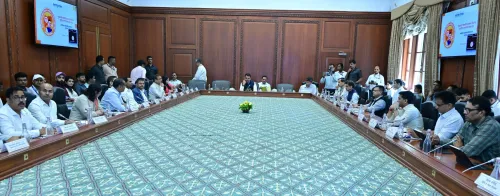
The state government will offer complimentary registration for residential land titles to over 25,000 displaced families, simplifying their journey toward land ownership and security, stated Chetan Kashyap, the MSME minister, following a cabinet meeting on Tuesday.
The Sardar Sarovar Project, which spans across Gujarat, Madhya Pradesh, Maharashtra, and Rajasthan, has historically posed intricate rehabilitation challenges, with countless families—particularly from tribal communities—dealing with displacement for many years.
Madhya Pradesh, which has a substantial number of affected households, has been progressively developing resettlement strategies, including land distribution. The recent waiver on registration fees represents a tangible administrative relief to finalize property rights. The meeting also approved two irrigation projects aimed at enhancing agricultural reach.
The Dhanwahi Micro Irrigation Project, estimated at Rs 53.73 crore, will provide irrigation to 3300 hectares and benefit 2810 farmers. The larger Barhi Micro Enterprise Irrigation Project, with a budget of Rs 566.92 crore, will irrigate 20,000 hectares in Katni district and support 11,000 farmers.
Collectively, these projects entail an investment of approximately Rs 620 crore, facilitating irrigation for 23,500 hectares and assisting around 14,000 farmers in enhancing their productivity.
Kashyap remarked that Chief Minister Mohan Yadav pointed out that before 2003, the state had irrigation facilities covering only around 7.25 lakh hectares. In contrast, his administration has initiated new schemes covering an additional seven lakh hectares in just the past two years. He declared the upcoming year as the “Farmer Welfare Year” to intensify efforts toward agricultural prosperity.
Additionally, the cabinet sanctioned the continuation of several welfare initiatives, including the Chief Minister's Public Welfare Scheme, Animal Husbandry Development Scheme, Cow Conservation Scheme, Adolescent Welfare Fund Scheme, and Minority Self-Employment Scheme.
To resolve longstanding employee issues, the State Social Welfare Board was disbanded, and its personnel were incorporated into the Women and Child Development Department for enhanced administrative efficiency. These decisions underline the government’s commitment to inclusive growth, aiding farmers, displaced communities, and public employees through focused policies and infrastructure development in Madhya Pradesh.
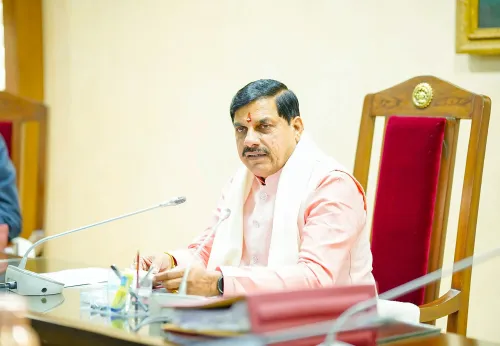
During the cabinet meeting, Chief Minister Mohan Yadav discussed significant recent initiatives related to farmer welfare, irrigation, and social development in the state. Under the Bhavantar Yojana, also known as the Price Difference Payment Scheme, over 700 farmers have received payments exceeding Rs 1500 crore. Madhya Pradesh has emerged as the first state in India to fully implement this scheme, completing all disbursements within just two months, showcasing the government's commitment to timely support for agricultural producers, the minister reported.
The cabinet also acknowledged the inauguration of Pashupatinath Lok, inspired by the successful Mahakal Lok project. Special precautions have been taken at this site to safeguard the statue from erosion and ensure its long-term preservation, contributing to the state’s ambitions in developing spiritual corridors that attract devotees and stimulate local economies.
In an effort to promote diversified agriculture, the state hosted its inaugural flower festival in Bhopal. This event aims to encourage farmers to consider floriculture as a promising income avenue. Presently, around 40,000 farmers across Madhya Pradesh are involved in flower cultivation over approximately 45,000 hectares of land, indicating a growing interest in this sector, as per the minister’s update.
Point of View
It's clear that the Madhya Pradesh government's actions reflect a commitment to addressing the challenges faced by displaced tribal communities. The waiver of land registration fees is a significant step toward empowering these families, ensuring they have a chance at stability and prosperity. This initiative, along with the focus on irrigation and agricultural support, indicates a careful consideration of the needs of the most vulnerable populations in the state.
NationPress
25 Sept 2026
Frequently Asked Questions
What is the recent decision made by the Madhya Pradesh government?
The Madhya Pradesh government has waived land registration fees for over 25,000 tribal families displaced by the Sardar Sarovar Project, facilitating their path to land ownership.
How many families will benefit from this initiative?
More than 25,000 tribal families affected by the Sardar Sarovar Project will benefit from the waiver of land registration fees.
What are the irrigation projects mentioned in the news?
The Dhanwahi Micro Irrigation Project and the Barhi Micro Enterprise Irrigation Project are the two significant irrigation projects aimed at enhancing agricultural coverage in Madhya Pradesh.
What is the Bhavantar Yojana?
The Bhavantar Yojana, or Price Difference Payment Scheme, is an initiative under which farmers receive payments for crops sold at lower prices than the minimum support price, ensuring financial support for agricultural producers.