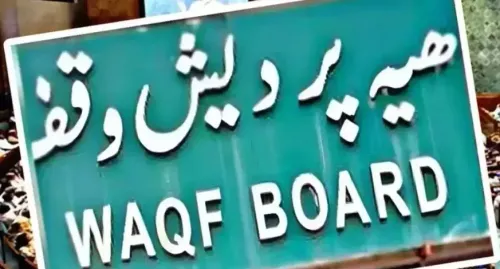
MP Waqf Board to channel 95% property income for imams, needy children
Synopsis
The Madhya Pradesh Waqf Board is redirecting 95% of its property income toward imams, muezzins, and at-risk children — even as it acknowledges that roughly 95% of its properties remain illegally occupied. With 101 of 125 Bhopal graveyards reportedly encroached upon and income only recently nudged from ₹2 crore to ₹3 crore, the scale of the welfare ambition sits in stark contrast to the scale of the recovery challenge.
Key Takeaways
MP Waqf Board has directed that 95% of Waqf property income go toward imams', muezzins' salaries and underprivileged children.
An estimated 95% of Waqf properties in Madhya Pradesh are reportedly under illegal occupation.
In Bhopal , 101 of 125 graveyards have reportedly disappeared or been encroached upon.
Board income has risen from ₹2 crore to ₹3 crore following new rent-fixation guidelines under Section 32(NA) .
More than ₹2.02 crore has been spent on education for 2,836 children at risk of dropping out; fees paid directly for 289 orphans .
Recovery drives include FIRs, Waqf tribunal cases, and possession of properties including part of the former Jeevan Rekha Hospital site.
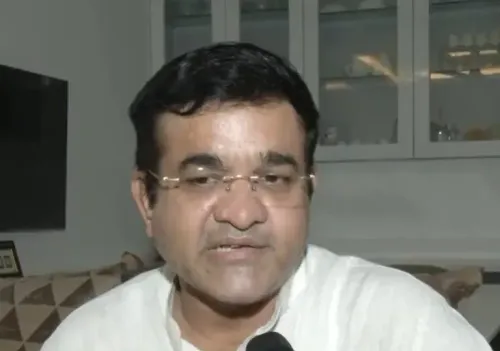
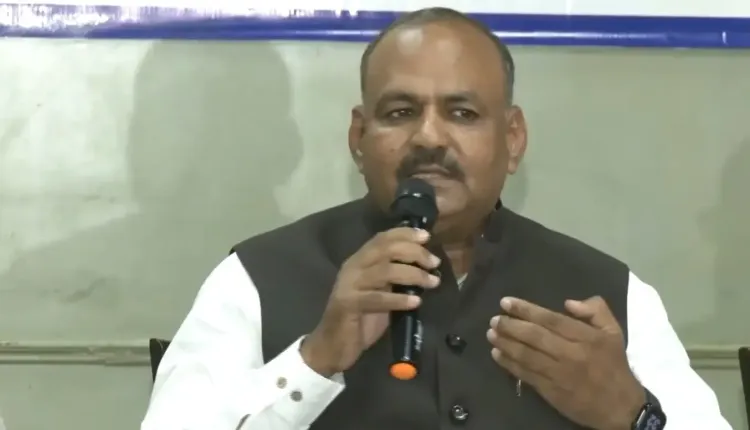
The Madhya Pradesh Waqf Board has directed management committees to utilise 95 per cent of income generated from Waqf properties for raising the salaries of imams and muezzins and supporting underprivileged children, board chairman Sanwar Patel said on Monday, 12 October 2026. The remaining five per cent will be split between the state Waqf Board (four per cent) and the Central Waqf Council (one per cent).
Salary Reforms and the Haryana Model
The board is reportedly studying Haryana's centralised salary model to bring uniformity to the remuneration of religious functionaries across the state. Under the 1949 merger agreement, the Madhya Pradesh government is responsible for maintaining 272 mosques in Bhopal and paying their imams — but salaries currently vary widely, creating a disparity the board is now looking to address.
Scale of Illegal Encroachments
Patel disclosed that an estimated 95 per cent of Waqf properties in the state are under illegal occupation. The situation is particularly acute in Bhopal, where 101 of 125 graveyards have reportedly disappeared or been encroached upon, leaving only 24 intact. The board is actively working to secure the remaining sites and construct boundary walls around them.
As part of its recovery drive, the board has taken possession of a portion of a property previously occupied by Jeevan Rekha Hospital. The premises have since been rented out for ₹1.8 lakh a month, yielding an annual income of ₹21.6 lakh. The board has also introduced rent-fixation guidelines under Section 32(NA), pegging rates at one per cent for residential properties and 2.5 per cent for commercial properties. As a result, its total income has grown from ₹2 crore to ₹3 crore, according to Patel.
Education Support for Vulnerable Children
The board has extended direct financial assistance to students from economically weaker backgrounds. School fees are being paid directly to institutions for 289 orphaned children, while more than ₹2.02 crore has been spent on the education of 2,836 children at risk of dropping out due to financial hardship. The board has also announced merit-based incentives for high-achieving students, aligned with those offered by the state government.
Legal Action and Transparency Drive
'The 2025 law has brought transparency, and 100 per cent of our property records are now online. Properties donated for the welfare of the poor should serve that purpose, and we are taking legal action to recover assets occupied illegally,' Patel said.
The board is pursuing cases against alleged encroachers under Section 54 and through Waqf tribunals. Recovery certificates have been issued in major cases, and FIRs registered in several instances. This comes amid a broader national push to reform Waqf property administration, with the central government's Waqf (Amendment) Act drawing significant political attention in recent months.
Point of View
But the numbers expose a structural crisis: a body that claims to prioritise the poor cannot meaningfully do so when 95% of its asset base is under illegal occupation. The jump in income from ₹2 crore to ₹3 crore, while welcome, is modest given the scale of encroachments described. The real test is whether the board's legal recovery drive — FIRs, tribunal cases, recovery certificates — translates into asset reclamation at scale, or remains a procedural exercise. Without recovering its property base, any welfare allocation is a fraction of what Waqf endowments were originally meant to deliver.
NationPress
12 Oct 2026
Frequently Asked Questions
What has the MP Waqf Board decided about its property income?
The Madhya Pradesh Waqf Board has directed management committees to use 95% of income from Waqf properties to raise imams' and muezzins' salaries and support underprivileged children. The remaining 5% is split between the state Waqf Board (4%) and the Central Waqf Council (1%).
How much of MP's Waqf property is under illegal occupation?
According to board chairman Sanwar Patel, an estimated 95% of Waqf properties in Madhya Pradesh are under illegal occupation. In Bhopal alone, 101 of 125 graveyards have reportedly disappeared or been encroached upon, leaving only 24 intact.
How is the MP Waqf Board supporting children's education?
The board is paying school fees directly to institutions for 289 orphaned children and has spent over ₹2.02 crore on the education of 2,836 children at financial risk of dropping out. It has also introduced merit-based incentives aligned with state government standards.
What steps is the board taking to recover encroached properties?
The board is pursuing cases under Section 54 and through Waqf tribunals, issuing recovery certificates, and registering FIRs in several instances. It has also recovered a portion of the former Jeevan Rekha Hospital site, now rented out for ₹1.8 lakh per month.
How has the MP Waqf Board's income changed recently?
Following the introduction of rent-fixation guidelines under Section 32(NA) — setting rates at 1% for residential and 2.5% for commercial properties — the board's annual income has grown from ₹2 crore to ₹3 crore, according to chairman Sanwar Patel.