President Murmu urges IPS probationers: serve with sensitivity, stay ahead of cybercrime
Synopsis
President Droupadi Murmu used her address to IPS probationers at Rashtrapati Bhavan to deliver a two-part mandate: police officers must serve with empathy, not authority — and they must outpace criminals using deepfakes and disinformation. It is a rare presidential intervention that frames policing as both a civic duty and a technology race.
Key Takeaways
President Droupadi Murmu addressed IPS 78 RR (2025 batch) probationers at Rashtrapati Bhavan on 10 November 2026 .
She urged officers to prioritise sensitivity and service over a sense of superiority, especially toward socially and economically weaker citizens.
Murmu advised probationers to learn from junior team members who may be more proficient with technology.
She flagged organised disinformation as a serious emerging threat that smart policing must pre-empt at local, regional, and national levels.
Cybercrimes and deepfake content were highlighted as priority challenges requiring both societal sensitisation and updated police methods.
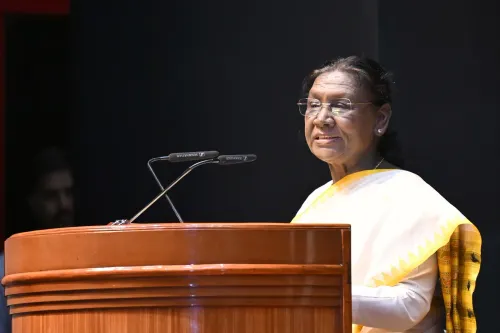
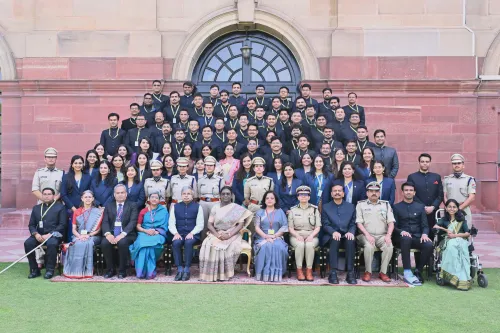
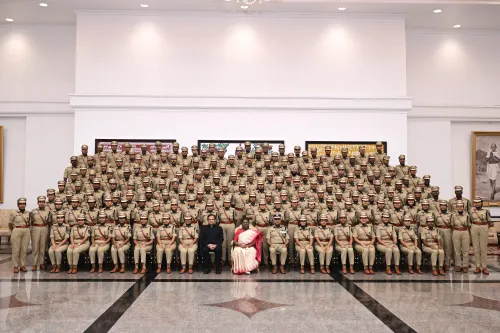
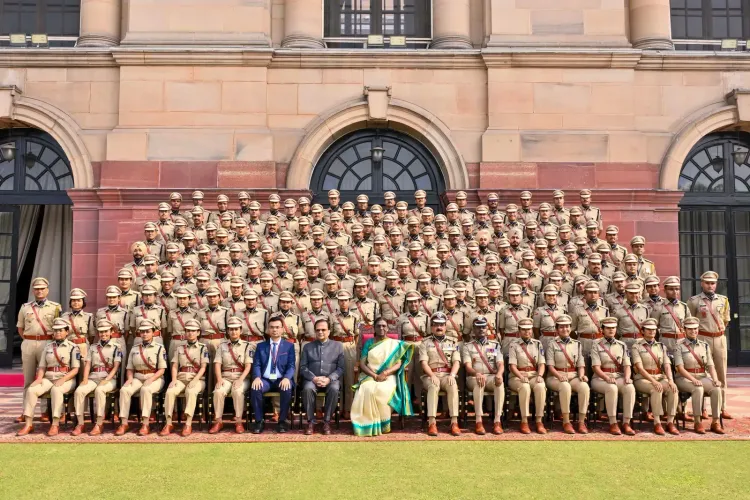
President Droupadi Murmu on Tuesday, 10 November 2026, called upon freshly inducted Indian Police Service (IPS) officers to embrace smart, citizen-first policing — prioritising sensitivity over authority — as the country grapples with rising cybercrimes, deepfake threats, and organised disinformation campaigns. She was addressing the 78th Regular Recruit (RR) batch of the 2025 IPS probationers at Rashtrapati Bhavan in New Delhi.
Service Over Superiority
President Murmu told the probationers that for ordinary citizens, every police officer — from the constable at a thana to a senior IPS official — is a living symbol of governance. 'People perceive the governance to be good when the police system functions well,' she said, stressing that how officers treat complainants shapes public trust in the state itself.
She underscored that the most vulnerable segments of society — those who are socially or economically weaker and lack access to senior officials — deserve priority attention. 'People feel immensely supported when a police officer listens to their grievances with sensitivity and attentiveness,' she told the probationers, urging them to actively address the fears and complaints of marginalised individuals rather than waiting for escalation.
Learning From the Ranks
In a pointed message on institutional humility, President Murmu noted that some junior employees within the police system may be more proficient with technology than their senior officers. She advised the officer trainees not to hesitate to learn from the most junior members of their team, an acknowledgement that digital fluency now resides at every level of the force.
She also urged the probationers to encourage public participation and teamwork in their working style and to prioritise the welfare of their team members as a means of boosting overall capability and enthusiasm. Real respect, she said, is earned through performance and values — not derived from the authority that laws and rules confer.
Misinformation and the Threat to Public Order
President Murmu flagged the spread of misinformation as an emerging and serious challenge to law enforcement. She noted that impressionable minds — particularly the youth — can be swayed by orchestrated disinformation, and that such campaigns can unfold at local, regional, or even national scales. Smart policing, she said, can prevent such situations from spiralling into large-scale public order crises before they become unmanageable.
Notably, this warning comes at a time when several Indian states have recorded incidents where viral misinformation on social media triggered communal tension or mob violence, underscoring the operational relevance of her remarks.
Cyber Threats and the Deepfake Challenge
Turning to technology-driven crime, the President said that cybercrimes are growing more widespread and more serious, and that the police must sensitise society far more extensively about their gravity. She stressed that officers must also reorient their own approach to such offences — moving from reactive investigation to proactive awareness and prevention.
President Murmu specifically called out deepfake content as a new and potent threat, urging the new cohort of officers to always stay ahead of criminals who deploy state-of-the-art technologies. This call comes against a backdrop of deepfake-related complaints rising sharply in India over the past two years, with the Ministry of Electronics and Information Technology having previously flagged the issue to social media platforms.
What This Means for the New Batch
The 78 RR, 2025 batch will be deployed across states and central police organisations after completing their training at the Sardar Vallabhbhai Patel National Police Academy (SVPNPA) in Hyderabad. The President's address sets a clear institutional expectation: that the next generation of IPS officers will be as adept at navigating digital threats and community trust-building as they are at traditional law enforcement. The challenge for the system will be translating these values from the ceremonial hall at Rashtrapati Bhavan into the daily functioning of police stations across India.
Point of View
But the police force lacks a coherent national cyber-literacy framework; exhortation from the President is not a substitute for structured training budgets and inter-agency coordination. The citizens most likely to benefit from 'sensitive policing' — the poor, the marginalised, those far from senior officials — are precisely those whose complaints routinely go unlogged at the first responder level. Without accountability mechanisms that surface how individual officers actually treat complainants, this address risks remaining an inspirational speech rather than a policy inflection point.
NationPress
10 Nov 2026
Frequently Asked Questions
What did President Murmu say to IPS probationers on 10 November 2026?
President Droupadi Murmu urged the IPS 78 RR (2025 batch) probationers at Rashtrapati Bhavan to adopt smart, sensitive policing — serving citizens with empathy rather than exercising authority over them. She also warned them about the growing threats of cybercrimes, deepfake content, and organised misinformation.
What is the 78 RR 2025 IPS batch?
The 78th Regular Recruit (RR) batch of the Indian Police Service, recruited in 2025, is a cohort of probationary officers who train at the Sardar Vallabhbhai Patel National Police Academy in Hyderabad before being posted to states and central police organisations across India.
Why did President Murmu stress sensitivity toward weaker sections?
She noted that socially and economically weaker citizens generally lack access to senior officials and are most dependent on front-line police interactions. Murmu argued that addressing their grievances attentively is the clearest measure of whether governance is actually working.
What technology threats did President Murmu highlight for the new IPS officers?
The President specifically called out the rapid spread of cybercrimes and deepfake content as priority threats, urging officers to stay ahead of criminals using state-of-the-art technologies and to sensitise communities about the gravity of cyber offences.
What did Murmu say about misinformation and public order?
She said orchestrated disinformation is an emerging and serious challenge that can target impressionable minds — especially youth — at local, regional, or national levels. Smart, proactive policing, she argued, can prevent such situations from escalating into large public order crises.