What was the verdict in the Murshidabad riots case?

Synopsis
A recent ruling from the Jangipur Sub-Divisional court in Murshidabad has led to life sentences for 13 individuals involved in the tragic murders of a father and son during protests. This case reveals deeper issues regarding personal vendettas amid political tensions and the adequacy of government responses to communal strife.
Key Takeaways
13 individuals sentenced to life imprisonment for the murders.
The murders were driven by personal vendetta , not political motives.
Victims were trying to prevent riots in their village.
SIT described the attack as pre-planned .
Family accepted compensation from the opposition leader.
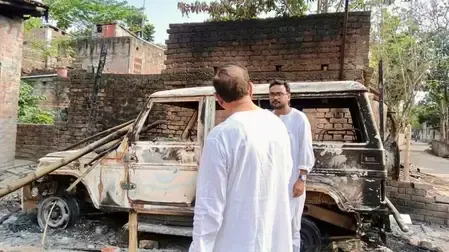
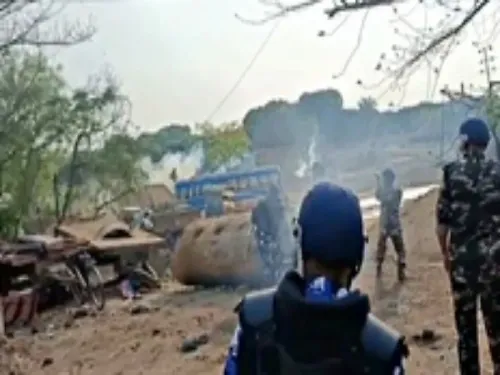
Kolkata, Dec 23 (NationPress) The Jangipur Sub-Divisional court situated in Murshidabad district of West Bengal sentenced 13 individuals on Tuesday for the brutal murder of Hargobindo Das and his son Chandan Das during protests against the Waqf (Amendment) Act in April.
On Monday, Judge Amitabha Mukhopadhyay found these 13 individuals guilty. The sentencing took place on Tuesday amidst heightened security throughout the court premises.
The deceased, a father and son duo, were residents of Jafrabad village in the Samserganj Police Station area of Jangipur Police District.
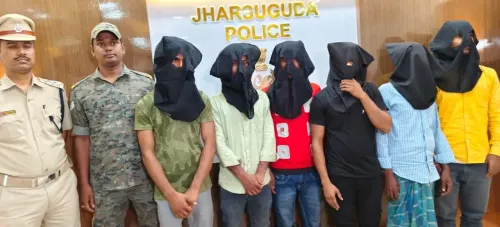
The convicts who received life sentences include Dildar Nadab, Asmaul Nadab, Inzamul Haque, Ziaul Haque, Fekharul Sheikh, Aazfarul Sheikh, Munirul Sheikh, Iqbal Sheikh, Nurul Sheikh, Saba Karim, Hazrat Sheikh, Akbar Ali, and Yusuf Sheikh.
The judge pointed out on Monday that the motives behind these murders stemmed not from political agendas but rather personal vendettas.
In response, the BJP asserted that this judicial observation revealed attempts to mislead public perception and avoid accountability under the pretext of opposing the Waqf (Amendment) Act.
The state police's Special Investigation Team (SIT) arrested the 13 accused individuals sequentially. Earlier this year, they submitted a comprehensive 900-page charge sheet.
The charge sheet indicated that the father and son were slain while attempting to quell tensions during riots in their village, and characterized the assault as a pre-planned operation.
Family members of the deceased rejected a compensation offer from the ruling Trinamool Congress, opting instead for financial support from Suvendu Adhikari, the Leader of the Opposition.
This past April, the Calcutta High Court directed the establishment of the SIT to probe the Murshidabad riots and mandated the deployment of Central Armed Police Forces (CAPF) in the region.
A division bench comprising Justice Soumen Sen and Justice Raja Basu Chowdhury remarked that the measures taken by the West Bengal government to manage communal disturbances were insufficient, suggesting that earlier deployment of the CAPF could have prevented the situation from becoming so grave and volatile.
Point of View
This case underscores the urgent need for thorough investigations into communal violence, ensuring justice for victims while addressing the root causes of such violence. The response from authorities must be scrutinized to prevent future tragedies, maintaining public trust and safety.
NationPress
3 Oct 2026
Frequently Asked Questions
What were the main reasons for the murders?
The judge noted that the murders were motivated by personal vendetta, rather than any political agenda.
How many individuals were convicted?
A total of 13 individuals were convicted and sentenced to life imprisonment.
What was the role of the Special Investigation Team?
The Special Investigation Team arrested the accused and submitted a detailed 900-page charge sheet outlining the pre-planned nature of the attack.
Did the victims' family accept compensation?
While they rejected compensation from the state government, they did accept financial support from the Leader of the Opposition.
What did the Calcutta High Court direct?
The Calcutta High Court ordered the formation of an SIT to investigate the riots and mandated the deployment of Central Armed Police Forces in the area.