Will the Victim's Family Seek Death Penalty for 13 Convicted in Murshidabad Riots?
Synopsis
The family of Hargobindo and Chandan Das plans to petition the Calcutta High Court for the death penalty for the 13 convicts sentenced to life for their murder in the Murshidabad riots. Their plea follows a recent court ruling and a meeting with Opposition leader Suvendu Adhikari who pledged support.
Key Takeaways
The family of the victims is pursuing the death penalty for the convicts.
The riots were linked to protests against the Waqf (Amendment) Act.
Support from political leaders can influence legal proceedings.
The court's ruling highlighted issues of personal vendetta over political motives.
Government responses to communal violence are under scrutiny.
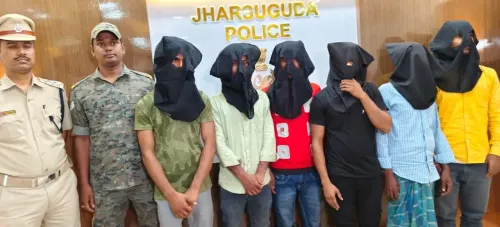
Kolkata, Dec 23 (NationPress) The relatives of Hargobindo Das and his son Chandan Das, who lost their lives during the Murshidabad riots in April this year, are set to approach the Calcutta High Court to demand the death penalty for the 13 individuals who were recently sentenced to life imprisonment by the Jangipur sub-divisional court in the same region of West Bengal.
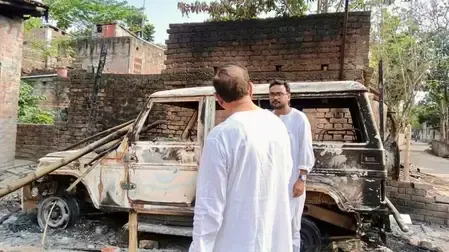
This decision stems from a meeting with the Leader of the Opposition in the West Bengal Assembly, Suvendu Adhikari, who assured the family of his full support in their quest for justice following the court's life sentences.
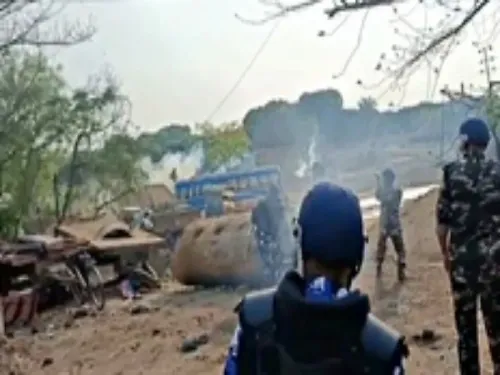
Both victims were residents of Jafrabad village under the jurisdiction of Samserganj Police Station in the Jangipur Police District. They were murdered while attempting to defend themselves against rioters during a communal unrest event sparked by protests against the Waqf (Amendment) Act.
During the trial, the sub-divisional court confirmed that the motives behind the murders were personal, not politically driven. The Bharatiya Janata Party remarked that this ruling revealed attempts to mislead the public regarding the motivations behind the violence.
Earlier this year, the family declined a compensation offer from the Trinamool Congress-led state government but accepted financial aid from Suvendu Adhikari.
In April, the Calcutta High Court had instructed the establishment of a Special Investigation Team to look into the Murshidabad riots and mandated the deployment of Central Armed Police Forces (CAPF) in the area. A bench comprising Justice Soumen Sen and Justice Raja Basu Chowdhury criticized the West Bengal government's response to communal tensions, suggesting that earlier intervention could have prevented the situation from escalating to such a serious level.
Point of View
It is vital to approach this sensitive issue with care and respect for the victims' families. The pursuit of justice, particularly in communal violence cases, must always prioritize truth and accountability.
NationPress
26 Sept 2026
Frequently Asked Questions
What happened in the Murshidabad riots?
The Murshidabad riots were marked by violence that led to the deaths of Hargobindo Das and his son Chandan Das as they tried to fend off rioters during protests against the Waqf (Amendment) Act.
What was the outcome of the recent court ruling?
The Jangipur sub-divisional court sentenced 13 individuals to life imprisonment for their involvement in the murders of Hargobindo and Chandan Das.
What action is the family taking now?
The family plans to approach the Calcutta High Court to seek the death penalty for the 13 convicts.
Who is supporting the family's legal efforts?
The family received support from Suvendu Adhikari, the Leader of the Opposition in the West Bengal Assembly, who pledged assistance in their legal battle.
What criticisms did the court make about the government's handling of the riots?
The Calcutta High Court criticized the West Bengal government for inadequate measures to control the communal unrest, suggesting earlier intervention could have mitigated the situation.