L. Murugan seeks to quit as Union Minister to strengthen BJP in Tamil Nadu
Synopsis
In an unusual political move, Union Minister L. Murugan has formally asked PM Modi to relieve him of his Cabinet post and Rajya Sabha seat — not under pressure, but to go back to street-level BJP work in Tamil Nadu. With 2029 Lok Sabha elections in view and the Dravidian heartland still out of BJP's direct reach, this is a deliberate bet on organisational depth over Delhi power.
Key Takeaways
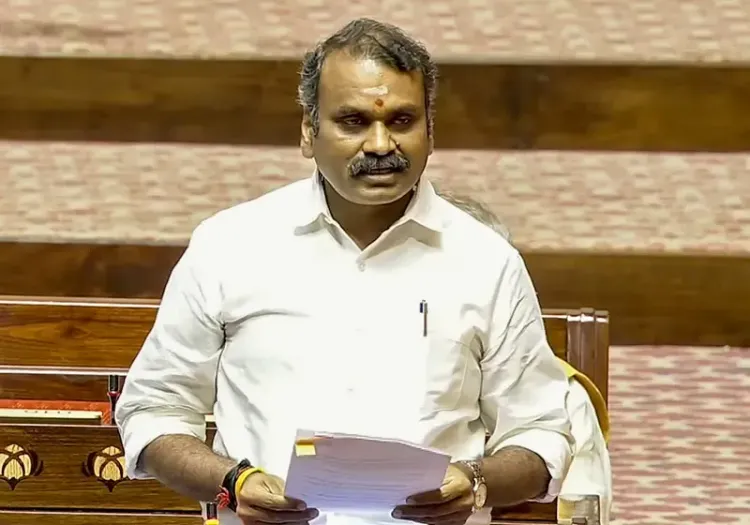
Murugan , Union Minister of State for Information and Broadcasting and Parliamentary Affairs , has requested PM Narendra Modi to relieve him of his ministerial post and Rajya Sabha membership.
He wants to return to grassroots politics and strengthen BJP in Tamil Nadu ahead of the 2029 Lok Sabha elections .
Murugan cited PM Modi's recent Tamil Nadu visit and public enthusiasm as reinforcing his conviction that the party can grow further in the state.
He has spent nearly three decades in the ABVP and BJP and served five years in the Union government, including twice as a Rajya Sabha member.
PM Modi has not yet publicly responded to the request as of 13 October 2026 .
Union Minister of State L. Murugan has written to Prime Minister Narendra Modi requesting to be relieved of his ministerial portfolio and his Rajya Sabha membership, expressing his desire to return to grassroots politics and dedicate himself full-time to strengthening the Bharatiya Janata Party (BJP) in Tamil Nadu ahead of the 2029 Lok Sabha elections. The letter, shared on 13 October 2026, marks a significant political move by the Minister of State for Information and Broadcasting and Parliamentary Affairs.
What Murugan Said in His Letter
In his letter to the Prime Minister, Murugan invoked a personal credo to explain his decision. 'Now, I wish to return to the grassroots, stand with our karyakartas and dedicate myself full-time to strengthening the BJP in Tamil Nadu ahead of the 2029 Lok Sabha elections,' he wrote. He added: 'Nation First. Party Next. Self Last,' describing it as the guiding principle of nearly three decades in the Akhil Bharatiya Vidyarthi Parishad (ABVP) and the BJP.
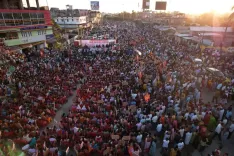
Murugan cited Prime Minister Modi's recent visit to Tamil Nadu as a turning point, saying the public affection and enthusiasm he witnessed reinforced his conviction that the party could achieve far more in the state with focused organisational effort. He pledged to visit every village and street, meet residents, and expand the party's footprint across Tamil Nadu.
A Journey From Konur Village to Cabinet
Murugan described his tenure in the Union government as the greatest honour of his life, tracing his roots to a family of daily wage labourers and cattle grazers in Konur village. He credited Modi's leadership and the party's recognition of grassroots workers for his appointments as vice-chairman of the National Commission for Scheduled Castes, twice as a Rajya Sabha member, and eventually as a Union Minister.
His personal narrative — from humble origins to Cabinet — has been central to the BJP's outreach among Scheduled Caste communities in Tamil Nadu, where the party has struggled to translate national-level support into state-level electoral gains.
The Strategic Stakes for BJP in Tamil Nadu
Tamil Nadu has remained one of the most challenging states for the BJP, which has historically relied on alliances rather than its own organisational base in the Dravidian-politics-dominated state. The Dravida Munnetra Kazhagam (DMK), led by Chief Minister M.K. Stalin, currently holds firm control of the state government and a dominant position in the state's Lok Sabha seats.
Murugan's proposed move signals a deliberate BJP strategy to invest in party-building at the ground level well before the 2029 general elections, rather than depending solely on alliance arithmetic. Notably, the party has been gradually increasing its vote share in the state over successive elections, though seat conversion has remained elusive.
What Happens Next
As of 13 October 2026, Prime Minister Modi has not publicly responded to the request. Any ministerial reshuffle or acceptance of Murugan's Rajya Sabha resignation would require formal Cabinet and Parliamentary processes. Political observers will watch closely whether Modi accepts the request and who, if anyone, replaces Murugan in his current portfolios. Murugan expressed gratitude for the trust placed in him over five years of government service and sought Modi's blessings to continue serving through organisational work.
Point of View
Not an impulsive resignation. Tamil Nadu remains one of the BJP's most stubborn electoral blind spots — the party has vote share but almost no direct seats, and alliances have carried it as far as they can. Sending a Cabinet-rank figure back to ground-level work this early in the electoral cycle is a statement of intent about 2029. The deeper question is whether one organisational push, however sincere, can shift the structural dynamics of Dravidian politics in three years. The BJP has tried this playbook before; the results have been modest. Murugan's Dalit roots and personal story give him genuine traction, but grassroots credibility alone rarely translates into seats in a state where caste, language, and regional identity are this tightly woven into voting behaviour.
NationPress
13 Oct 2026
Frequently Asked Questions
Why is L. Murugan requesting to quit as Union Minister?
L. Murugan has requested Prime Minister Narendra Modi to relieve him as Union Minister of State for Information and Broadcasting and Parliamentary Affairs so he can return to grassroots politics and strengthen the BJP in Tamil Nadu ahead of the 2029 Lok Sabha elections. He cited the public enthusiasm witnessed during PM Modi's recent Tamil Nadu visit as a key motivating factor.
Is Murugan also giving up his Rajya Sabha seat?
Yes, Murugan has requested to be relieved of both his ministerial post and his Rajya Sabha membership. He wishes to work full-time among party workers on the ground in Tamil Nadu rather than continuing in a legislative and executive capacity at the Centre.
What is the BJP's electoral standing in Tamil Nadu?
Tamil Nadu has historically been one of the most challenging states for the BJP, which has relied on alliances rather than its own organisational base in the Dravidian-politics-dominated state. The DMK under Chief Minister M.K. Stalin currently holds a dominant position, and the BJP has struggled to convert its growing vote share into direct Lok Sabha seats.
Has PM Modi accepted Murugan's request?
As of 13 October 2026, Prime Minister Modi has not publicly responded to Murugan's letter. Any acceptance would require formal Cabinet and Parliamentary procedures, including a resignation from the Rajya Sabha.
What is L. Murugan's background in the BJP?
Murugan has spent nearly three decades in the ABVP and the BJP, rising from a family of daily wage labourers in Konur village. He has served as vice-chairman of the National Commission for Scheduled Castes, twice as a Rajya Sabha member, and as a Union Minister of State for five years.