Nagaland women do 80% of farm work but face structural barriers, Governor reviews agriculture
Synopsis
Women perform over 80% of Nagaland's farming work yet remain structurally marginalised — no land rights, limited credit, and little policy visibility. Governor Nand Kishore Yadav's agriculture review in Kohima brought these numbers into focus, but the gap between acknowledgement and targeted reform remains the story.
Key Takeaways
Women account for 65–70% of Nagaland's agricultural workforce and perform more than 80% of core farming operations.
Nearly 70% of Nagaland's population depends on agriculture for its livelihood.
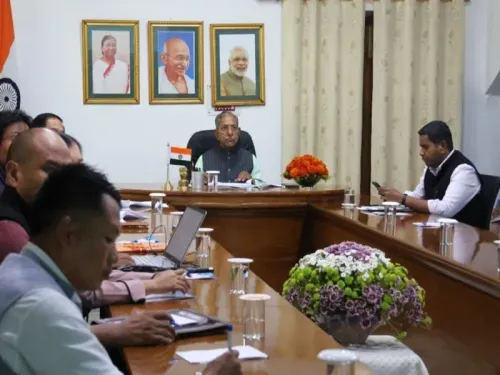
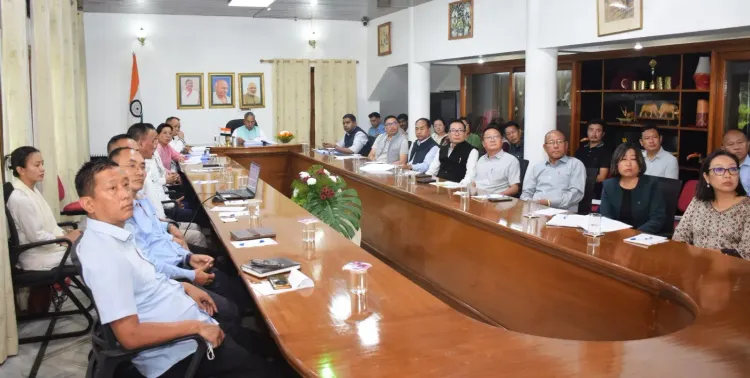
Governor Nand Kishore Yadav chaired a review of the Agriculture Department at Lok Bhavan, Kohima on 29 July .
Key challenges flagged: fragmented landholdings, poor road connectivity, difficult terrain, and inadequate infrastructure.
Flagship schemes under review include RKVY , PM-Kisan , MOVCD-NER , SMAM , and Per Drop More Crop .
Chief Minister Neiphiu Rio has called for food processing and incubation centres to reduce Nagaland's dependence on outside agricultural produce.
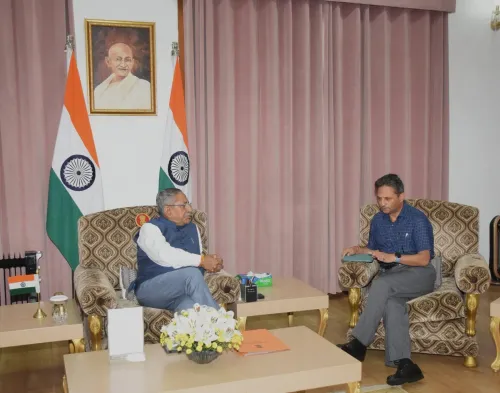
Women constitute between 65 and 70 per cent of Nagaland's agricultural workforce and perform more than 80 per cent of core farming operations — yet continue to face deep-rooted social and structural challenges, senior officials of the state's Agriculture Department said on Wednesday, 29 July. The figures came to light during a high-level review meeting chaired by Governor Nand Kishore Yadav at Lok Bhavan in Kohima.
Scale of Women's Role in Nagaland's Farms
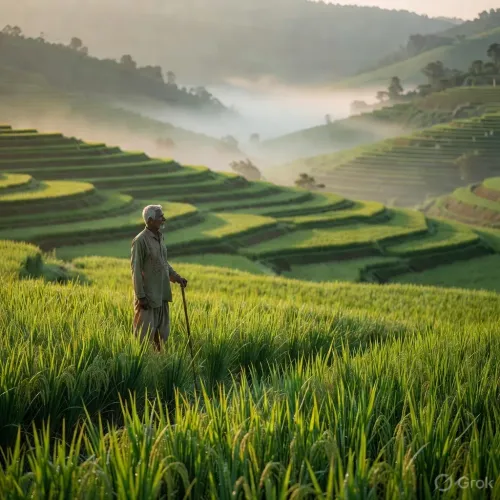
According to departmental officials, women farmers in the state are the primary hands behind sowing, transplanting, harvesting, seed conservation, and the management of local food systems. Their contribution is not marginal — it is foundational. Nearly 70 per cent of Nagaland's total population depends on agriculture for its livelihood, making the sector's structural inequities a concern that cuts across the entire rural economy.
Despite this dominant role, women cultivators reportedly lack adequate land rights, access to institutional credit, and representation in formal agricultural planning — constraints that officials acknowledged during the review but did not detail in specific policy commitments.
What the Review Meeting Covered
The Agriculture Department presented a comprehensive overview of Nagaland's agrarian profile, covering production targets, cropping intensity, irrigation infrastructure, farm mechanisation, and the delivery of both centrally and state-sponsored schemes. Flagship programmes reviewed include Krishonnati Yojana, PM-Rashtriya Krishi Vikas Yojana (RKVY), National Food Security and Nutrition Mission (NFSNM), National Mission on Edible Oils, Mission Organic Value Chain Development for the North Eastern Region (MOVCD-NER), National Mission on Natural Farming, PM-Kisan, Sub-Mission on Agricultural Mechanisation (SMAM), and Per Drop More Crop (PDMC), among others.
Officials also briefed the Governor on the expansion of oil palm cultivation, progress in organic and natural farming, water harvesting infrastructure, farmer training programmes, and efforts to improve market linkages for agricultural produce.
Key Challenges Flagged by Officials
The department identified several structural constraints holding back the sector: fragmented landholdings, inadequate rural infrastructure, difficult mountainous terrain, and poor road connectivity. These factors compound the difficulties faced by smallholder farmers — particularly women — in accessing inputs, markets, and government support.
Notably, Nagaland's geography makes last-mile delivery of agricultural services significantly harder than in plains states, a challenge that multiple schemes have yet to fully overcome.
What the Governor and Chief Minister Said
Governor Yadav appreciated the department's efforts and called for stronger sustainable agriculture, improved farmer livelihoods, and more effective scheme implementation. He urged officials to adopt innovative approaches, enhance convergence among stakeholders, and push agriculture toward being more productive, technology-driven, and market-oriented.
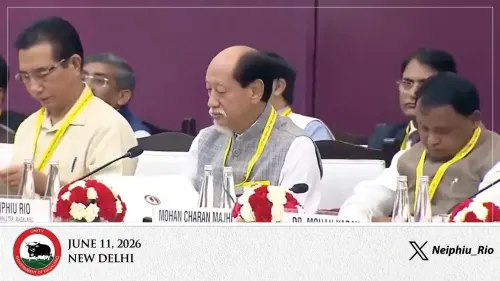
Chief Minister Neiphiu Rio, addressing a separate function in Kohima recently, acknowledged that Nagaland remains largely a consumer state, heavily reliant on goods and agricultural products sourced from outside. He expressed confidence that the establishment of food processing and incubation centres would boost local production, encourage value addition, and generate employment — steps he described as essential to greater self-reliance.
What Comes Next
The review signals renewed administrative attention on Nagaland's agriculture sector ahead of the next crop season. Whether the focus on women farmers translates into targeted policy — such as land titling reforms, gender-disaggregated scheme delivery, or women-led self-help group credit access — remains to be seen. Officials indicated that future plans and innovative approaches would be pursued, but specifics are yet to be announced.
Point of View
Not a concrete women-in-agriculture policy. Nagaland is not unique in this gap: across India's Northeast, women are the de facto farm managers while land records and credit flows remain male-dominated. The real test of this review's value will be whether the next budget cycle includes gender-disaggregated scheme targets or land titling provisions for women cultivators — or whether these statistics remain a talking point at the next review.
NationPress
28 Oct 2026
Frequently Asked Questions
What percentage of Nagaland's agricultural workforce is made up of women?
Women constitute approximately 65 to 70 per cent of Nagaland's agricultural workforce and are responsible for more than 80 per cent of core farming operations, including sowing, transplanting, harvesting, and seed conservation. Despite this dominant role, they continue to face significant social and structural barriers.
What was the purpose of Governor Nand Kishore Yadav's agriculture review meeting in Kohima?
Governor Nand Kishore Yadav chaired a review meeting of the Nagaland Agriculture Department at Lok Bhavan, Kohima on 29 July to assess the implementation of flagship schemes, examine challenges, and discuss future plans for the sector. The meeting covered production targets, irrigation, farm mechanisation, and market linkages.
What are the main challenges facing Nagaland's agriculture sector?
Officials flagged fragmented landholdings, inadequate rural infrastructure, difficult mountainous terrain, and poor road connectivity as the primary structural constraints. These factors make last-mile delivery of agricultural services and scheme benefits especially difficult in the state.
Which central schemes are being implemented in Nagaland's agriculture sector?
The department is implementing several centrally sponsored schemes including PM-RKVY, PM-Kisan, NFSNM, MOVCD-NER, National Mission on Natural Farming, SMAM, Per Drop More Crop, and Krishonnati Yojana, alongside state government initiatives targeting organic farming, oil palm cultivation, and water harvesting.
What has Chief Minister Neiphiu Rio said about Nagaland's agricultural self-reliance?
Chief Minister Neiphiu Rio has acknowledged that Nagaland remains heavily dependent on agricultural goods sourced from outside the state. He expressed confidence that food processing and incubation centres would boost local production, encourage value addition, and generate employment, helping the state move toward greater agricultural self-reliance.