Did Chandrababu Naidu Request Statutory Status for Amaravati?
Synopsis
In a pivotal meeting, Andhra Pradesh Chief Minister N. Chandrababu Naidu implored Union Home Minister Amit Shah to grant Amaravati statutory status. This request is seen as vital for the state's development and stability, aiming to bolster investor confidence while addressing fiscal challenges. Discover the implications of this significant political dialogue.
Key Takeaways
Chandrababu Naidu met Amit Shah to discuss Amaravati's statutory status.
Statutory recognition is deemed crucial for state development .
Financial flexibility was requested concerning the G-Ram-G scheme.
The meeting addressed ongoing projects and budget allocations.
Naidu's TDP is a key ally in the NDA government.
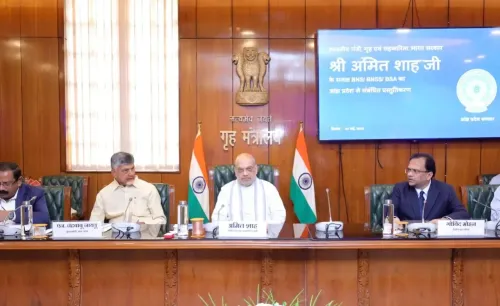
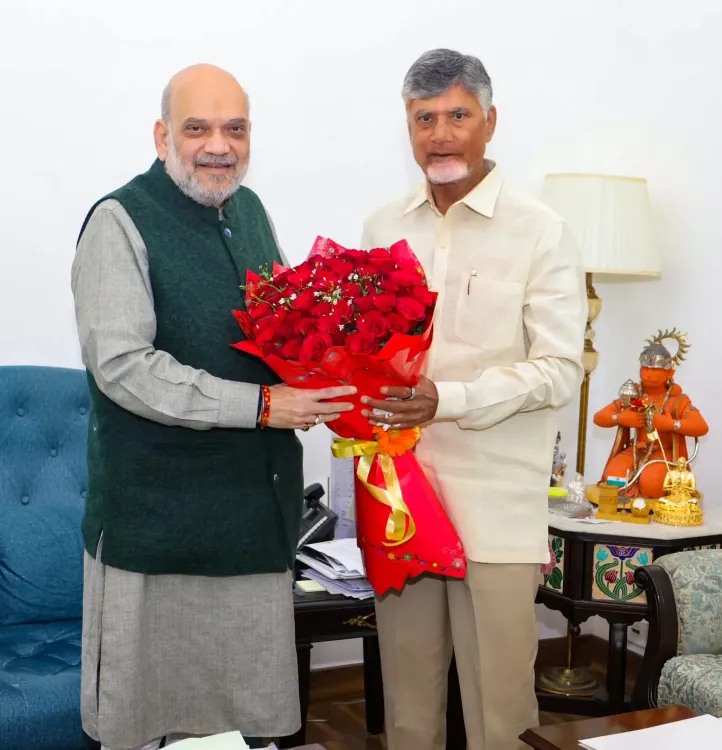
Amaravati, Jan 7 (NationPress) The Chief Minister of Andhra Pradesh, N. Chandrababu Naidu, met with the Union Home Minister, Amit Shah, in New Delhi on Wednesday, urging the Central Government to provide statutory status to Amaravati as the state's permanent capital.
During this crucial meeting, the Chief Minister emphasized the importance of introducing a Bill in Parliament to grant statutory status to Amaravati, which he believes is essential for the state's long-term growth and stability.
Chandrababu Naidu arrived in Delhi following a visit to the Polavaram project site earlier that day.
Throughout their discussions, both leaders reviewed significant development and welfare initiatives concerning Andhra Pradesh.
The Chief Minister highlighted that formal legislative recognition of Amaravati would not only expedite development but also meet the aspirations of the people of Andhra Pradesh and enhance investor confidence.
Additionally, he requested some flexibility regarding specific elements of the G-Ram-G scheme, recently enacted in place of the Mahatma Gandhi National Rural Employment Guarantee Act (MNREGA).
Chandrababu Naidu elaborated on the financial arrangements of VB- G-RAM-G, explaining to Amit Shah that altering the Central and State government funding ratio to 60:40 would adversely affect Andhra Pradesh, which is already grappling with financial challenges.
He pointed out that this revised funding ratio imposes an extra financial strain on the state, potentially jeopardizing project implementation.
In his appeal for relief, the Chief Minister sought alternative financial assistance and flexibility given the state's current fiscal predicament. He acknowledged the Centre's support in helping Andhra Pradesh navigate its financial difficulties and called for ongoing collaboration.
The meeting also delved into ongoing development projects, welfare schemes, and recent advancements in the state.
It is understood that they discussed allocations to Andhra Pradesh in the Union Budget as well.
Chandrababu Naidu, whose Telugu Desam Party (TDP) is a significant ally in the BJP-led NDA government, reportedly sought budget allocations for various state projects.
Point of View
The meeting between Andhra Pradesh Chief Minister N. Chandrababu Naidu and Union Home Minister Amit Shah signifies a critical dialogue on state progress and fiscal policy. The request for statutory status for Amaravati reflects a broader commitment to regional development and political collaboration, which is essential for national unity and growth.
NationPress
1 Oct 2026
Frequently Asked Questions
Why did Chandrababu Naidu meet Amit Shah?
Chandrababu Naidu met Amit Shah to request statutory status for Amaravati as the permanent capital of Andhra Pradesh, which he believes is essential for the state's development.
What is the significance of statutory status for Amaravati?
Statutory status would provide formal legislative recognition to Amaravati, potentially accelerating its development and enhancing investor confidence.
What financial concerns did Naidu raise?
Naidu expressed concerns about the revised Central-State funding ratio of 60:40, stating it would strain Andhra Pradesh's finances and hinder project implementation.