NALSA launches E-Prisons Early Release Module to cut remission delays
Synopsis
India's prison system has long struggled with administrative delays that keep eligible prisoners locked up past their due release date. NALSA's new E-Prisons Early Release Processing Module — built on the NIC platform and mandated by the Supreme Court — automates identification, processing, and tracking of remission cases nationwide, turning a paper-heavy chain of approvals into a digitally accountable workflow.
Key Takeaways
NALSA launched the E-Prisons Early Release Processing Module on 27 May 2025 at a pan-India level in virtual mode.
The module was developed by the National Informatics Centre (NIC) within the existing e-Prisons platform, following Supreme Court directions.
Key features include automatic identification of eligible prisoners, real-time SMS and WhatsApp alerts, colour-coded grace-period monitoring, and centralised dashboards.
The module was piloted at Central Jail, Agra , and District Jail, Lucknow before the national rollout.
CJI Surya Kant launched the platform, warning that administrative delay 'risks diminishing the very fairness that the process is intended to secure.'
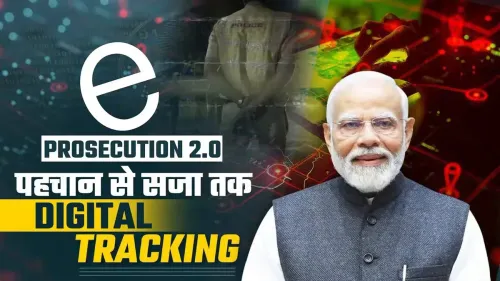
The National Legal Services Authority (NALSA) on Wednesday, 27 May unveiled the 'E-Prisons Early Release Processing Module', a technology-driven mechanism designed to eliminate systemic delays in the remission and premature release of eligible prisoners across India. The module was rolled out at a pan-India level in virtual mode, following directions of the Supreme Court in the Surendra @ Sunda vs. State of Uttar Pradesh case.
What the Module Does
Developed by the National Informatics Centre (NIC) within the existing e-Prisons platform, the module automates several steps that previously relied on manual file movement. Key features include automatic identification of eligible prisoners ahead of their eligibility date, online processing of release proposals, real-time SMS and WhatsApp status alerts, colour-coded grace-period monitoring, and centralised dashboards with digital accountability mechanisms.
The platform is also designed to improve coordination among prison authorities, police departments, legal services institutions, and other stakeholders involved in the remission process — a chain that has historically been prone to bureaucratic bottlenecks.
From Pilot to National Rollout
The module was first tested as a pilot project at Central Jail, Agra, and District Jail, Lucknow, under apex court directions. Following a successful pilot phase, it is now being extended to all states and union territories in accordance with their respective remission and premature release policies.
What the Chief Justice Said
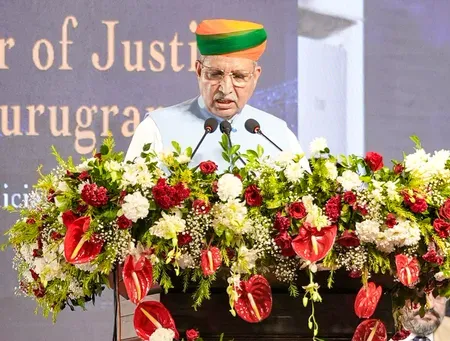
The platform was launched by Chief Justice of India (CJI) Surya Kant, Patron-in-Chief of NALSA, in the presence of Justice Vikram Nath, Executive Chairman of NALSA, and Justice J. K. Maheshwari, along with senior officials from the Supreme Court, NALSA, prison authorities, and NIC.
CJI Surya Kant said a prisoner eligible for remission or premature release 'should not remain in uncertainty only because procedures move slowly or responsibility travels across offices without resolution.' He further observed that 'administrative delay, if left unattended, risks diminishing the very fairness that the process is intended to secure.'
Justice Vikram Nath cautioned that the initiative's true success would depend not on 'the sophistication of the software' but on whether it reduces unnecessary incarceration. He stressed the need for 'transparency to replace uncertainty' and for 'the constitutional promise of fairness' to reach 'even those at the farthest margins of the justice system.'
Broader Significance for Criminal Justice Reform
NALSA described the initiative as part of a growing role for technology in strengthening access to justice, transparency, and institutional efficiency within India's criminal justice system. Notably, prolonged undertrial and post-conviction detention due to procedural delays has been a recurring concern flagged by the Supreme Court in multiple cases over the past decade. This module directly addresses that gap by digitising and time-stamping each step of the remission process, creating a traceable accountability trail. The rollout marks one of the more concrete technology interventions in prison administration at the national level in recent years.
Point of View
But its real test lies in adoption at the state level, where prison administration is notoriously under-resourced and resistant to change. The Supreme Court has repeatedly flagged undertrial overcrowding — India's prisons run at over 130% capacity — yet previous technology mandates have seen uneven implementation across states. Digitising the remission workflow is necessary but not sufficient: unless district-level prison officials are trained and held to dashboard-driven timelines, the module risks becoming another well-designed tool that collects dust at the margins. The accountability mechanisms built into the platform are promising; whether they translate into measurable reductions in excess detention is the metric that matters.
NationPress
11 Oct 2026
Frequently Asked Questions
What is the NALSA E-Prisons Early Release Processing Module?
It is a digital platform launched by the National Legal Services Authority on 27 May 2025 to automate the identification and processing of remission and premature release cases for eligible prisoners across India. It was built by the National Informatics Centre within the existing e-Prisons platform, following Supreme Court directions in the Surendra @ Sunda vs. State of Uttar Pradesh case.
Why was the module introduced?
The module was introduced to address systemic delays in the manual processing of remission proposals, which have historically kept eligible prisoners incarcerated beyond their due release dates. The Supreme Court directed NALSA to create a streamlined digital mechanism to ensure timely consideration of such cases.
Which states and jails will the module cover?
After a successful pilot at Central Jail, Agra, and District Jail, Lucknow, the module is now being rolled out to all states and union territories in accordance with their respective remission and premature release policies.
What are the key features of the new module?
The module offers automatic identification of eligible prisoners ahead of their eligibility date, online proposal processing, real-time SMS and WhatsApp status alerts, colour-coded grace-period monitoring, centralised dashboards, and digital accountability mechanisms to reduce delays caused by manual file movement.
Who launched the E-Prisons Early Release Processing Module?
Chief Justice of India Surya Kant, Patron-in-Chief of NALSA, launched the platform in the presence of Justice Vikram Nath, Executive Chairman of NALSA, and Justice J. K. Maheshwari, along with senior officials from the Supreme Court, NALSA, prison authorities, and NIC.