Supreme Court: Missing charge sheet copies no ground for default bail under BNSS
Synopsis
The Supreme Court has drawn a clear line under BNSS default bail law: supplying extra charge sheet copies is a procedural obligation, not a prerequisite for the charge sheet's validity. Accused persons cannot exploit administrative delays in document supply to claim statutory bail — a ruling that significantly limits a potential loophole in India's new criminal procedure code.
Key Takeaways
The Supreme Court on 1 July 2025 ruled that failure to supply additional charge sheet copies does not entitle an accused to default bail under the BNSS .
Default bail under Section 187(3) of the BNSS arises only if the charge sheet is not filed within 60 or 90 days — not due to delayed document supply.
The bench of Justice Sanjay Karol and Justice NK Singh dismissed the appeal of an accused in a CBI cyber fraud and mule account case.
The CBI had filed the charge sheet on 2 September 2025 within the statutory period; the dispute centred on non-supply of accompanying copies.
The court reaffirmed that the right to default bail is an indefeasible right under Article 21 , but it lapses once the charge sheet is filed in time.
The accused remains free to seek regular bail , to be decided on its own merits.
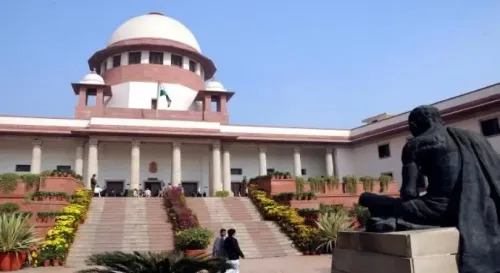
The Supreme Court of India on Wednesday, 1 July 2025, ruled that an accused cannot claim default bail merely because an investigating agency failed to supply additional copies of a charge sheet as mandated under the Bharatiya Nagarik Suraksha Sanhita (BNSS), so long as the charge sheet itself was filed within the statutory deadline. The judgment settles a contested point of criminal procedure under the new criminal law framework.
What the Court Ruled
A bench of Justice Sanjay Karol and Justice NK Singh held that the right to default bail under Section 187(3) of the BNSS is triggered only when the investigating agency fails to file the charge sheet within the prescribed period of 60 or 90 days. Non-supply of additional copies — required under Section 193(8) of the BNSS for distribution to the accused — does not invalidate the charge sheet or revive the right to statutory bail.
'Simple non-filing of additional copies of the charge sheet/police report will not entitle the appellant to the relief of default bail,' the Justice Karol-led bench stated in its order.
Background of the Case
The ruling came while dismissing an appeal filed by an accused against a Bombay High Court order that had rejected his plea for default bail in a Central Bureau of Investigation (CBI) case involving an alleged cyber fraud and mule account racket. The appellant argued that although the CBI had filed the charge sheet within the statutory period on 2 September 2025, it had failed to furnish the requisite copies and accompanying documents within the prescribed time — and that this failure entitled him to default bail under the BNSS.
The Supreme Court rejected this contention outright, holding that the procedural requirement to supply extra copies cannot be equated with the filing of the charge sheet itself for the purposes of claiming default bail.
How BNSS Compares to the Old CrPC
The bench noted that the provisions governing default bail under the BNSS are substantially similar to those under the erstwhile Code of Criminal Procedure (CrPC). The only significant addition in the BNSS is the requirement under Section 193(8) to furnish extra copies of the police report for supply to the accused. The court held this procedural addition does not alter the fundamental threshold for claiming default bail.
Relying on earlier precedents, the apex court reiterated that even if all supporting documents are not filed alongside the charge sheet, the report does not become invalid, and the accused cannot claim statutory bail on that ground alone.
On the Right to Default Bail
The judgment reaffirmed settled constitutional principles: the right to default bail is an indefeasible right flowing from Article 21 of the Constitution, but it is available only until the charge sheet is filed within the prescribed statutory period. Once a charge sheet complying with Section 193(3) of the BNSS is filed in time, 'the right to default bail ceases,' the bench stated.
The court clarified that the appellant remains free to pursue regular bail, which must be considered independently on its own merits and without being influenced by the observations made in this judgment. The ruling is expected to guide trial courts and high courts handling similar challenges as India transitions to the new criminal law regime.
Point of View
And had the court read that as a condition precedent to a valid charge sheet, it would have created a wave of default bail applications on purely administrative grounds. The Supreme Court has correctly kept the threshold anchored to the charge sheet filing date, not the logistics of document distribution. What remains to be watched is how trial courts handle delays in document supply that are so severe they prejudice the accused's ability to prepare a defence — a question this judgment deliberately leaves open.
NationPress
30 Sept 2026
Frequently Asked Questions
What did the Supreme Court rule on default bail and charge sheet copies under BNSS?
The Supreme Court ruled on 1 July 2025 that an accused is not entitled to default bail simply because the investigating agency failed to supply additional copies of the charge sheet as required under Section 193(8) of the BNSS. The right to default bail arises only if the charge sheet itself is not filed within the statutory 60 or 90-day period.
What is default bail under the BNSS?
Default bail, also called statutory bail, is the right of an accused to be released if the investigating agency fails to file a charge sheet within a prescribed period — 60 days for most offences and 90 days for serious offences — under Section 187(3) of the Bharatiya Nagarik Suraksha Sanhita. It is an indefeasible right rooted in Article 21 of the Constitution, but it lapses once the charge sheet is filed in time.
What was the background of the case before the Supreme Court?
The case involved an accused in a CBI investigation into an alleged cyber fraud and mule account racket. The Bombay High Court had rejected his plea for default bail, and he appealed to the Supreme Court, arguing that the CBI's failure to supply accompanying documents alongside the charge sheet — filed on 2 September 2025 — entitled him to statutory bail.
How does the BNSS differ from the old CrPC on this point?
The BNSS is substantially similar to the erstwhile Code of Criminal Procedure (CrPC) on default bail provisions. The key addition in the BNSS is Section 193(8), which requires investigating officers to submit extra copies of the police report for supply to the accused. The Supreme Court held that this procedural addition does not change the threshold for claiming default bail.
Can the accused still get bail after this ruling?
Yes. The Supreme Court clarified that the accused remains free to apply for regular bail, which must be considered independently on its own merits. The observations in this judgment are not to influence that process.