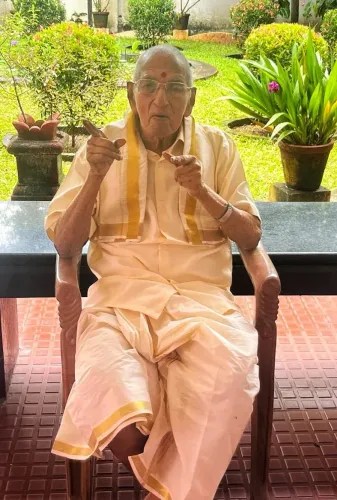
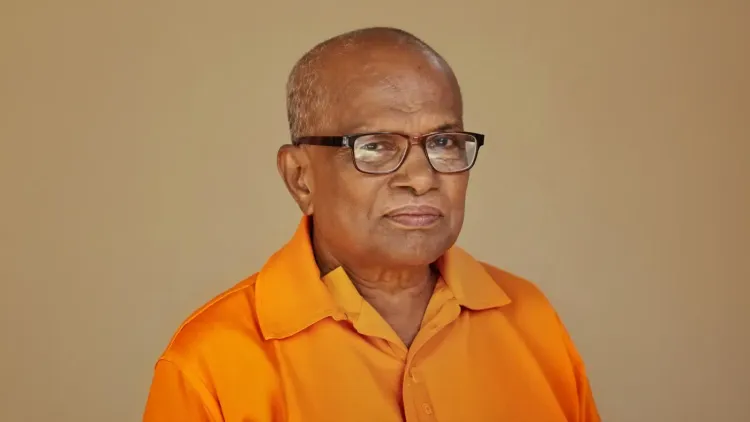
Muni Narayana Prasad, 87, Narayana Gurukulam Head, Dies; Kerala CM Mourns
Synopsis
Muni Narayana Prasad, 87, the Padma Shri-winning monk who authored nearly 200 works on Advaita philosophy and led Narayana Gurukulam's global network, died on April 25, 2025. An engineer-turned-sannyasi, he spent decades distilling Sree Narayana Guru's radical anti-caste humanism for the world — a legacy Kerala will struggle to replace.
Key Takeaways
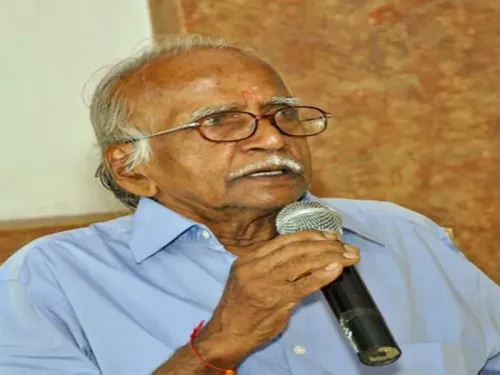
Muni Narayana Prasad , 87, head of Narayana Gurukulam, Varkala , passed away on Saturday, April 25, 2025 .
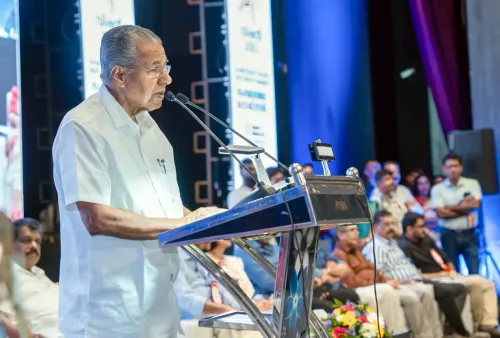
Kerala Chief Minister Pinarayi Vijayan condoled his death, calling him a teacher who inspired humanism and equality.
Prasad authored nearly 200 works in Malayalam and English , including authoritative commentaries on the Upanishads and Bhagavad Gita.
Born in 1938 near Thiruvananthapuram, he gave up a career as an engineer to embrace sannyasa and Advaita philosophy, initiated into brahmacharya in 1970 .
He was a successor to Nataraja Guru and Guru Nitya Chaitanya Yati and led the Gurukulam's global network spanning from Moscow to Fiji .
A recipient of the Padma Shri , he will be laid to rest at Varkala beside his spiritual teachers.
Thiruvananthapuram, April 25: Muni Narayana Prasad, the 87-year-old spiritual head of Narayana Gurukulam in Varkala, Thiruvananthapuram, passed away on Saturday, April 25, 2025, leaving behind an extraordinary legacy as one of India's foremost interpreters of Sree Narayana Guru's philosophy. His death has been widely mourned across Kerala's spiritual, academic, and cultural communities. Kerala Chief Minister Pinarayi Vijayan expressed deep condolences, describing Prasad as a teacher who inspired generations to embrace humanism and equality.
Kerala CM Pays Tribute to a Life of Knowledge and Humility
Chief Minister Vijayan said that with Muni Narayana Prasad's passing, Kerala has lost a rare soul who harmonised profound knowledge with personal humility. Vijayan noted that Prasad's life was a living testimony to the principle that spirituality is not passive contemplation but constant, disciplined action.
The Chief Minister's condolence message underscored the deep respect Prasad commanded across political and ideological lines — a testament to the universality of his teachings, which transcended caste, creed, and community.
From Engineer to Enlightened Monk: Prasad's Remarkable Journey
Born in 1938 near Thiruvananthapuram, Muni Narayana Prasad began his adult life as a trained engineer — a career most would consider enviable. However, an intense inner quest led him to renounce professional life entirely, choosing instead a path of spiritual inquiry rooted in Advaita Vedanta.
He was initiated into brahmacharya in 1970 and later embraced sannyasa, immersing himself in the non-dualistic philosophy that forms the bedrock of Sree Narayana Guru's teachings. He became a direct successor to Nataraja Guru and Guru Nitya Chaitanya Yati, two towering figures in the Narayana tradition.
His transformation from engineer to monk is itself a philosophical statement — that the search for truth demands the courage to walk away from comfort.
Scholar, Author, and Global Voice for Advaita Philosophy
At the Narayana Gurukulam in Sreenivasapuram, Varkala, Prasad made the ashram both his contemplative home and intellectual workshop. He authored nearly 200 works in Malayalam and English, covering major Upanishads, the Bhagavad Gita, and the poetry of Sree Narayana Guru. His commentaries are widely regarded as authoritative references in Indian philosophical scholarship.
His intellectual reach extended far beyond Kerala. He served as a visiting professor abroad and addressed global forums spanning from Moscow to Fiji, making the Guru's teachings accessible to international audiences. He led the Gurukulam's global network with the simplicity and discipline of a monk, combining rigorous scholarship with physical labour in his daily routine.
Honoured with the Padma Shri — India's fourth-highest civilian award — Prasad accepted the recognition with characteristic equanimity, never allowing public acclaim to alter his monastic discipline.
Legacy: Lived Humanism Beyond Caste and Creed
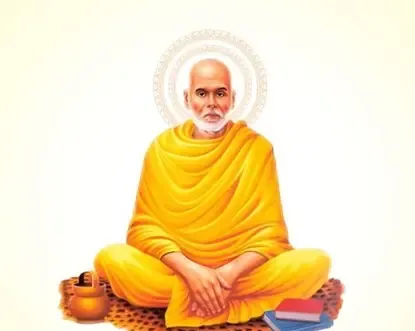
Muni Narayana Prasad's most enduring contribution lies in his ability to distil complex Vedantic truths into accessible, lived humanism. In a country still grappling with caste discrimination, his interpretations of Sree Narayana Guru's philosophy — which radically rejected caste hierarchy — carry urgent contemporary relevance.
This comes amid a broader national conversation about social equity and the role of spiritual institutions in shaping public values. Prasad's life demonstrated that philosophical thought is most powerful when it translates into everyday ethical practice — a lesson with implications far beyond the walls of any ashram.
His passing marks an irreparable loss to the Sree Narayana movement, Kerala's cultural heritage, and India's philosophical tradition. He will be laid to rest beside his teachers at Varkala, completing a circle of discipleship that defined his extraordinary life.
The Narayana Gurukulam is expected to announce succession arrangements in the days ahead, raising questions about the continuity of Prasad's vast scholarly and institutional work across its global network.
Point of View
Power struggles, or political alignment, Prasad represented something increasingly scarce: a monk who lived exactly what he preached. His interpretation of Sree Narayana Guru's anti-caste humanism remains profoundly relevant as India continues to wrestle with identity politics and social inequality. The real question now is whether the institutions he built can sustain that vision without the moral authority of the man who embodied it.
NationPress
14 Oct 2026
Frequently Asked Questions
Who was Muni Narayana Prasad?
Muni Narayana Prasad was the 87-year-old spiritual head of Narayana Gurukulam in Varkala, Thiruvananthapuram, and one of India's foremost scholars of Sree Narayana Guru's Advaita philosophy. He authored nearly 200 works in Malayalam and English and was honoured with the Padma Shri. He passed away on April 25, 2025.
What is Narayana Gurukulam and where is it located?
Narayana Gurukulam is a spiritual and philosophical institution located in the Sreenivasapuram area of Varkala, Thiruvananthapuram district, Kerala. It is dedicated to the teachings of Sree Narayana Guru and maintains a global network of centres. Muni Narayana Prasad served as its head for decades.
Why did Kerala CM Pinarayi Vijayan condole Muni Narayana Prasad's death?
Kerala Chief Minister Pinarayi Vijayan condoled Muni Narayana Prasad's passing because he was a towering figure in Kerala's spiritual and cultural life, known for promoting humanism and equality rooted in Sree Narayana Guru's philosophy. Vijayan described him as a teacher who inspired society to think beyond caste and creed.
What was Muni Narayana Prasad's contribution to Indian philosophy?
Muni Narayana Prasad authored nearly 200 books on Advaita Vedanta, the Upanishads, the Bhagavad Gita, and Sree Narayana Guru's poetry, making complex philosophical ideas accessible to ordinary readers. He also lectured internationally, from Moscow to Fiji, and served as a visiting professor abroad, extending the Guru's teachings globally.
Where will Muni Narayana Prasad be buried?
Muni Narayana Prasad will be laid to rest at Varkala, Thiruvananthapuram, near his spiritual teachers Nataraja Guru and Guru Nitya Chaitanya Yati. This is in keeping with the tradition of the Narayana Gurukulam lineage.