NCB's Operation Global Hunt extradites 4 drug kingpins from UAE, Malaysia, Azerbaijan
Synopsis
India's NCB has pulled off its most ambitious counter-narcotics operation yet — extraditing four international drug kingpins from the UAE, Malaysia, and Azerbaijan in a single campaign. The ₹13,000-crore Basoya case alone signals that Operation Global Hunt is no longer just chasing street-level dealers but dismantling the boardrooms of India's drug trade.
Key Takeaways
The NCB extradited four drug kingpins under Operation Global Hunt from the UAE , Malaysia , and Azerbaijan .
Virender Singh Basoya , suspected mastermind of a ₹13,000-crore drug cartel, was extradited from the UAE .
Salim Dola , a close aide of Dawood Ibrahim , was arrested in Malaysia and deported via Turkiye .
The NCB's dual 'top-to-bottom' and 'bottom-to-top' strategy simultaneously targets overseas cartel heads and domestic supply chains.
Sustained diplomatic engagement and evidence-backed extradition requests have improved cooperation from foreign governments.
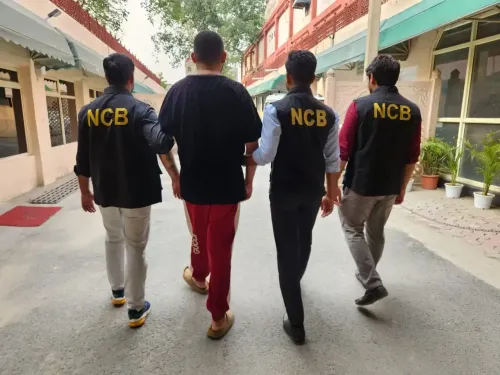
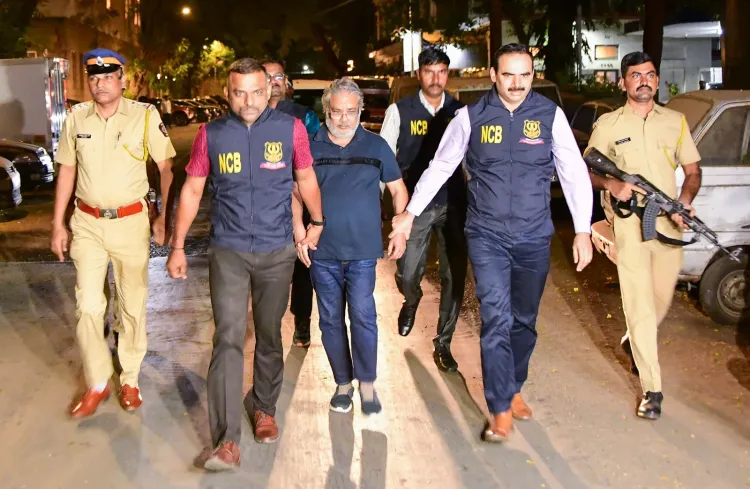
The Narcotic Control Bureau (NCB) has extradited four high-profile international drug kingpins to India under Operation Global Hunt, a coordinated campaign targeting cartel masterminds operating from foreign soil, senior officials said on 15 August. The operation marks a significant escalation in India's counter-narcotics strategy, moving beyond domestic crackdowns to pursue syndicate heads sheltering abroad.
The Four Extraditions
Virender Singh Basoya, the suspected mastermind of a ₹13,000-crore international drug cartel, was extradited from the UAE. Ritik Bajaj, described by officials as a cross-border logistics supplier, was also brought back from the UAE. Prabhdeep Singh was extradited from Azerbaijan, while Salim Dola — identified as a close aide of fugitive underworld figure Dawood Ibrahim and a major player in international narcotics networks — was arrested in Malaysia and deported to India via Turkiye.
The Twin-Track Strategy
Officials say the breakthrough rests on a dual investigative methodology: a 'top-to-bottom' and a 'bottom-to-top' approach deployed simultaneously. Under the top-to-bottom track, the NCB uses intelligence inputs, Interpol channels and international cooperation to identify and build cases against cartel leaders operating from foreign locations. The bottom-to-top track begins at street level — local arrests of suppliers, middlemen and logistics operators yield digital footprints, financial records and communication trails that investigators then follow upward through the network hierarchy.
'The strategy enables investigators to simultaneously target cartel leaders abroad and trace the domestic networks operating under them,' officials said. They added that connecting seemingly independent domestic seizures to larger international networks has been a key operational dividend of this approach.
Diplomatic Groundwork
Officials credited sustained diplomatic engagement for improving cooperation from foreign governments. The Centre has reportedly persuaded international partners of the security risks posed by harbouring transnational syndicate heads. The NCB has also strengthened extradition requests by backing them with substantial evidence — financial records, digital evidence and detailed documentation of each accused person's alleged role in organised drug trafficking.
'This helps in easing the extradition process. Further, India has also managed to convince the international community about the ill-effects of holding such people in their respective countries,' an official said. Notably, the extraditions span four different countries, reflecting the breadth of the NCB's international outreach.
Broader Context and What It Means
The NCB's intensified campaign follows the government's stated objective of building a drug-free India. Until recently, enforcement efforts were concentrated on local suppliers, middlemen and dealers — the visible lower rungs of narcotics networks. Officials acknowledge that dismantling the trade requires targeting the kingpins who control operations remotely from abroad, insulated from domestic law enforcement.
'Tracing the chain upwards is one part of the challenge. The real success is when these persons are extradited to India,' an official said. The four extraditions under Operation Global Hunt represent the most visible results of this reoriented strategy to date. With intelligence pipelines now active across multiple jurisdictions, officials suggest further extraditions are likely as ongoing investigations mature.
Point of View
But the harder test is what happens next — whether prosecutions result in convictions and whether the cartels reconstitute under new leadership. India has a mixed record on translating high-profile arrests into durable network disruption. The Dawood Ibrahim connection in the Salim Dola case also raises a pointed question: if India can now secure the extradition of a Dawood aide from Malaysia, what does that signal about the diplomatic ceiling on pursuing the fugitive himself? Operation Global Hunt's real measure will be whether it produces lasting structural damage to these networks, not just headline arrests.
NationPress
29 Sept 2026
Frequently Asked Questions
What is NCB's Operation Global Hunt?
Operation Global Hunt is a targeted campaign by India's Narcotic Control Bureau to trace, locate and extradite international drug kingpins operating from foreign countries. It uses Interpol channels, intelligence sharing and diplomatic engagement to build and execute extradition cases against cartel masterminds abroad.
Who are the four drug kingpins extradited under Operation Global Hunt?
The four are Virender Singh Basoya (extradited from the UAE, suspected mastermind of a ₹13,000-crore drug cartel), Salim Dola (arrested in Malaysia, deported via Turkiye, linked to Dawood Ibrahim), Prabhdeep Singh (extradited from Azerbaijan), and Ritik Bajaj (extradited from the UAE, described as a cross-border logistics supplier).
What is the NCB's twin top-to-bottom and bottom-to-top strategy?
The top-to-bottom approach targets overseas cartel masterminds using intelligence inputs and Interpol channels, while the bottom-to-top approach begins with domestic arrests of street-level dealers and traces digital, financial and communication evidence upward through the network. Used simultaneously, the two tracks allow investigators to close in on cartel leaders from both ends of the supply chain.
Who is Salim Dola and why is his extradition significant?
Salim Dola is described by officials as a major player in international narcotics networks and a close aide of fugitive underworld figure Dawood Ibrahim. His arrest in Malaysia and deportation to India via Turkiye is significant because it demonstrates India's ability to secure the handover of individuals with links to high-profile organised crime figures across multiple jurisdictions.
How has India improved its extradition success rate for drug suspects?
India has strengthened extradition requests by backing them with substantial evidence including financial records, digital evidence and detailed documentation of each suspect's alleged role. Sustained diplomatic engagement has also reportedly persuaded foreign governments of the security risks of harbouring transnational syndicate leaders, improving bilateral cooperation.