NCB secures 10-year jail for two Punjab drug traffickers in 2019 cocaine case

Synopsis
Five years after seizing 115 g of cocaine in Punjab, the NCB has won 10-year jail terms for two local operatives of a Canada-linked drug syndicate — but the alleged kingpin remains at large. The conviction is a partial win in a cross-border case that exposes how international trafficking networks embed local operatives to insulate their leadership from prosecution.
Key Takeaways
The Special Court, Jalandhar , sentenced Akshinder Singh Sodhi and Amandeep Kumar to 10 years' Rigorous Imprisonment each under the NDPS Act.
Both convicts were also fined ₹1 lakh each.
The case stems from a September 2019 seizure of 115 g of cocaine , 13 g of ephedrine , 80 g of hashish oil , and intoxicant capsules by the NCB Chandigarh Zonal Unit .
The syndicate is allegedly operated by a Canada-based kingpin who remains absconding; the NCB probe is continuing.
Separately, the NCB held an awareness drive at IIT Jodhpur reaching around 900 students , promoting the MANAS Helpline (1933) .
The Narcotics Control Bureau (NCB) has secured 10 years' Rigorous Imprisonment for two drug traffickers linked to an international narcotics syndicate, following a case that originated in Punjab in September 2019 with the seizure of 115 g of cocaine and other contraband. The Special Court, Jalandhar, pronounced the sentence on 6 August, marking a significant conviction in a cross-border trafficking network with alleged links to Canada.
The Conviction
The court sentenced Akshinder Singh Sodhi and Amandeep Kumar to 10 years' Rigorous Imprisonment each, along with a fine of ₹1 lakh each, under the Narcotic Drugs and Psychotropic Substances (NDPS) Act. The verdict was confirmed by an NCB official in a statement on Thursday.
The original seizure, carried out by the NCB Chandigarh Zonal Unit in September 2019, netted 115 g of cocaine, 13 g of ephedrine, 80 g of hashish oil, and a quantity of intoxicant capsules. The recovery exposed what investigators described as a structured international trafficking syndicate.
Canada-Based Kingpin Still at Large
According to the NCB, the syndicate was operated by an absconding kingpin based in Canada, working in conspiracy with local operatives across India. The bureau confirmed that the investigation against absconding accused persons is ongoing, with the stated objective of neutralising all modules of the network — including those with links to operatives in Canada and other countries.
Notably, this conviction represents the prosecution of the local operatives; the alleged mastermind remains at large, and the NCB has indicated the probe will continue until the full syndicate is dismantled.
Meticulous Investigation, Effective Prosecution
The NCB credited the conviction to what it called 'meticulous investigation and effective prosecution,' a phrase that underscores the bureau's emphasis on courtroom follow-through — an area where drug enforcement agencies have historically faced criticism for high seizure rates but low conviction ratios.
This is the latest in a series of NDPS convictions the NCB has pursued in Punjab, a state that has long been at the centre of India's drug trafficking challenge given its proximity to the Pakistan border and established smuggling corridors.
NCB Awareness Drive at IIT Jodhpur
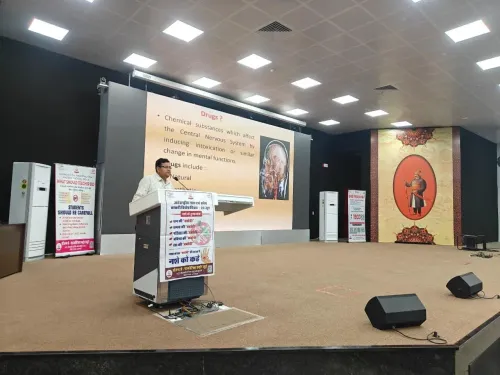
In a separate development on the same day, the NCB conducted an anti-drug awareness campaign at IIT Jodhpur, reaching approximately 900 students. The session, led by the Assistant Director, NCB, covered the dangers of substance abuse, warning signs, and steps to manage stress and depression — identified as key triggers for drug use among youth.
Officials also encouraged students to spread awareness about the NCB MANAS Helpline (Toll-Free: 1933), which provides information, support, and assistance related to drug abuse. The programme aimed at inspiring students to make informed choices and lead drug-free lives.
With the Canada-linked kingpin still absconding, the NCB's Punjab case remains open — and the next phase of the investigation could determine whether the broader syndicate faces the same legal reckoning as its local operatives.
Point of View
But it is an incomplete one. The Canada-based kingpin's continued absence from the dock illustrates a persistent gap in India's cross-border drug enforcement: local operatives are arrested and convicted while the architects of international syndicates remain beyond reach, often shielded by jurisdictional complexity and extradition bottlenecks. Punjab's drug problem is well-documented, but convictions of mid-level operatives — while necessary — do not disrupt the supply chain unless the command structure is simultaneously targeted. The NCB's stated commitment to pursuing absconding accused is welcome; the real test is whether it translates into an extradition request and diplomatic follow-through with Canada.
NationPress
21 Sept 2026
Frequently Asked Questions
Who was sentenced in the NCB Punjab drug trafficking case?
Akshinder Singh Sodhi and Amandeep Kumar were sentenced to 10 years' Rigorous Imprisonment each, along with a fine of ₹1 lakh each, by the Special Court in Jalandhar under the NDPS Act.
What drugs were seized in the original 2019 Punjab case?
The NCB Chandigarh Zonal Unit seized 115 g of cocaine , 13 g of ephedrine , 80 g of hashish oil , and intoxicant capsules in September 2019 . The seizure exposed an international trafficking syndicate with alleged links to Canada .
Is the Canada-based drug syndicate kingpin in custody?
No. According to the NCB, the alleged kingpin based in Canada remains absconding. The bureau has stated that its investigation against the absconding accused is continuing to neutralise all modules of the syndicate.
What is the NCB MANAS Helpline?
The NCB MANAS Helpline is a toll-free number ( 1933 ) operated by the Narcotics Control Bureau, offering information, support, and assistance related to drug abuse. The NCB promoted the helpline during an awareness campaign at IIT Jodhpur on 6 August .
Why is Punjab significant in India's drug trafficking landscape?
Punjab shares a border with Pakistan and has established smuggling corridors, making it a key transit and destination state for narcotics. The NCB has pursued multiple NDPS cases in the state, and this conviction is part of a broader enforcement push against international trafficking networks operating through Punjab.