NCTE probes BEd colleges in Madhya Pradesh for fake facilities, norm violations
Synopsis
A fourth college found operating from the same address as a college already under scrutiny — that detail alone tells you how deep the rot may run. NCTE's five-member team in Madhya Pradesh is not just auditing three BEd colleges; it is stress-testing whether India's teacher-training regulatory framework can actually catch and penalise ghost institutions before they produce under-qualified teachers.
Key Takeaways
NCTE dispatched a five-member fact-finding committee to Madhya Pradesh on 17 July 2025 to probe irregularities at three BEd colleges affiliated with Barkatullah University .
A fourth college was found operating from the same premises as one of the institutions under investigation, raising concerns about fake addresses.
The committee, constituted on 15 July 2025 , is led by former Vice-Chancellor H.C.S.
Rathore and includes officials from the UGC and the Ministry of Education .
Inspectors are using geo-tagged photos and videos and cross-checking Performance Appraisal Reports (PARs) against on-site conditions.
NCTE has warned of 'harsh punitive action', including possible de-recognition , for colleges found in violation.
The National Council for Teacher Education (NCTE) has deployed a five-member fact-finding committee to Madhya Pradesh to investigate serious irregularities at three BEd colleges affiliated with Barkatullah University, with de-recognition of the institutions among the possible outcomes. The probe, which began on 17 July 2025, follows media reports of questionable practices including suspected fake locations and missing infrastructure.
What Triggered the Probe
The committee was constituted on 15 July 2025 after media coverage flagged irregularities at the three affiliated colleges. During preliminary checks, NCTE authorities discovered a fourth college operating from the same premises as one of the institutions under scrutiny — a finding that has significantly widened the scope of the investigation and raised concerns about fabricated addresses and non-existent facilities.
Who Is on the Committee
The panel is led by H.C.S. Rathore, former Vice-Chancellor of the Central University of South Bihar. Its members include Ashima Mangla from the University Grants Commission (UGC), two directors from the Ministry of Education, a Madhya Pradesh government nominee, and NCTE's Regional Director Wing Commander Vijay Rana. The composition of the team — drawing from the UGC, the Ministry of Education, and the state government — signals that the Centre is treating this as more than a routine compliance check.
What the Inspection Covers
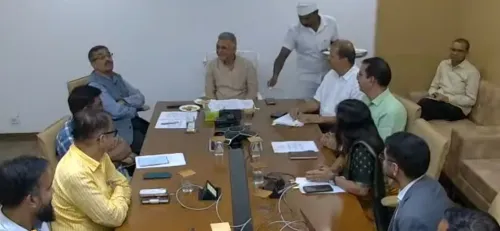
The team arrived in the state on 17 July 2025 and immediately commenced physical inspections. Investigators are documenting ground conditions using geo-tagged photographs and videos, and are scrutinising infrastructure, laboratories, land records, faculty strength, and adherence to NCTE norms. Crucially, on-site observations will be cross-checked against documents and Performance Appraisal Reports (PARs) submitted by the colleges to determine whether they satisfy legal requirements under the NCTE Act and its regulations.
NCTE's Warning to Defaulting Institutions
NCTE has made its position unambiguous. In a strongly worded statement, the regulatory body said the matter is being treated with 'utmost seriousness' and warned that violations will attract 'harsh punitive action' following a full review. 'This is viewed as a serious lapse,' the NCTE stated, adding that defaulting institutions 'will face strict consequences.' De-recognition — which would bar a college from enrolling students in teacher-training programmes — remains on the table.
Wider Implications for Teacher Education
This is not an isolated concern. Substandard BEd colleges have long been flagged by regulators and education researchers as a structural weakness in India's teacher pipeline. The outcome of this probe is being closely watched: if NCTE follows through with de-recognition and publishes its findings, it could set a precedent for similar inspections across other states. Notably, this comes amid broader regulatory tightening in higher education, with bodies like the UGC and the National Assessment and Accreditation Council (NAAC) also stepping up scrutiny of affiliated institutions. The panel's final report is expected to shape how BEd colleges are monitored going forward.
Point of View
But the real question is systemic: how many such colleges have been rubber-stamped through paper audits for years? If the panel recommends de-recognition and NCTE acts on it, this probe could be a genuine inflection point — but only if findings are made public and enforcement is not quietly diluted at the state level, as has happened in past regulatory actions against substandard teacher-training institutions.
NationPress
17 Oct 2026
Frequently Asked Questions
Why is NCTE probing BEd colleges in Madhya Pradesh?
NCTE launched the probe after media reports flagged serious irregularities at three BEd colleges affiliated with Barkatullah University, including suspected fake locations and missing facilities. During preliminary checks, a fourth college was found operating from the same address as one of the colleges already under scrutiny, prompting the formation of a high-powered fact-finding committee on 15 July 2025.
Who is leading the NCTE fact-finding committee?
The committee is led by H.C.S. Rathore, former Vice-Chancellor of the Central University of South Bihar. It also includes Ashima Mangla from the UGC, two directors from the Ministry of Education, a Madhya Pradesh government nominee, and NCTE Regional Director Wing Commander Vijay Rana.
What are the possible consequences for the colleges under investigation?
NCTE has warned of 'harsh punitive action' for institutions found in violation of its norms, with de-recognition — which would bar the colleges from enrolling students in teacher-training programmes — explicitly on the table. The regulator described the lapses as 'serious' in an official statement.
How is the inspection being conducted?
The team is conducting physical verifications using geo-tagged photographs and videos to document on-ground conditions. Inspectors are examining infrastructure, laboratories, land records, and faculty strength, and cross-referencing their findings with Performance Appraisal Reports (PARs) submitted by the colleges under the NCTE Act.
What broader impact could this probe have?
If NCTE follows through with de-recognition and publishes its findings, the action could set a precedent for similar inspections of BEd colleges across other states. Education regulators and policy observers are watching the outcome closely, as it may lead to stricter monitoring frameworks for teacher-training institutions nationwide.