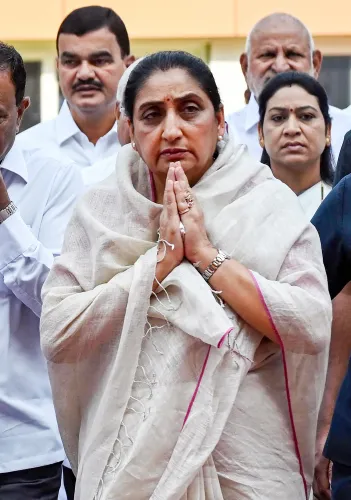
NCW chief calls for parole ban on rape, POCSO convicts after Pune case

Synopsis
The NCW has moved to recommend a blanket parole ban for rape and POCSO convicts, triggered by the Nasrapur case in Pune where a habitual offender on temporary release allegedly raped and murdered a four-year-old girl. If accepted by the Centre, the reforms would fundamentally alter India's prison release framework for sexual offenders.
Key Takeaways
NCW Chairperson Vijaya Rahatkar announced parole ban recommendations on 8 May .
Proposed ban covers rape , aggravated sexual assault , repeat offences, and serious POCSO Act violations.
Trigger: Nasrapur case in Pune , where a 65-year-old habitual offender allegedly raped and murdered a 4-year-old girl.
Additional safeguards proposed include mandatory risk assessment , electronic monitoring , and survivor family consultation.
NCW also recommends Special Fast Track Trial Courts and continuous police surveillance of repeat offenders.
The National Commission for Women (NCW) Chairperson Vijaya Rahatkar on Friday, 8 May announced that the Commission will recommend to the Central government a complete prohibition on parole for individuals convicted of rape, aggravated sexual assault, and other serious offences against women and children. The move follows the Nasrapur sexual assault and murder case in Pune district, which has intensified scrutiny of India's existing parole framework.
What the NCW Is Proposing
The Commission's proposed recommendations include amendments to prison and parole rules to classify rape, aggravated sexual assault, repeat sexual offences, and serious offences under the Protection of Children from Sexual Offences (POCSO) Act as categories categorically ineligible for parole or temporary release. According to an official statement, the NCW may also recommend mandatory risk assessment, strengthened police verification, electronic monitoring, and mandatory consultation with survivors or their families before any temporary release is considered.
The Nasrapur Case That Triggered the Push
The catalyst for these recommendations is the Nasrapur incident in Pune district, where a 65-year-old habitual offender allegedly lured a four-year-old girl — visiting her grandmother for summer holidays — into a cattle shed. According to reports, he raped and murdered the child, crushing her head with a stone and concealing her body under cow dung. Rahatkar said the case has raised serious concerns about public safety and the confidence of women and girls in society, adding that in such cases,
Point of View
While morally compelling in the wake of the Nasrapur horror, will face a structural test: parole rules in India are largely a state subject, meaning Centre-level amendments alone cannot enforce uniformity. The Nasrapur case also raises a prior question — whether the offender was on parole at the time, or whether existing surveillance mechanisms simply failed. Without that accountability being established, the risk is that new rules are layered atop broken enforcement, producing headlines rather than safety.
NationPress
22 Sept 2026
Frequently Asked Questions
What has the NCW recommended regarding parole for sexual offenders?
The NCW has recommended a complete ban on parole for individuals convicted of rape, aggravated sexual assault, repeat sexual offences, and serious POCSO Act violations. The proposal, if accepted by the Centre, would amend prison and parole rules to make these categories ineligible for temporary release.
What is the Nasrapur sexual assault case that prompted these recommendations?
The Nasrapur case involves a 65-year-old habitual offender in Pune district who allegedly raped and murdered a four-year-old girl visiting her grandmother during summer holidays. The accused reportedly concealed the child's body under cow dung in a cattle shed. The case triggered the NCW's review of the existing parole framework.
What additional safeguards has the NCW proposed beyond a parole ban?
Beyond the parole ban, the NCW has proposed mandatory risk assessments, strengthened police verification, electronic monitoring of offenders, and consultation with survivors or their families before any temporary release. It has also called for Special Fast Track Trial Courts and continuous surveillance of habitual and repeat offenders.
Who is affected by the NCW's proposed reforms?
The recommendations would affect individuals convicted under rape laws, aggravated sexual assault provisions, and the POCSO Act. State police authorities would also be required to maintain continuous surveillance on repeat offenders and submit periodic reports to senior officials.
When will these recommendations take effect?
The NCW's proposals are recommendations to the Central government and have not yet been formally adopted. Implementation would require legislative or regulatory amendments, the timeline for which has not been specified.