NDA seeks Karnataka Governor's intervention over SIR electoral rolls row
Synopsis
The NDA has escalated Karnataka's electoral rolls row to the Governor, alleging that the Congress state government pressured the Chief Electoral Office and triggered FIRs against Form-7 objectors in at least four districts. With the SIR process in its critical notice phase, this confrontation could test the boundaries of executive influence over election administration.
Key Takeaways
NDA delegation led by H.D.
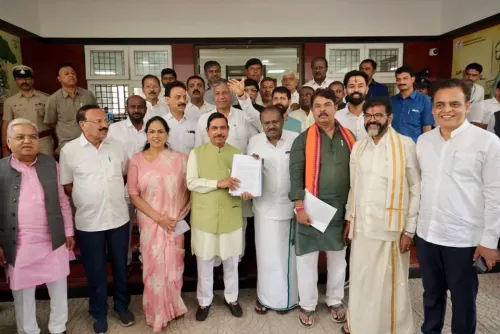
Ashoka , and Chalavadi Narayanaswamy met Governor Thaawarchand Gehlot on 6 October 2026 in Bengaluru .
The delegation alleged undue influence by the Congress -led Karnataka government over the Special Intensive Revision (SIR) of electoral rolls.
FIRs under the Bharatiya Nyaya Sanhita, 2023 have reportedly been registered in Belagavi , Bidar , Ballari , and Mysuru against Form-7 filers.
The NDA cited a 16 January 2026 Election Commission of India communication allowing bulk submission of Form-7 objections as legally valid.
Shivakumar and ministers were accused of staging a protest inside the Election Commission premises despite prohibitory orders.
The delegation has urged the Governor to direct the state government to halt all criminal cases linked to the SIR exercise.
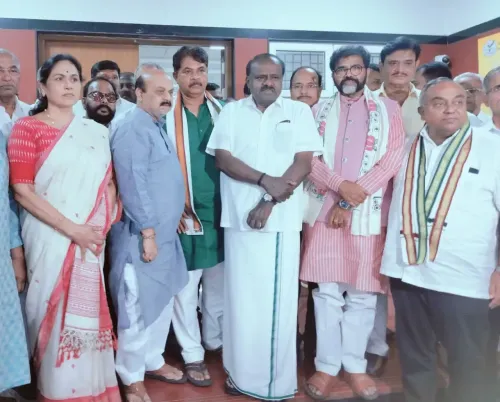
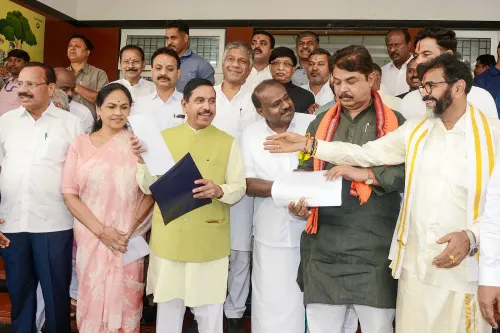
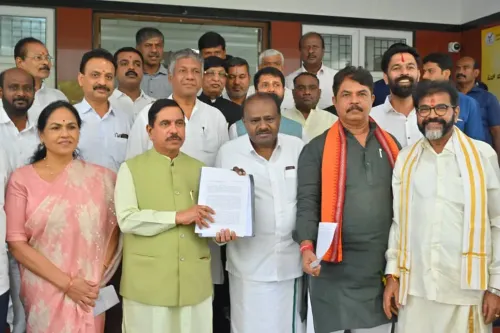
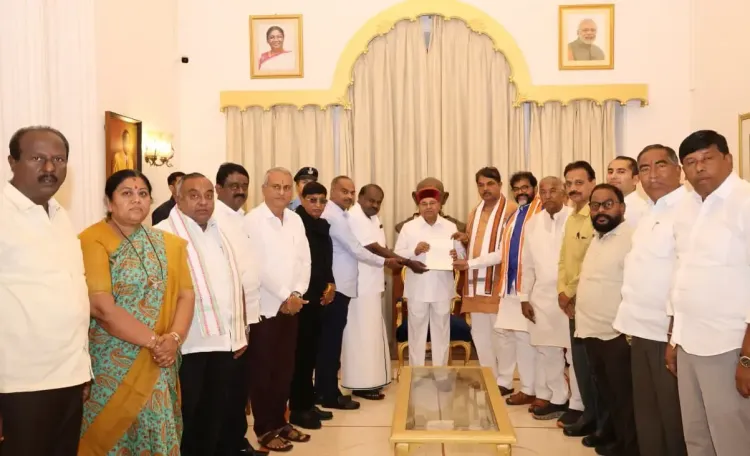
An NDA delegation led by Union Minister for Heavy Industries and Steel H.D. Kumaraswamy and Leaders of Opposition R. Ashoka and Chalavadi Narayanaswamy met Karnataka Governor Thaawarchand Gehlot at Lok Bhavan, Bengaluru, on Tuesday, 6 October 2026, urging his intervention in what the alliance termed undue governmental interference in the constitutional process of Special Intensive Revision (SIR) of electoral rolls. The delegation submitted a formal memorandum asking the Governor to protect individuals — including BJP workers — who had filed objections through Form-7 applications, and to halt what it described as false and unwarranted FIRs under the Bharatiya Nyaya Sanhita (BNS), 2023.
What the NDA delegation alleged
The BJP and Janata Dal (Secular) MLAs and MPs comprising the delegation alleged that the Chief Electoral Office had reportedly succumbed to pressure from the Congress-led Karnataka state government. They contended that the SIR exercise — currently at the stage of issuing notices and disposing of claims and objections — was being undermined by political interference aimed at restricting legitimate objections to electoral roll entries.
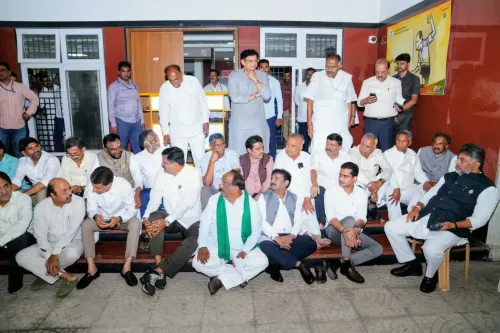
The delegation further alleged that Chief Minister D.K. Shivakumar and other ministers had held a protest within the premises of the Election Commission despite prohibitory orders in force, exerting what the memorandum termed undue influence on the functioning of the Chief Electoral Office.
The Form-7 controversy at the centre of the dispute
At the heart of the row is the use of Form-7 — a statutory instrument under Rule 13(2) of the Registration of Electors Rules, 1960 — through which any enrolled voter may raise an objection to the inclusion of a name in the electoral roll. The NDA memorandum cited an Election Commission of India communication dated 16 January 2026 and the Manual on Electoral Rolls, 2023 to argue that bulk submission of Form-7 applications is explicitly permitted and that there is no cap on the number of objections an individual or a Booth Level Agent may file.
'Hence, no illegality is committed with submitting Form-7,' the delegation stated in its memorandum.
According to the NDA, the SIR was necessary to prevent the inclusion of ineligible persons in electoral rolls on account of what it described as illegal influx, and to safeguard the integrity of voter lists ahead of future elections.
FIRs in multiple districts fuel apprehension
The delegation told the Governor that a circular proposing action under Section 31 of the Representation of the People Act had created widespread apprehension among citizens who had submitted Form-7 applications. It cited FIRs registered in multiple districts — Belagavi, Bidar, Ballari, and Mysuru — as evidence that police machinery was being used to intimidate those participating in the constitutionally sanctioned SIR process.
The memorandum argued that such actions undermined the constitutional promise of universal adult franchise and compromised the independence of election officials.
What the delegation has demanded
The NDA urged Governor Gehlot to issue directions to the Karnataka government on two counts: first, to protect the interests of individuals who had filed Form-7 objections; and second, to ensure that no false or unwarranted criminal cases under the BNS, 2023 were registered against them. The delegation maintained that the Governor's intervention was essential to uphold the purity of elections and the rule of law.
The Congress government in Karnataka is yet to formally respond to the memorandum. With the SIR process still in its notice phase, the dispute is likely to intensify as the deadline for disposal of claims and objections approaches.
Point of View
It is equally legitimate to scrutinise whether that right is being exercised in good faith or weaponised to target specific communities. Neither the ruling Congress nor the NDA has answered that question, and the Election Commission's silence is the most consequential factor of all.
NationPress
6 Oct 2026
Frequently Asked Questions
What is the Special Intensive Revision (SIR) of electoral rolls in Karnataka?
The Special Intensive Revision (SIR) is a periodic, structured exercise conducted by election authorities to update and clean up electoral rolls — adding eligible voters, correcting errors, and removing ineligible names. In Karnataka, the SIR is currently at the notice phase, during which claims and objections to the draft electoral roll are being filed and disposed of.
What is Form-7 and why is it at the centre of this controversy?
Form-7 is the statutory form under Rule 13(2) of the Registration of Electors Rules, 1960, used by enrolled voters to raise an objection to the inclusion of a name in the electoral roll. The controversy arises because bulk Form-7 submissions — allegedly by BJP and JD(S) workers — have led to FIRs in multiple Karnataka districts, with the Congress government arguing the filings were designed to disenfranchise voters, while the NDA insists bulk filing is explicitly permitted.
Why did the NDA approach the Karnataka Governor?
The NDA approached Governor Thaawarchand Gehlot because it alleges the Congress-led state government pressured the Chief Electoral Office to act against Form-7 filers, compromising the independence of the election machinery. The delegation sought the Governor's directions to halt FIRs against objectors and protect the integrity of the SIR process.
Which districts have seen FIRs related to the SIR process?
According to the NDA memorandum, FIRs under the Bharatiya Nyaya Sanhita, 2023 have been registered in at least four Karnataka districts: Belagavi, Bidar, Ballari, and Mysuru, in connection with bulk Form-7 objection filings during the SIR exercise.
What has the Congress government said in response?
As of the time of this report, the Congress-led Karnataka government had not issued a formal response to the NDA memorandum submitted to the Governor. Earlier, Chief Minister D.K. Shivakumar and ministers had reportedly staged a protest at the Election Commission premises — an act the NDA characterised as undue influence on election officials.