Karnataka CEO orders action on false voter roll claims amid SIR row
Synopsis
Karnataka's Chief Electoral Officer has ordered formal action against those who allegedly filed bulk false declarations to delete voter names during the SIR process — a direct response to Chief Minister D.K. Shivakumar's dramatic dharna at the very office. With 224 constituencies now under scrutiny, the row has turned a routine electoral revision exercise into a live political flashpoint.
Key Takeaways
Karnataka Chief Electoral Officer V.
Anbukumar on 1 October 2026 directed EROs to act against applicants making false declarations in electoral roll forms.
Bulk filings of Form 7 — used to delete or object to voter names — triggered the directive amid the ongoing Special Intensive Revision (SIR) .
Action will be governed by Section 31 of the Representation of the People Act, 1950 and Rule 20 of the Registration of Electors Rules, 1960 , and must be preceded by a formal inquiry.
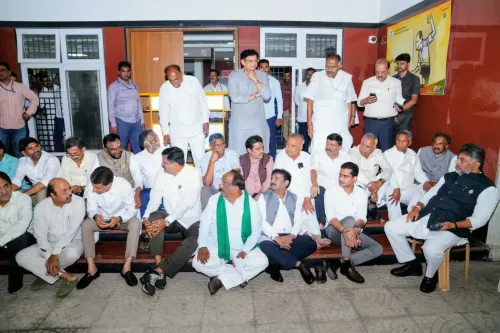
Shivakumar staged a dharna at the Chief Electoral Officer's office in Gandhinagar, Bengaluru , demanding a criminal case and a probe into the alleged conspiracy.
The directive covers all 224 Assembly constituencies in Karnataka and multiple administrative tiers including Greater Bengaluru Authority.
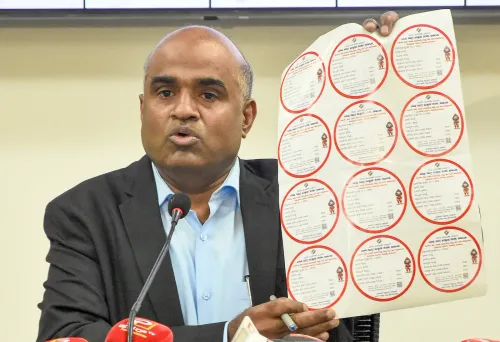
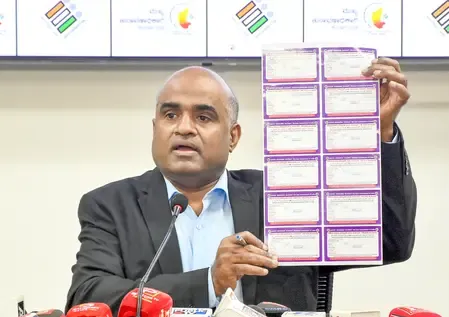
Karnataka Chief Electoral Officer V. Anbukumar on Thursday, 1 October 2026, directed Electoral Registration Officers (EROs) across the state to initiate action against applicants found to have knowingly filed false declarations while submitting claims and objections related to electoral rolls. The order follows a high-voltage protest by Chief Minister D.K. Shivakumar and Cabinet colleagues at the state's Chief Electoral Officer's office in Bengaluru, marking a sharp escalation in the controversy surrounding the ongoing Special Intensive Revision (SIR) process.
What the Directive Says
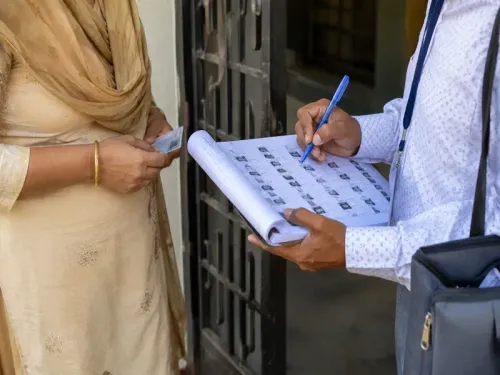
In a formal communication released on Thursday night, the Chief Electoral Officer cited instances of bulk filing of applications in Form 7 — the form used to seek deletion of names from electoral rolls or to raise objections to the inclusion of names — that had come to the notice of EROs. Several of these applications were reportedly not genuine, raising concerns about a coordinated attempt to remove eligible voters from the rolls.
The directive instructs EROs to take action in accordance with the law against applicants who have made knowingly false written declarations in forms including Form 6, Form 6A, Form 7, and Form 8. Crucially, the communication specifies that any such action must be preceded by a formal inquiry.
The order draws on Section 31 of the Representation of the People Act, 1950, and Rule 20 of the Registration of Electors Rules, 1960, as the legal basis for proceedings against violators.
Who Received the Communication
The letter was addressed to a wide cross-section of electoral and administrative authorities, including the District Election Officer and Chief Commissioner of the Greater Bengaluru Authority, district election officers and deputy commissioners of all districts, additional district election officers and commissioners of Bengaluru's North, South, and Central municipal corporations, the Additional District Election Officer and Deputy Commissioner of Bengaluru Urban, and Electoral Registration Officers of all 224 Assembly constituencies across Karnataka.
CM Shivakumar's Dharna and Key Demands
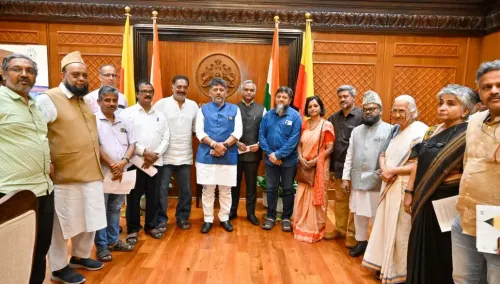
The directive came hours after Chief Minister D.K. Shivakumar, accompanied by several Cabinet ministers and legislators, staged a dharna on the steps of the Chief Electoral Officer's office in Gandhinagar, Bengaluru. The Chief Minister submitted a memorandum demanding the registration of a criminal case and a thorough probe into what he described as an alleged conspiracy to delete the names of eligible voters through bulk Form 7 applications.
Shivakumar declared that the agitation would continue until a criminal case was registered and a serious investigation ordered — a move that drew national attention to the SIR process and its potential political implications ahead of future electoral cycles.
Context: The SIR Controversy
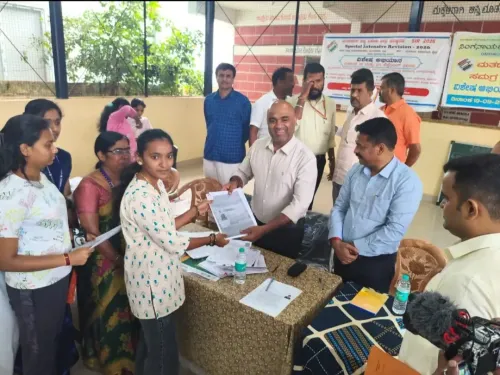
The Special Intensive Revision (SIR) is a periodic exercise conducted to update and clean up electoral rolls. This round has been clouded by allegations of bulk, co-ordinated filings seeking voter deletions. Critics argue that if unchecked, such filings could disenfranchise large sections of legitimate voters. Notably, this is not the first time India has seen disputes around electoral roll revisions, but the scale of the alleged bulk applications and the direct involvement of a sitting Chief Minister in a street protest marks this episode as unusually consequential for Karnataka's electoral landscape.
What Happens Next
EROs across all 224 Assembly constituencies are now required to scrutinise suspected false declarations and initiate action wherever violations are established through the prescribed inquiry process. The Chief Electoral Officer's intervention stops short of directly ordering a criminal case — something Chief Minister Shivakumar has explicitly demanded. Whether the matter escalates to a police or court referral will likely depend on the findings of individual ERO inquiries. All eyes will be on whether the authorities move swiftly enough to address the political pressure while maintaining procedural propriety.
Point of View
Creating an obvious vector for organised manipulation. Karnataka is not the first state to face this, but the scale of alleged bulk filings and a sitting Chief Minister's street protest signal that the Election Commission's current safeguards may not be sufficient deterrence. The real accountability test comes when ERO findings are made public — and whether the authorities act uniformly across all filers, regardless of political affiliation.
NationPress
2 Oct 2026
Frequently Asked Questions
What is the SIR row in Karnataka?
The SIR (Special Intensive Revision) row refers to a controversy over alleged bulk filing of Form 7 applications — used to delete or object to voter names — during Karnataka's ongoing electoral roll revision exercise. Concerns that many of these applications were not genuine prompted Chief Minister D.K. Shivakumar to stage a dharna and the Chief Electoral Officer to order action against false filers.
What has the Karnataka Chief Electoral Officer directed?
Chief Electoral Officer V. Anbukumar has directed Electoral Registration Officers across all 224 Assembly constituencies to initiate action against applicants who knowingly made false declarations in electoral forms including Forms 6, 6A, 7, and 8. Any action must be preceded by a formal inquiry under Section 31 of the Representation of the People Act, 1950, and Rule 20 of the Registration of Electors Rules, 1960.
What is Form 7 in the context of electoral rolls?
Form 7 is the prescribed form used to seek deletion of a name from the electoral roll or to raise an objection to the inclusion of a particular name. Allegations of bulk, co-ordinated Form 7 filings are at the centre of the current SIR controversy in Karnataka.
What did CM Shivakumar demand at his dharna?
Chief Minister D.K. Shivakumar, accompanied by Cabinet ministers and legislators, submitted a memorandum at the Chief Electoral Officer's office demanding the registration of a criminal case and a serious investigation into the alleged conspiracy to delete eligible voters' names. He said the protest would continue until these demands were met.
Who is affected by the bulk Form 7 filings?
Eligible voters whose names may have been targeted for deletion through allegedly false Form 7 applications are directly at risk of disenfranchisement. The directive to EROs across all 224 constituencies aims to identify and reverse such deletions where violations are established through inquiry.