Ghaziabad encounter row: NDA leaders defend UP Police, slam Abu Azmi
Synopsis
The killing of murder accused Asad in a late-night Ghaziabad police encounter has cracked open a familiar fault line: Abu Azmi's charge of religious selectivity in UP encounters versus the NDA's defence of impartial policing. With Yogi Adityanath's law-and-order record at stake and opposition voices growing louder, this is as much about the 2027 UP election narrative as it is about one encounter.
Key Takeaways
Asad , prime accused in the murder of 17-year-old Surya Pratap Chauhan , was shot dead in a late-night police encounter in Ghaziabad on Saturday .
Maharashtra SP chief Abu Azmi alleged the encounter was religiously motivated, calling it 'extremely wrong'.
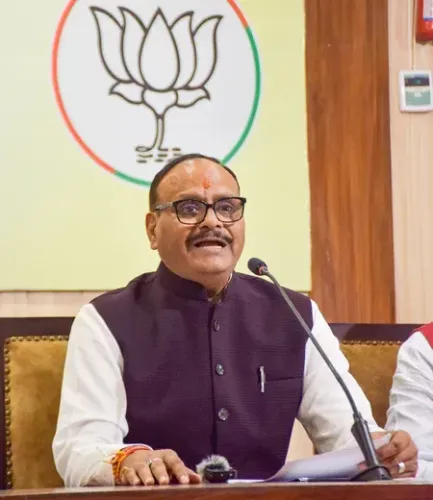
BJP Rajya Sabha member Dinesh Sharma defended the UP Police , arguing officers acted in lawful self-defence against an armed criminal.
JD(U) spokesperson Rajiv Ranjan Prasad questioned why opposition leaders appeared sympathetic to criminals and urged support for UP's law-and-order system.
JD(U) Chief Spokesperson Neeraj Kumar cited gangster Vikas Dubey's encounter to argue that criminality has no caste or religious identity.
The episode reignites a long-running debate over encounter deaths in Uttar Pradesh under Chief Minister Yogi Adityanath .
NDA leaders on Tuesday mounted a sharp defence of the Uttar Pradesh Police after Maharashtra Samajwadi Party chief and MLA Abu Azmi alleged that the Ghaziabad encounter — in which the prime accused in a murder case was shot dead — was driven by religious bias. The political clash has intensified debate over policing methods in Uttar Pradesh and the use of encounters as a law-enforcement tool.
The Encounter and Azmi's Remarks
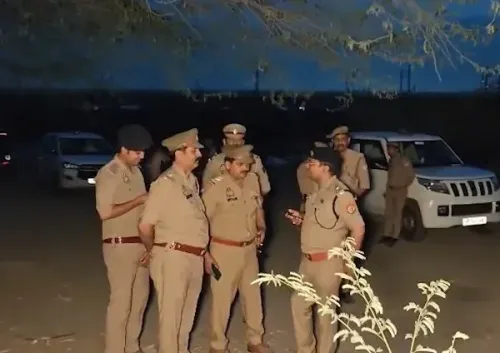
The controversy centres on the killing of Asad, the key accused in the murder of 17-year-old Surya Pratap Chauhan, who was allegedly stabbed to death on Bakrid in the Khoda area of Ghaziabad. Asad was shot dead in a late-night police encounter on Saturday, triggering an immediate political storm.
Abu Azmi publicly questioned the operation, describing it as 'extremely wrong' and alleging that encounters in Uttar Pradesh are selectively carried out on religious lines. 'Normally, there is no firing involved during an encounter, except in rare cases. But this has become a model. Criminals should be punished... however, in Uttar Pradesh, this is being done based on religion,' Azmi said. He further claimed: 'If someone kills a Muslim or a Yadav, then the encounters don't happen. However, if a Hindu is killed by a Muslim or Yadav, then they are caught in encounters as soon as possible.'
BJP's Rebuttal
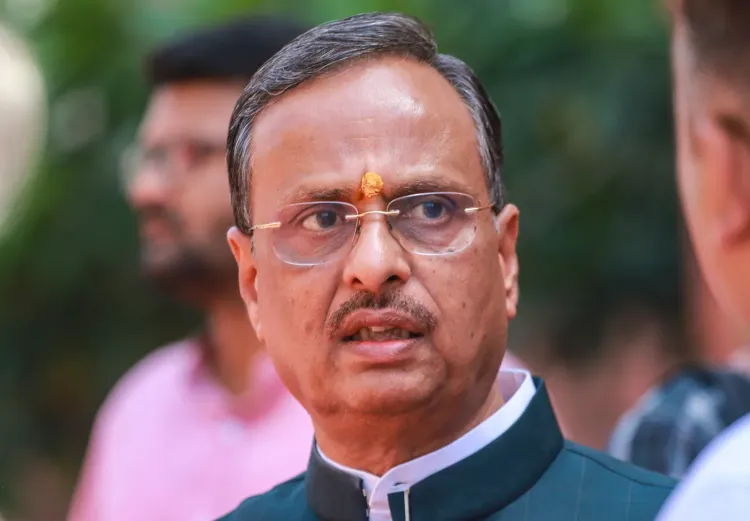
BJP Rajya Sabha member Dinesh Sharma rejected the allegations, arguing that the police had no choice when faced with an armed criminal. 'I would like to ask Azmi, if someone comes before you and starts firing, will you first ask whether he is a Hindu or a Muslim before taking action? Why have the police been given weapons? They have been given weapons for self-defence and for the protection of society,' Sharma said.
He maintained that the UP Police operates without discrimination and that its actions have bolstered public confidence. 'I believe the Uttar Pradesh Police acts impartially, and there is fear among criminals. At the same time, a positive environment has been created across Uttar Pradesh for ordinary citizens,' he added.
JD(U) Voices Back the Government
JD(U) National Spokesperson Rajiv Ranjan Prasad turned the criticism back on the opposition, questioning why leaders such as Tejashwi Yadav and Abu Azmi appeared sympathetic to criminals. 'Abu Azmi should first study the actions taken against criminals in Uttar Pradesh before making such statements,' Prasad said, urging the opposition to support the law-and-order framework built under Chief Minister Yogi Adityanath rather than view crime through the prism of caste and religion.
JD(U) Chief Spokesperson Neeraj Kumar also dismissed the religion-encounter link, invoking the case of gangster Vikas Dubey — himself killed in a police encounter — to argue that criminality carries no caste or religious identity. 'How can encounters be carried out based on religion? What was the blood group of Vikas Dubey? Such statements only benefit political opponents. A criminal is a criminal,' Kumar said.
The Broader Political Context
This is not the first time encounters under the Yogi Adityanath government have drawn political fire. Critics — primarily from the Samajwadi Party (SP) and allied formations — have repeatedly alleged that police encounters in Uttar Pradesh disproportionately target minorities and backward-caste individuals. The government and its NDA allies have consistently denied this, pointing to a broad reduction in reported crime as evidence of impartial enforcement. Notably, the National Human Rights Commission (NHRC) has in the past taken cognisance of encounter deaths in the state, underscoring that the debate has institutional as well as political dimensions.
With assembly elections on the horizon in several states and UP remaining a key political battleground, the Ghaziabad encounter is likely to remain a flashpoint. The question of due process versus operational necessity in police encounters is expected to resurface in both legislative and judicial forums.
Point of View
But they tap into a genuine institutional concern: the absence of a robust, independent review mechanism for encounter deaths in Uttar Pradesh. The NDA's rebuttal — that a criminal is a criminal regardless of religion — is rhetorically effective but sidesteps the structural question of accountability. Invoking Vikas Dubey, a dominant-caste gangster also killed in an encounter, is a standard deflection that does not address the pattern critics allege. What is missing from both sides of this debate is data — a transparent, disaggregated record of who has been killed in UP encounters since 2017, which would either validate or refute Azmi's claim and settle the argument on evidence rather than assertion.
NationPress
16 Oct 2026
Frequently Asked Questions
What was the Ghaziabad encounter that triggered this political row?
Asad, the prime accused in the murder of 17-year-old Surya Pratap Chauhan — allegedly stabbed to death on Bakrid in the Khoda area of Ghaziabad — was shot dead in a late-night police encounter on Saturday. The killing prompted Maharashtra SP chief Abu Azmi to publicly question the operation and allege religious bias in UP Police encounters.
What did Abu Azmi allege about UP Police encounters?
Azmi alleged that encounters in Uttar Pradesh are selectively conducted on religious lines, claiming that when a Hindu is killed by a Muslim or Yadav, police act swiftly, but that the reverse does not hold. He argued that the Constitution requires arrest, trial, and due process rather than extrajudicial killings.
How did BJP and JD(U) respond to Azmi's allegations?
BJP's Dinesh Sharma argued that police have the right and duty to use weapons in self-defence against armed criminals, regardless of religion. JD(U)'s Rajiv Ranjan Prasad and Neeraj Kumar both rejected the religion-encounter link, with Kumar citing the case of gangster Vikas Dubey to argue that criminality has no caste or religious identity.
Who was Surya Pratap Chauhan and why does his case matter?
Surya Pratap Chauhan was a 17-year-old who was allegedly stabbed to death on Bakrid in the Khoda area of Ghaziabad. His murder case became the backdrop for the encounter of prime accused Asad, and has since become a focal point in the broader political debate over law enforcement in Uttar Pradesh.
Is this the first time UP Police encounters have faced political scrutiny?
No. Encounters under Chief Minister Yogi Adityanath's government have repeatedly drawn criticism from opposition parties, who allege disproportionate targeting of minorities and backward-caste individuals. The National Human Rights Commission has previously taken cognisance of encounter deaths in the state, indicating the issue has institutional dimensions beyond political rhetoric.