Ghaziabad encounter row: SP's Abu Azmi alleges religious bias, cleric echoes charge
Synopsis
SP's Abu Azmi has called the Ghaziabad police encounter of Asad — accused in the Bakrid stabbing of a 17-year-old — ‘extremely wrong’ and religiously motivated. With a cleric amplifying the charge and demanding a judicial inquiry, the episode has reignited a persistent debate over the pattern of extra-judicial encounters in Uttar Pradesh.
Key Takeaways
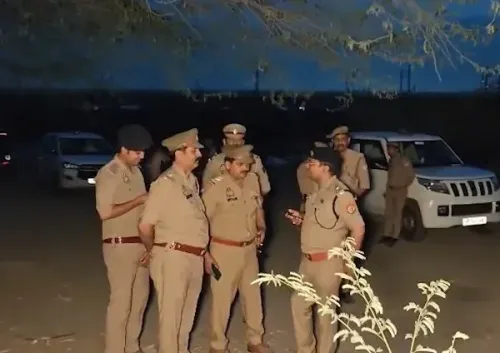
Asad , prime accused in the killing of 17-year-old Surya Pratap Chauhan in Khoda, Ghaziabad , was shot dead in a late-night police encounter on Saturday .
SP MLA Abu Azmi condemned the encounter as ‘extremely wrong’ and alleged encounters in Uttar Pradesh are carried out selectively based on religion.
Azmi claimed that when a Muslim or Yadav is the victim, encounters do not follow, but the reverse scenario leads to swift action.
Maulana Sajid Rashidi backed Azmi’s charge, calling the encounter ‘biased’ and arguing that extra-judicial killings undermine the judiciary.
Rashidi also questioned the timing of action against allegedly illegal construction linked to the accused, demanding a comprehensive government inquiry.
The Uttar Pradesh government is yet to formally respond to the allegations of religious bias.
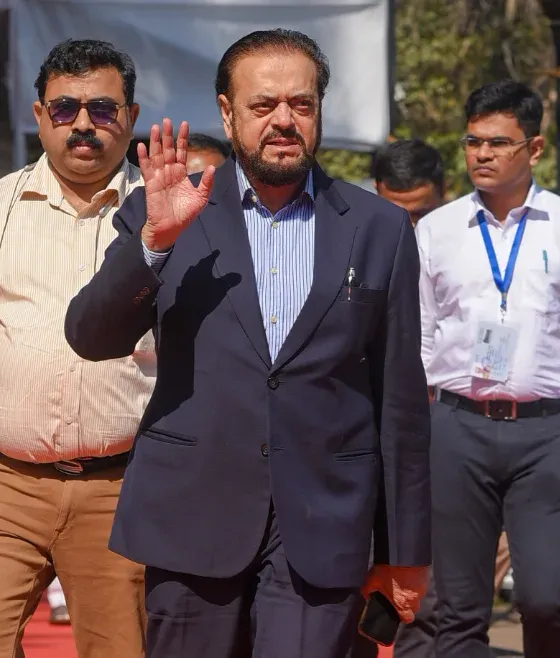
Samajwadi Party leader and Maharashtra MLA Abu Azmi has publicly condemned the police encounter in which Asad, the prime accused in the Khoda murder case in Ghaziabad, Uttar Pradesh, was shot dead, alleging that such operations are selectively carried out on the basis of religion. The remarks have ignited a fresh political controversy over the use of extra-judicial force by Uttar Pradesh Police.
Background: The Encounter and the Case
Asad was the key accused in the killing of 17-year-old Surya Pratap Chauhan, who was allegedly stabbed to death on Bakrid in the Khoda area of Ghaziabad. Asad was shot dead during a late-night police encounter on Saturday, an incident that has since drawn sharp reactions from opposition politicians and religious figures alike.
What Abu Azmi Said
Abu Azmi, who serves as the Maharashtra Samajwadi Party chief, described the encounter as “extremely wrong” and argued that the constitutional framework demands due process before punishment. “Criminals should be punished. If someone is a serious offender, give them the death penalty, but there is a Constitution for this. Arrest the criminal, prove the crime in court, and then the punishment is given. However, in Uttar Pradesh, this is being done by looking at religion,” Azmi said.
Azmi further alleged that encounters are not applied uniformly. “If someone kills a Muslim or a Yadav, then the encounters don’t happen. However, if a Hindu is killed by a Muslim or Yadav, then they are caught in encounters as soon as possible. Criminals are criminals — be it Muslim, Hindu or Christian. Every criminal should be punished,” he added.
Cleric Backs the Allegation
Maulana Sajid Rashidi also weighed in, supporting Azmi’s position and calling for strict adherence to due legal process. “Not only Abu Azmi, even we have been asserting this very point since the day the encounter took place: that this was a biased encounter. The fundamental question is this: in a democratic nation, there exists a specific democratic system,” Rashidi said.
Rashidi argued that law enforcement agencies should not assume the role of the judiciary. “If the police, or any government, possesses the direct authority to carry out an encounter against anyone at will, then the billions upon billions of rupees currently being expended on the judiciary should be immediately discontinued, as there would no longer be any rationale for its existence,” he said.
Questions Over Property Action
Rashidi also raised questions about the timing of a reported action against allegedly illegal construction linked to the accused. “Regarding the claim that a portion of this house was constructed illegally — was this fact unknown previously? If it was known, why was a notice not issued earlier? Why did this information surface only after the fact?” he said, calling for a thorough government inquiry.
Broader Context
This is not the first time Uttar Pradesh Police encounters have drawn political fire. Critics, particularly from opposition parties, have repeatedly questioned the pattern of such operations under the current state administration. The Samajwadi Party has historically contested the state’s law-enforcement approach, and this incident appears set to intensify that debate ahead of future electoral cycles. The government is yet to formally respond to the specific allegations of religious bias raised by Azmi and Rashidi.
Point of View
But the underlying question it raises — whether encounter patterns in Uttar Pradesh correlate with the religion of the accused — has never been answered with public data. The state government has consistently defended such operations as legitimate self-defence by police, while critics argue the sheer frequency of encounters strains that justification. What is missing from this debate is independent, disaggregated data on encounter victims by religion, caste, and nature of crime — without which both the allegation and the denial remain unverifiable. Until that data is published and audited, the controversy will recur with every high-profile encounter.
NationPress
16 Oct 2026
Frequently Asked Questions
Who was Asad and why was he encountered by UP Police?
Asad was the prime accused in the murder of 17-year-old Surya Pratap Chauhan , who was allegedly stabbed to death on Bakrid in the Khoda area of Ghaziabad, Uttar Pradesh. He was shot dead during a late-night police encounter on Saturday.
What did Abu Azmi say about the Ghaziabad encounter?
Samajwadi Party MLA Abu Azmi called the encounter ‘extremely wrong’ and alleged that Uttar Pradesh Police carry out such operations selectively based on the religion of the accused, rather than applying the law uniformly to all criminals.
Why did Maulana Sajid Rashidi call the encounter biased?
Maulana Sajid Rashidi argued that in a democracy, an accused must be arrested, charged, and tried before being punished, and that police should not act as judge and executioner. He described the encounter as biased and called for a thorough government inquiry.
Has the Uttar Pradesh government responded to the bias allegations?
As of the time of reporting, the Uttar Pradesh government had not formally responded to the specific allegations of religious bias raised by Abu Azmi and Maulana Sajid Rashidi regarding the Ghaziabad encounter.
What broader issue does this encounter controversy highlight?
The episode reignites a long-running debate over the pattern of police encounters in Uttar Pradesh, with opposition parties and civil society critics repeatedly questioning whether such operations are applied uniformly across communities or influenced by the identities of those involved.