UP Minister Sanjay Nishad questions police encounters, urges surrender chance
Synopsis
A sitting minister in Yogi Adityanath's own cabinet has broken ranks — Nishad Party chief Sanjay Kumar Nishad publicly questioned Uttar Pradesh's encounter culture, arguing that police are bypassing courts and denying accused persons the right to surrender. His remarks follow two recent encounter deaths in Ghazipur and Ghaziabad.
Key Takeaways
UP Minister Sanjay Kumar Nishad opposed police encounter killings on 5 June , calling them an overreach into judicial territory.
The remarks followed the encounter death of the key accused in the Ghazipur murder of Vineet Rai , son of hotelier Ajay Rai .
A second encounter death occurred in Ghaziabad , involving the accused in the stabbing of 17-year-old Surya Pratap Chauhan .
Nishad urged that accused persons be given the opportunity to surrender and face trial rather than be killed in encounters.
The minister called on Chief Minister Yogi Adityanath to order a thorough investigation into the Ghazipur murder.
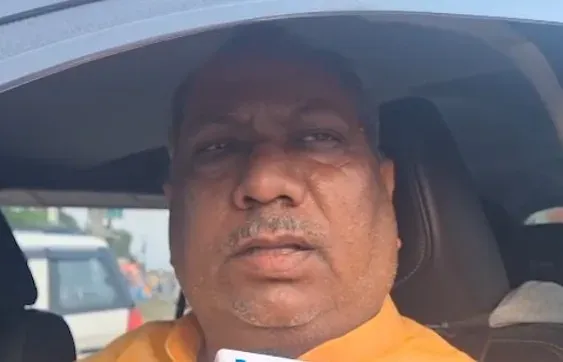
Uttar Pradesh Minister and Nishad Party chief Sanjay Kumar Nishad on Friday, 5 June publicly opposed the killing of accused persons in police encounters across the state, asserting that law enforcement must not usurp the role of the judiciary. His remarks came in the backdrop of at least two recent encounter deaths linked to high-profile criminal cases in Uttar Pradesh.
The Ghazipur Murder That Triggered the Debate
Vineet Rai, son of hotelier Ajay Rai, was shot dead by four masked men in the Kotwali police station area of Ghazipur district. The victim's father had previously alleged that police inaction against an extortion racket enabled the killing, further claiming that members of the force were in 'nexus' with the gang. He had demanded encounter and bulldozer action against the accused.
The key accused in that murder case was subsequently killed in a police encounter on Wednesday night, according to reports. A separate encounter death had also occurred in the Khoda police station area of Ghaziabad, where the main accused in the fatal stabbing of 17-year-old Surya Pratap Chauhan was shot dead by police.
What Nishad Said
Reacting to the Ghazipur killing, Nishad said: 'The truth will be known after the investigation. I am with the victim's family in whatever their demand is. I have always stood with society and will continue to do so.' He urged Chief Minister Yogi Adityanath to order a thorough probe and ensure punishment for the perpetrators.
On the broader question of encounter deaths, the minister was unambiguous. 'Criminals do not have any caste, but it is wrong if the police start carrying out the work of the courts,' he said. He added that accused persons must be given the opportunity to surrender before any action is taken. 'If someone is accused of a crime, the person should be given an opportunity to surrender. They can surrender in court,' Nishad said.
Due Process at the Centre of His Argument
Nishad argued that the constitutionally mandated sequence — surrender, remand, interrogation, trial — must be followed. 'Let the accused surrender, then take him into remand. Interrogation can be done after that, according to the law,' he said. He questioned how an accused could surrender if the police effectively blocked that path: 'But if the police stand in front of the court, then how will the accused surrender?'
The minister was careful to clarify that he was not defending criminals. 'Criminals should definitely be punished, but after the proceedings in the court,' he said, stressing that every citizen retains the right to speak, seek justice, and be treated with respect.
Context: UP's Encounter Record Under Scrutiny
Uttar Pradesh has recorded a significant number of police encounters since 2017, a trend that has drawn both political support and civil liberties criticism. Nishad's remarks are notable because he is a minister in the Yogi Adityanath-led government, making his public dissent on encounter policy an unusual break from the ruling alliance's established posture on law enforcement. This is the first time a sitting UP cabinet minister from the ruling coalition has so explicitly questioned the encounter practice in recent memory.
As investigations into both the Ghazipur and Ghaziabad cases continue, Nishad's comments are likely to intensify the debate around police accountability and due process in the state.
Point of View
Suggesting that the pressure to act fast is overriding procedural safeguards. UP's encounter record has long attracted scrutiny from the National Human Rights Commission, and a minister's voice adds institutional weight to those concerns. Whether this translates into any policy recalibration, or remains an isolated statement, will be the real test.
NationPress
21 Oct 2026
Frequently Asked Questions
Why did UP Minister Sanjay Nishad oppose police encounters?
Sanjay Kumar Nishad argued that it is constitutionally wrong for police to carry out the work of courts by killing accused persons in encounters. He said accused individuals must be given the opportunity to surrender, face remand, and be tried under the law.
What is the Ghazipur murder case that prompted his remarks?
Vineet Rai, son of hotelier Ajay Rai, was shot dead by four masked men in the Kotwali police station area of Ghazipur district. The victim's father alleged police inaction and claimed the force was in nexus with the extortion gang responsible. The key accused was subsequently killed in a police encounter.
Which other encounter case did Nishad reference?
The main accused in the stabbing death of 17-year-old Surya Pratap Chauhan in the Khoda police station area of Ghaziabad was also killed in a police encounter, adding to the controversy around UP's encounter record.
What did Nishad demand from Chief Minister Yogi Adityanath?
Nishad urged the Chief Minister to conduct a thorough investigation into the Ghazipur murder and ensure that the culprits are punished through proper legal proceedings.
Is Nishad's position unusual within the UP ruling alliance?
Yes. As a minister in the Yogi Adityanath-led government and chief of the Nishad Party — a BJP coalition partner — his public opposition to encounter deaths represents a notable departure from the ruling alliance's established law-and-order stance.