NDA holds 'Save Democracy' march in Darbhanga; Bhupender Yadav defends electoral roll revision
Synopsis
The NDA took its electoral roll revision battle to Darbhanga, with Bhupender Yadav branding the Special Intensive Revision as the ninth such exercise since 1950 and accusing opponents of shielding infiltrators. The rally is a clear signal that the alliance intends to frame the voter-roll debate as a democracy issue — not an administrative one — ahead of Bihar's next electoral cycle.
Key Takeaways
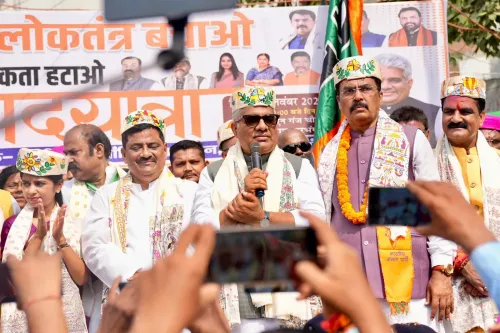
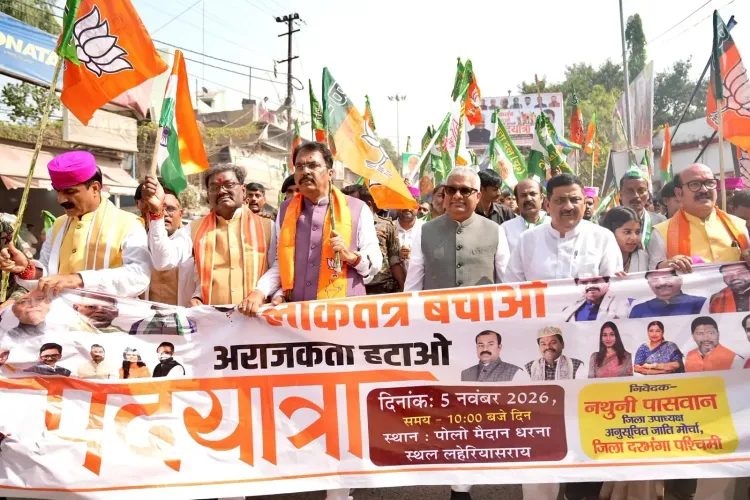
The NDA held a 'Loktantra Bachao, Arajakta Hatao' march in Darbhanga, Bihar on 5 November 2026 .
Union Minister Bhupender Yadav called the Special Intensive Revision (SIR) of electoral rolls the ninth such exercise since 1950 .
Yadav said the revision targets deceased voters, relocated residents, and duplicate entries , and that no eligible voter can be arbitrarily removed.
He claimed the present government expanded voter registration document options from 4 to 11 compared to the previous Congress-led dispensation.
He alleged only 2 objections were raised before the Supreme Court despite 1.7 lakh BLAs being deployed by parties during the last election.
Senior NDA leaders including Sanjay Kumar Jha , Sanjay Saraogi , and Darbhanga MP Gopalji Thakur attended the rally.
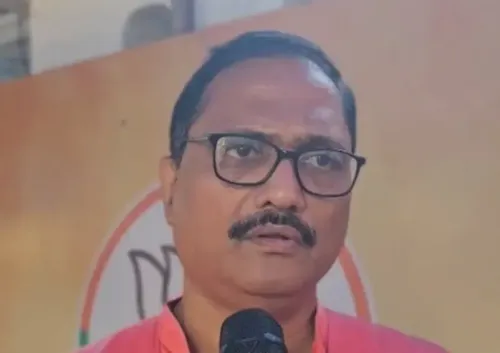
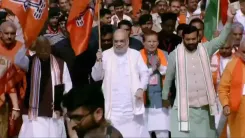
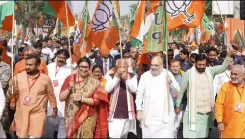
The National Democratic Alliance (NDA) on Thursday, 5 November 2026, organised a large 'Loktantra Bachao, Arajakta Hatao' (Save Democracy, End Anarchy) march in Darbhanga district, Bihar, with Union Environment, Forest and Climate Change Minister Bhupender Yadav making a forceful public defence of the ongoing Special Intensive Revision (SIR) of electoral rolls. The rally, held at the Polo Ground protest site in Laheriasarai, drew large crowds of NDA workers and leaders from across the state.
Yadav Defends the Electoral Roll Revision
Addressing the gathering, Yadav argued that the SIR exercise was neither new nor without precedent. He claimed such revisions had been conducted eight times since 1950, making the current exercise the ninth in independent India's history. He described the process as being in the national interest and essential to preserving the credibility of the country's democratic framework.
Yadav outlined the stated objectives of the revision: removing names of deceased persons, deleting entries of individuals who had relocated, and eliminating duplicate registrations where the same voter appeared on rolls at multiple locations. He insisted that no eligible voter's name could be arbitrarily struck off, noting that political parties deployed their own Booth Level Agents (BLAs) to independently monitor the process.
He further claimed that during the previous election, parties had fielded approximately 1.7 lakh BLAs, yet only two objections were raised before the Supreme Court — which, according to him, subsequently examined the matter and upheld the validity of the exercise.
Expansion of Voter Registration Documents
Taking a comparative stance, Yadav alleged that the previous Congress-led government had permitted only four documentary options for voter registration, whereas the present government had expanded that list to 11 documents. He said voters could submit any one of the prescribed documents to establish their eligibility and secure inclusion in the electoral rolls.
Sharp Attack on the Opposition
Yadav alleged that those opposing the SIR were, in effect, supporting the inclusion of infiltrators in electoral rolls and undermining the interests of genuine Indian voters — a charge the Opposition has not publicly addressed in the context of this march. He claimed the criticism of the revision was motivated primarily by electoral defeats in Bihar and West Bengal, and pointed out that similar protests had not emerged in states such as Kerala and Tamil Nadu.
Invoking the Emergency period, he said NDA leaders had historically fought to protect democratic institutions and remained committed to that cause. He urged citizens to remain vigilant against any threat to democratic processes.
Mithila's Symbolic Significance
Yadav also drew on the region's cultural heritage, describing Mithila as the land of Mother Janaki (Sita) and crediting Bihar with a historic contribution to India's democratic development. He called for a strong pro-democracy message to emerge from what he termed this 'historic land.'
Key Leaders Present
The march was attended by several senior NDA figures, including Janata Dal (United) National Working President Sanjay Kumar Jha, Bihar Bharatiya Janata Party (BJP) President Sanjay Saraogi, and Darbhanga MP Gopalji Thakur. Workers from NDA constituencies across Bihar participated, raising slogans under the rally's central message.
The march signals a broader NDA counter-offensive as the electoral roll revision process continues to draw fire from Opposition parties ahead of what is expected to be a politically charged electoral season in Bihar.
Point of View
Alleging infiltrator-protection, and citing the Supreme Court's inaction, Yadav is building a political narrative that makes opposing the SIR sound anti-democratic. What remains unaddressed is the core Opposition charge: that the revision process, however historically routine, risks disenfranchising legitimate voters, particularly migrant labourers. The asymmetric geography of protests — loud in Bihar and West Bengal, absent in Tamil Nadu and Kerala — may say more about where electoral stakes are highest than about the process itself.
NationPress
5 Nov 2026
Frequently Asked Questions
What is the NDA's 'Loktantra Bachao, Arajakta Hatao' march in Darbhanga?
It is a political rally organised by the National Democratic Alliance on 5 November 2026 in Darbhanga, Bihar, to publicly defend the ongoing Special Intensive Revision of electoral rolls and counter Opposition criticism of the process. The march was held at the Polo Ground in Laheriasarai and drew NDA workers from across the state.
What is the Special Intensive Revision (SIR) of electoral rolls?
The SIR is an exercise to clean up voter registration lists by removing names of deceased persons, deleting entries of those who have relocated, and eliminating duplicate registrations. Bhupender Yadav described it as the ninth such exercise conducted in India since 1950.
Why is the Opposition opposing the electoral roll revision?
Opposition parties have criticised the SIR, with concerns reportedly centred on the risk of eligible voters — particularly migrants — being dropped from rolls. Bhupender Yadav, however, alleged that the opposition was driven by electoral defeats in Bihar and West Bengal rather than genuine democratic concerns.
Who attended the NDA rally in Darbhanga?
Key attendees included Union Minister Bhupender Yadav, JD(U) National Working President Sanjay Kumar Jha, Bihar BJP President Sanjay Saraogi, and Darbhanga MP Gopalji Thakur, along with a large number of NDA workers from various constituencies.
How has the government expanded voter registration document options?
According to Bhupender Yadav, the present government has expanded the list of acceptable voter registration documents from four (under the previous Congress-led government) to 11, allowing voters greater flexibility in establishing their eligibility for inclusion in electoral rolls.