Northeast youth central to Act East Policy and Viksit Bharat 2047: Arunachal Governor
Synopsis
Arunachal Pradesh Governor Lt Gen K. T. Parnaik used a Guwahati seminar to reframe the Northeast's youth not as a peripheral demographic but as the frontline of India's Act East ambitions — arguing that the region's geographic, cultural, and ecological assets make it uniquely positioned to drive the country's 2047 development vision.
Key Takeaways
Arunachal Pradesh Governor Lt Gen K.
Parnaik (Retd) addressed the national seminar in Guwahati on 19 July , calling Northeast youth pivotal to India's Act East Policy .
He described the Northeast as India's strategic gateway to Southeast Asia , offering youth opportunities to build economic, cultural, and strategic ties with neighbouring countries.
The Governor cited government schemes including Digital India , Startup India , Skill India , and the National Education Policy as tools for youth empowerment.
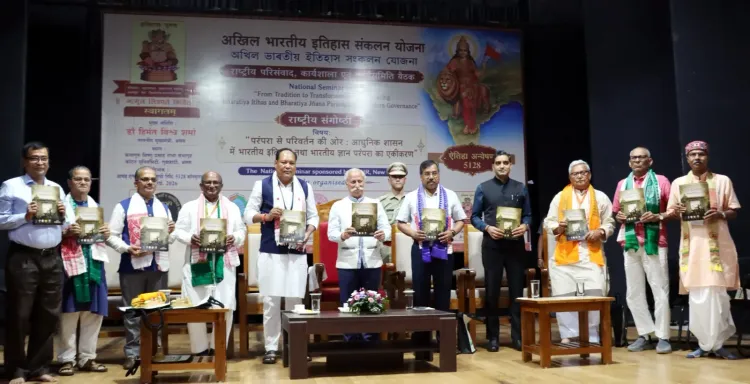
The three-day seminar, which began on 17 July , was organised by the Bharatiya Itihas Sankalan Samiti, Assam and Akhil Bharatiya Itihas Sankalan Yojana, New Delhi .
Senior academics from North Eastern Hill University , North Lakhimpur University , and Cotton University also addressed the gathering.
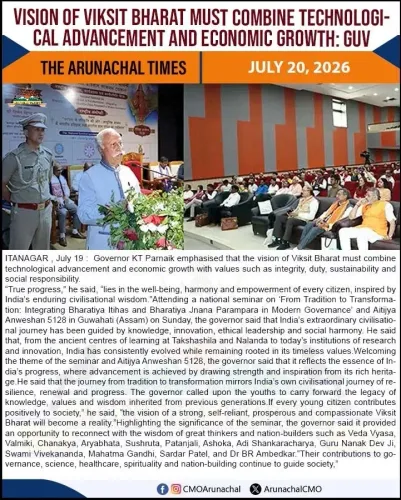
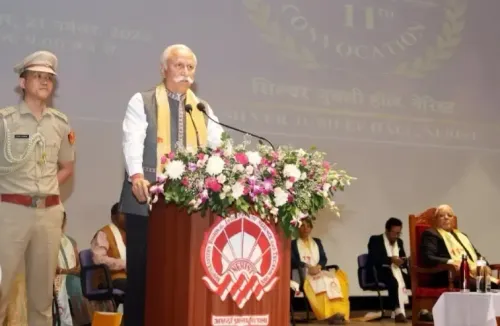
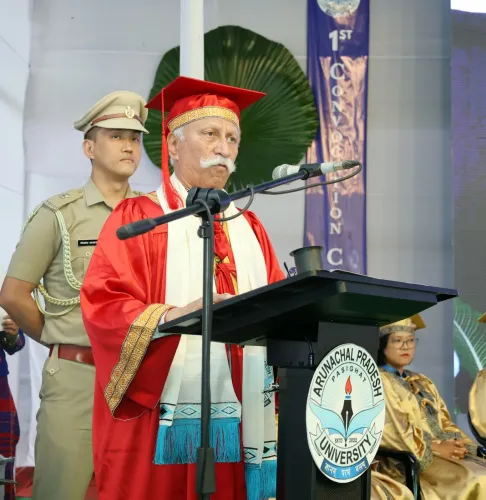
Arunachal Pradesh Governor Lt Gen K. T. Parnaik (Retd) on Sunday, 19 July called the youth of India's Northeastern region pivotal to realising the country's Act East Policy and the Viksit Bharat 2047 vision, urging them to fuse innovation with the region's deep cultural and ecological heritage. He was speaking at a three-day national seminar in Guwahati that brought together historians, academics, and policymakers from across the country.
Key Remarks at the Seminar
Addressing the national seminar on 'From Tradition to Transformation: Integrating Bharatiya Itihas and Bharatiya Jnana Parampara in Modern Governance' and the Aitijya Anweshan 5128 conclave, Governor Parnaik described the Northeast as India's strategic gateway to Southeast Asia. He stressed that this geographic positioning offers young people from the region unmatched opportunities to strengthen economic, cultural, and strategic ties with neighbouring nations under the Act East framework.
He urged youth to actively contribute to border area development, national security awareness, renewable energy, green technologies, and digital entrepreneurship — while simultaneously safeguarding indigenous knowledge systems and traditional ecological wisdom.
Civilisational Heritage as a Development Compass
Governor Parnaik drew on India's civilisational arc, citing ancient centres of learning at Takshashila and Nalanda as proof of a knowledge tradition that has endured across millennia. He invoked the contributions of figures including Veda Vyasa, Chanakya, Aryabhata, Sushruta, Adi Shankaracharya, Swami Vivekananda, Mahatma Gandhi, Sardar Vallabhbhai Patel, and B. R. Ambedkar, arguing that their ideas on governance, science, healthcare, and spirituality remain living guides for nation-building.
He described India's journey from tradition to transformation as 'a story of resilience, renewal and progress,' and called on the younger generation to carry forward that inherited legacy of values and wisdom.
Government Schemes and Youth Empowerment
The Governor highlighted a suite of Central government initiatives — Digital India, Startup India, Skill India, Make in India, Atmanirbhar Bharat, and the National Education Policy — as instruments that have already empowered youth to innovate and become job creators. He said that if every young citizen contributes positively, the vision of a strong, self-reliant, and compassionate Viksit Bharat will move from aspiration to reality.
He also encouraged youth to pursue excellence in education, embrace entrepreneurship, promote sustainable tourism, protect the environment, and uphold discipline and ethical leadership.
Seminar Background and Participants
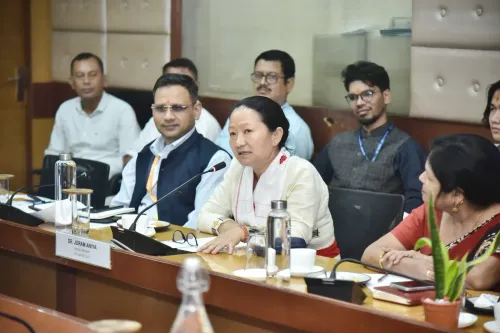
The seminar, which opened on 17 July, was jointly organised by the Bharatiya Itihas Sankalan Samiti, Assam, and the Akhil Bharatiya Itihas Sankalan Yojana, New Delhi. Among those who addressed the gathering were Assam Minister for Indigenous Affairs, Tribal Faith and Culture Biswajit Daimary; Akhil Bharatiya Itihas Sankalan Yojana National President Prof. Ishwar Sharan Vishwakarma; North Eastern Hill University Vice-Chancellor Prof. Prabha Shankar Shukla; North Lakhimpur University Vice-Chancellor Mukul Chandra Bora; Cotton University Vice-Chancellor Ramesh Chandra Deka; and National Organising Secretary Balmukund Pandey.
The seminar underscores a broader institutional effort to anchor modern governance frameworks in India's historical and knowledge traditions — a conversation that is gaining traction as the country approaches its centenary of independence in 2047.
Point of View
Toward cultural stewardship and entrepreneurship, rather than outward, toward Central investment or infrastructure. That is a rhetorically significant pivot at a seminar anchored in civilisational heritage. Yet the Act East Policy, now over a decade old, has delivered unevenly across the eight Northeastern states on connectivity, trade volumes, and border area development. Invoking it as an opportunity without acknowledging those gaps risks turning a strategic doctrine into a motivational slogan. The real test of whether Northeast youth can be Act East's frontline lies in logistics infrastructure and cross-border trade facilitation — neither of which featured in the Governor's remarks.
NationPress
19 Oct 2026
Frequently Asked Questions
What did Arunachal Pradesh Governor Lt Gen K. T. Parnaik say at the Guwahati seminar?
Governor Parnaik said Northeast youth have a pivotal role in advancing India's Act East Policy and the Viksit Bharat 2047 vision. He urged them to blend innovation with the region's cultural and ecological heritage, and to contribute to border development, renewable energy, and digital entrepreneurship.
What is the Act East Policy and why is the Northeast central to it?
India's Act East Policy is a strategic framework to strengthen economic, cultural, and diplomatic ties with Southeast Asia. The Northeast is central to it because the region shares borders with Myanmar, Bangladesh, Bhutan, and China, making it India's physical gateway to the East.
What was the Guwahati seminar about?
The three-day seminar, titled 'From Tradition to Transformation: Integrating Bharatiya Itihas and Bharatiya Jnana Parampara in Modern Governance,' ran from 17 to 19 July in Guwahati. It was jointly organised by the Bharatiya Itihas Sankalan Samiti, Assam, and the Akhil Bharatiya Itihas Sankalan Yojana, New Delhi.
Which government schemes did Governor Parnaik highlight for youth empowerment?
He cited Digital India, Startup India, Skill India, Make in India, Atmanirbhar Bharat, and the National Education Policy as Central government initiatives that have empowered youth to innovate and become job creators.
Who else spoke at the Guwahati seminar?
Speakers included Assam Minister Biswajit Daimary, Akhil Bharatiya Itihas Sankalan Yojana National President Prof. Ishwar Sharan Vishwakarma, and Vice-Chancellors of North Eastern Hill University, North Lakhimpur University, and Cotton University.