Did Former Home Minister Ramesh Lekhak Authorize Force During Gen-Z Protests?
Synopsis
In a significant testimony, former Home Minister Ramesh Lekhak emphasized that he did not give orders to open fire during the Gen-Z protests. As the investigation unfolds, he attributes the violence to infiltrators, calling for justice against those responsible for the chaos. What does this mean for Nepal's political landscape?
Key Takeaways
Ramesh Lekhak denied ordering police to open fire during protests.
77 lives were lost, with over NPR 84 billion in damages.
The inquiry commission seeks to uncover the truth behind the violence.
Lekhak claims infiltration by specific groups escalated the protests.
Former Prime Minister Oli has refused to testify, citing bias.
Kathmandu, Dec 29 (NationPress) Former Home Minister Ramesh Lekhak of Nepal testified on Monday before an inquiry commission, asserting that he did not authorize any orders for police to open fire on demonstrators during the Gen-Z protests that occurred in early September.
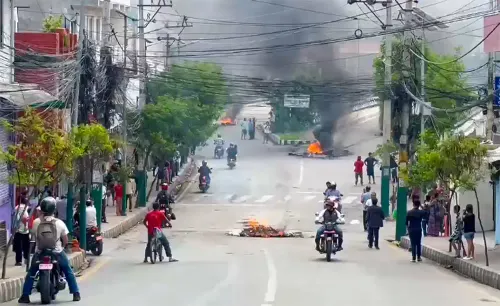
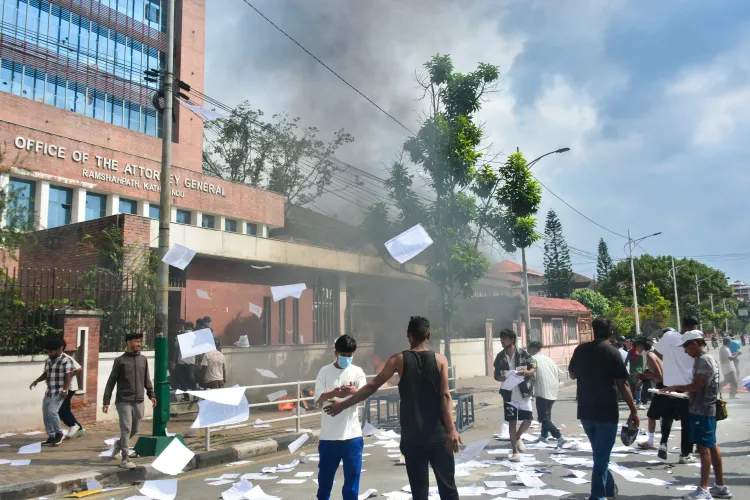
Government figures indicate that the two-day protest resulted in the deaths of 77 individuals, with damages to both public and private properties exceeding NPR 84 billion.
At that time, Lekhak was part of the coalition government under former Prime Minister K P Sharma Oli, and he is now facing accusations of permitting excessive force during the Gen-Z protests.
The current government, led by Sushila Karki, established an inquiry commission to investigate the events of September 8 and 9 during these protests, which has already gathered testimonies from heads of security and senior administrative officials.
As part of this investigation, the commission called upon former Home Minister Lekhak to provide his testimony. They also intend to summon former Prime Minister Oli.
In his written statement to the commission, Lekhak refuted any allegations of issuing written or verbal orders to use force against the protesters.
“No law empowers the Home Minister to give directives regarding the use of force,” he stated.
He disclosed that he had instructed security agencies a day prior to the protests to ensure the safety of lives and prevent any incidents that could result in fatalities.
During the Central Security Committee meeting on September 7, he noted that there was no consensus to apply excessive force. “I had also advised the security forces to be alert for infiltrators,” he remarked.
Lekhak attributed the escalation of violence to the infiltration of specific groups that hijacked the peaceful Gen-Z protests, leading to the deaths of several youths on September 8. He reiterated these claims while speaking to reporters after his testimony on Monday.
Throughout the Gen-Z movement, numerous state institutions, including buildings within Singha Durbar—the main administrative hub of the Nepalese government—, the Supreme Court, various government offices, police stations nationwide, residences of political leaders, and properties of several businesses, were vandalized and set ablaze. Following the police's lethal response to protesters on the first day, these properties were targeted the next day.
“This was a calculated conspiracy. It was a coordinated assault on both the nation and democracy,” Lekhak asserted, calling for accountability for those behind the destruction.
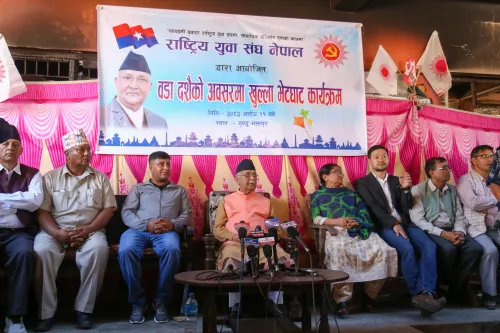
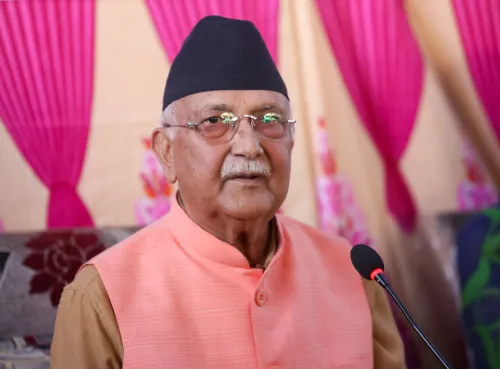
Despite the commission's preparations to record former Prime Minister Oli's testimony, he has declared his unwillingness to comply, alleging bias from the inquiry body.
In a television interview last week, he remarked, “The current Prime Minister and the commission chairperson have already predicated my fate. Why should I provide a statement when conclusions have been predetermined?”
Point of View
We observe that the testimony provided by former Home Minister Ramesh Lekhak raises critical questions about the use of force during protests. The government's inquiry reflects the necessity for accountability and transparency in handling civil unrest. Upholding democratic values is essential, and it is crucial that all parties involved are held responsible for their actions.
NationPress
30 Sept 2026
Frequently Asked Questions
What did former Home Minister Ramesh Lekhak testify?
He testified that he did not order police to open fire during the Gen-Z protests.
How many people died during the Gen-Z protests?
According to government statistics, 77 people lost their lives during the protests.
What damages were incurred during the protests?
Public and private properties sustained damages exceeding NPR 84 billion.
Who is leading the inquiry commission?
The inquiry commission is led by Sushila Karki.
What are the implications of this testimony?
The testimony raises important questions about accountability and the use of force in civil protests.