Will a Less Harmful Variety of 'Tiwra' Be Available Soon?

Synopsis
The Union Agriculture Minister announces the upcoming introduction of a safer variety of 'tiwra' or 'khesri', known as the 'poor man's pulse', aimed at benefiting farmers and enhancing pulse production across India. This innovative approach promises to replace toxic varieties with low-ODAP alternatives.
Key Takeaways
New low-toxin variety of 'tiwra' coming soon.
Government supports pulse production with minimum prices.
Research focuses on reducing health risks associated with pulses. 'Khesri' is a vital crop for food security in India.
Farmers are encouraged to grow more pulses.
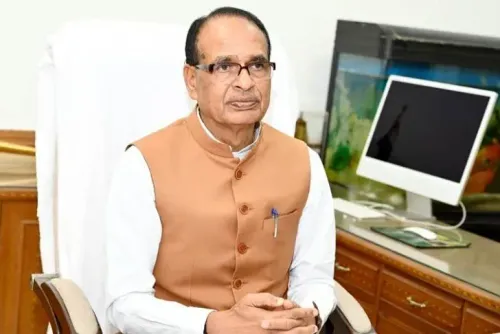
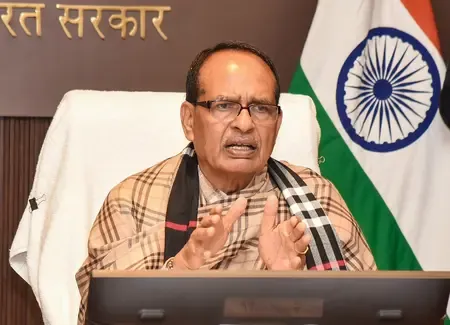
Amlaha, Feb 7 (NationPress) The Union Agriculture Minister, Shivraj Singh Chouhan, announced on Saturday that researchers at the Indian Agricultural Research Institute (IARI) and the Indian Council of Agricultural Research (ICAR) are making significant strides in the study of 'tiwra', also referred to as 'khesri' or grass pea.
While addressing a group of farmers, Chouhan revealed that a new, less toxic variety of 'tiwra' would soon make its debut in the market.
Historically, tiwra was a staple in India, but its usage was restricted due to its association with lathyrism, a disease affecting humans.
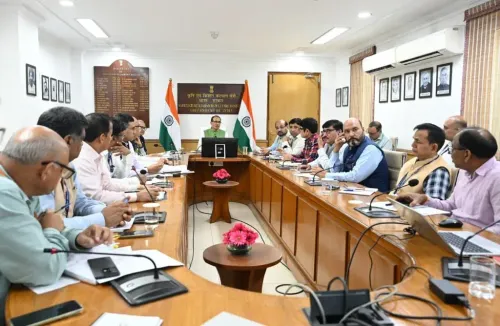
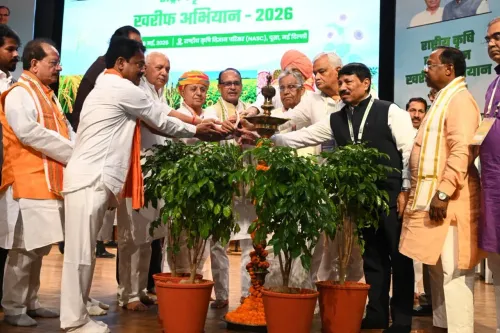
During the gathering that included scientists, farmers, and agriculture ministers from various states, the Union Minister highlighted the Central government's initiative to establish 1,000 new dal mills, with 55 of these located in Madhya Pradesh.
He emphasized that the Agriculture Department has instructed scientists and officials to engage more actively in fieldwork rather than remaining confined to offices.
Chouhan reiterated the government's dedication to purchasing pulses at minimum support prices: pigeon pea (tur) for ₹8,000 per quintal, urad for ₹7,800 per quintal, masoor for ₹7,000 per quintal, and chana for ₹5,875.
"We will procure every single pulse from farmers," he stated.
He encouraged farmers to cultivate pulses with confidence, assuring them that a price difference scheme would continue for these commodities, similar to the benefits seen in soybean, which Madhya Pradesh has fully utilized.
Chouhan urged farmers to increase their pulse production.
"We are working on extracting pulse protein from different varieties to enhance farmers' returns," he noted.
Scientists at ICAR are developing safer varieties with significantly lower levels of the neurotoxin known as BOAA, which can cause neurolathyrism, a neurological disorder associated with long-term consumption. This toxin is responsible for the ban on Khesri sales and storage in India since 1961.
Efforts are concentrated on substituting traditional high-toxin varieties with low-ODAP alternatives fit for human consumption.
Notable varieties released via ICAR partnerships with state agricultural universities include Ratan, Prateek, and Mahateora. These varieties have an ODAP content between 0.07% and 0.1%, significantly below the risk threshold, yielding up to 1.5 to 1.6 tonnes per hectare in suitable regions like Madhya Pradesh, Maharashtra, Chhattisgarh, Bihar, and Odisha.
The research journey began with early achievements such as Pusa-24 from IARI, which had approximately 0.2% ODAP, serving as a foundation for further breeding.
Researchers utilized conventional hybridization, tissue culture, and somaclonal variation to develop lines like Ratan from Pusa-24 variants.
"Current initiatives are exploring genetic modifications, including the integration of genes from Pseudomonas bacteria to completely neutralize the toxin," stated sources from the Agriculture Department.
Current studies are also examining environmental impacts, as ODAP levels can increase under abiotic stresses like drought.
Multi-location trials are underway to assess the stability of low-toxin lines across various conditions.
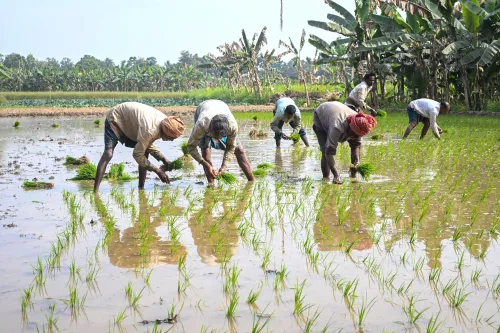
Recent research from 2023 to 2025 has optimized 'khesri' for rice-fallow systems in eastern India, particularly in Bihar, to enhance pulse production on underutilized lands following rice harvests.
Khesri has earned the title of the "poor man's pulse" or "insurance crop" due to its exceptional resilience in extreme drought, waterlogged conditions, and poor soil fertility where other crops may fail.
It boasts a high protein content, matures quickly in around 125 days, and serves dual purposes as both food and fodder.
While low-toxin varieties like 'Ratan' and 'Prateek' are being encouraged for cultivation, formal approval for commercial sale is still pending review by the Food Safety and Standards Authority of India and the Indian Council of Medical Research.
Point of View
Such initiatives will be crucial in ensuring that farmers can cultivate crops safely and profitably.
NationPress
24 Sept 2026
Frequently Asked Questions
What is 'tiwra' or 'khesri'?
Tiwra, also known as khesri or grass pea, is a pulse crop traditionally used in India but has been associated with health risks due to its neurotoxic properties.
Why was 'tiwra' banned in India?
'Tiwra' was banned in India because it can cause lathyrism, a neurological disease, when consumed in excessive amounts over a long period.
What are the benefits of the new low-toxin varieties?
The new low-toxin varieties of 'tiwra' have significantly reduced levels of the neurotoxin BOAA, making them safer for human consumption and beneficial for farmers.
How does the government plan to support pulse production?
The government has announced a commitment to procure pulses at minimum support prices, ensuring farmers receive fair compensation for their crops.
What is the significance of 'khesri' as a crop?
'Khesri' is often referred to as the 'poor man's pulse' due to its resilience in harsh conditions, making it an important crop for food security.