Did the Government Procure an Unprecedented 1 Crore 92 Lakh Metric Tonnes of Pulses?
Synopsis
New Delhi witnessed a significant shift in pulses procurement, with Union Agriculture Minister Shivraj Singh Chouhan revealing that the Modi government has procured an astonishing 1 crore 92 lakh metric tonnes. This article delves into the implications of this procurement and the initiatives driving a 'Pulses Revolution' in India.
Key Takeaways
1 crore 92 lakh metric tonnes of pulses procured by the Modi government.
Commitment to 100% procurement of major pulses.
India's share in global pulses cultivation is 38% .
Introduction of Self-Reliance in Pulses Mission .
Modern infrastructure reducing crop loss by 5% to 15% .
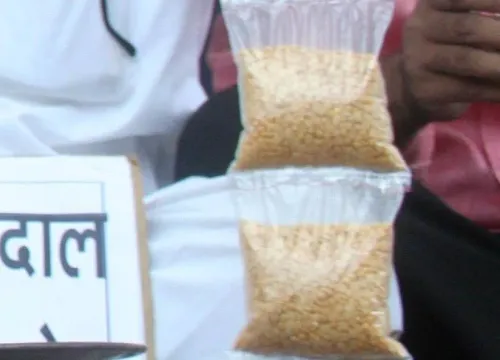
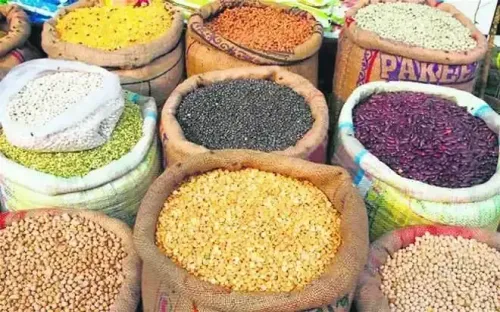
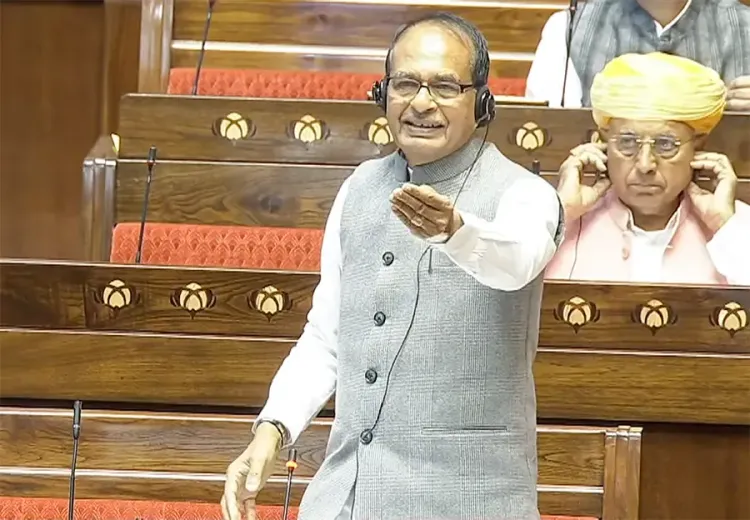
New Delhi, Feb 14 (NationPress) Over the span of a decade under the UPA administration, merely 6 lakh metric tonnes of pulses were procured. In stark contrast, the current regime led by Prime Minister Narendra Modi has successfully procured a remarkable 1 crore 92 lakh metric tonnes of pulses, as revealed by Union Agriculture Minister Shivraj Singh Chouhan.
The minister announced a commitment to ensuring 100 percent procurement of tur (pigeon pea), masoor (lentil), and urad (black gram). He stated, “The Centre will procure whatever quantity farmers produce and wish to sell.”
Chouhan highlighted that India occupies 38 percent of the global area dedicated to pulses cultivation, yet its production share stands at only 28 percent, which points to low productivity stemming from outdated seed varieties, inadequate seed replacement rates, and unfavorable weather conditions. Many farmers have transitioned to cultivating other crops, leading India to be the largest importer of pulses until 2016.
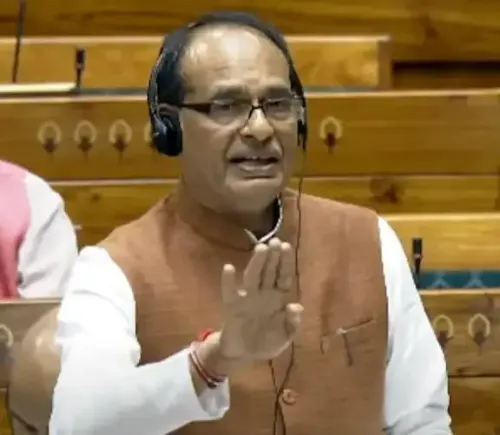
“Thanks to advancements in technology, superior seed varieties, scientific research, farmer support, and policy initiatives, a 'Pulses Revolution' has commenced. Consequently, pulses production soared to a record 27.30 million tonnes in the year 2021–22,” the minister informed Parliament.
As part of the Self-Reliance in Pulses Mission, several provisions have been established, including the development of enhanced seed varieties, increased seed replacement rates, farmer training, a cluster approach, free mini-kits, demonstration plots, financial assistance up to Rs 10,000 per hectare, transparent procurement processes, and support of up to Rs 25 lakh for setting up dal mills.
Chouhan conveyed in the Rajya Sabha that PM Modi made a landmark decision to allocate over Rs 1 lakh crore for agricultural infrastructure through the Agriculture Infrastructure Fund, ensuring safe storage for farmers’ produce.
Under this initiative, the establishment of 44,243 Custom Hiring Centres, 25,854 Primary Processing Centres, 25,565 Farm Harvest Automation Units, 17,779 Warehouses, 4,201 Sorting and Grading Units, infrastructure for Smart and Precision Agriculture at 3,549 locations, and 2,827 Cold Storages has been achieved.
Thanks to these modern facilities, losses of crops, fruits, and vegetables have diminished by 5 percent to 15 percent.
Farmers can now securely store their produce and receive better prices instead of being compelled to sell immediately after harvest, emphasized the minister.
Point of View
The recent achievements in pulses procurement highlight a significant transformation in India's agricultural policies under the current government. The commitment to enhance production through innovative measures reflects a proactive approach towards achieving self-reliance in agricultural products, benefiting farmers and the economy alike.
NationPress
17 Sept 2026
Frequently Asked Questions
What is the total amount of pulses procured by the Modi government?
The Modi government has procured a staggering 1 crore 92 lakh metric tonnes of pulses.
What initiatives are included in the Self-Reliance in Pulses Mission?
The mission includes developing improved seed varieties, farmer training, transparent procurement, and financial assistance for setting up dal mills.
How has crop loss been affected by the new agricultural infrastructure?
Modern facilities have reduced crop, fruit, and vegetable losses by 5 percent to 15 percent.
What was India's status in pulses importation until 2016?
India was the largest importer of pulses until 2016.
What percentage of global pulses cultivation does India represent?
India accounts for 38 percent of the global area under pulses cultivation.