MSP procurement of ₹5,547.99 crore cleared for kharif 2026-27 pulses, oilseeds
Synopsis
The Centre has cleared ₹5,547.99 crore in MSP-backed procurement of tur, moong, soybean, and sunflower across Uttar Pradesh, Telangana, and Karnataka for kharif 2026-27 — with UP alone cornering nearly 72% of the outlay. The move targets pulse and oilseed self-reliance at a time when India still imports significant volumes of edible oil.
Key Takeaways
Agriculture Minister Shivraj Singh Chouhan approved ₹5,547.99 crore in MSP procurement on 30 September under the Price Support Scheme (PSS) for kharif 2026-27.
Uttar Pradesh receives the largest share — ₹3,992.57 crore — for 4,66,000 MT of tur and 6,250 MT of moong.
Karnataka gets ₹1,107 crore covering soybean, moong, and sunflower procurement.
Telangana is allocated ₹448.42 crore for soybean and moong procurement at MSP.
Payments will be made directly to farmers' bank accounts under the Direct Benefit Transfer framework.
The scheme aims to boost domestic production of pulses and edible oils, reducing India's import dependence.
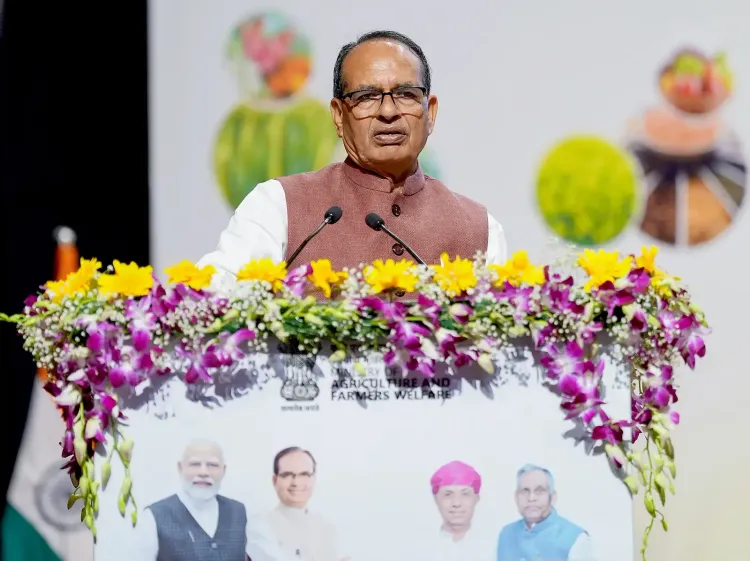
Agriculture Minister Shivraj Singh Chouhan on Wednesday, 30 September approved procurement worth ₹5,547.99 crore at Minimum Support Price (MSP) under the Price Support Scheme (PSS) for the Kharif Marketing Season 2026-27, covering farmers in Uttar Pradesh, Telangana, and Karnataka. The move is designed to shield pulse and oilseed growers from market price volatility and guarantee remunerative returns on their produce.
State-wise Breakdown of Approved Procurement
Uttar Pradesh receives the largest allocation — ₹3,992.57 crore — covering 4,66,000 metric tonnes of tur valued at ₹3,937.70 crore and 6,250 metric tonnes of moong valued at ₹54.87 crore, both to be procured at MSP.
In Karnataka, procurement worth ₹1,107 crore has been sanctioned under PSS. This covers 1,15,500 metric tonnes of soybean at ₹659.27 crore, 38,250 metric tonnes of moong at ₹335.83 crore, and 13,413 metric tonnes of sunflower at ₹111.90 crore.
Telangana has been allocated ₹448.42 crore, comprising 62,000 metric tonnes of soybean worth ₹353.90 crore and 10,766 metric tonnes of moong worth ₹94.52 crore.
What the Government Said
Minister Chouhan stated that the decision will provide greater economic security to farmers while simultaneously encouraging domestic production of pulses and oilseeds. He added that the procurement is part of India's broader push toward self-reliance in pulses and edible oils — a recurring policy priority for the Narendra Modi-led government.
Chouhan also assured that all procurement arrangements at designated centres will remain transparent, with payments credited directly to farmers' bank accounts in a timely manner — addressing a long-standing concern about delays in MSP disbursements.
Why This Matters for Farmers and Food Security
India remains a net importer of edible oils and has faced recurring pulse shortages that push retail prices higher. MSP-backed procurement under PSS acts as a price floor, discouraging distress sales when market prices dip below the support level. This is particularly significant for kharif crops like tur, moong, soybean, and sunflower, which are harvested and brought to market between October and December.
Notably, Uttar Pradesh's dominant share — accounting for nearly 72% of the total approved outlay — reflects both the state's scale of tur cultivation and its strategic importance ahead of state-level political cycles. Karnataka and Telangana, both significant oilseed-producing states, together account for the remaining 28%.
Transparency and Direct Benefit Transfer
The government's emphasis on direct bank transfers for MSP payments aligns with the broader Direct Benefit Transfer (DBT) framework, which has been progressively extended across agricultural support schemes. Officials indicated that procurement centres will be operational across all three states to ensure accessibility for registered farmers.
What Happens Next
With the kharif harvest season approaching, procurement operations at designated mandis and collection centres are expected to commence in the coming weeks. Farmers in the three states will need to register with their respective state nodal agencies to participate in PSS procurement. The success of the scheme will ultimately depend on the efficiency of ground-level logistics and the speed of payment processing — areas where past PSS cycles have drawn criticism from farmer groups.
Point of View
547.99 crore outlay is a meaningful signal of intent, but MSP procurement under PSS has historically reached only a fraction of eligible farmers — largely because awareness, registration, and logistics gaps persist at the ground level. Uttar Pradesh's outsized 72% share raises a legitimate question about whether allocation reflects cultivation data or political calculus ahead of future electoral cycles. The real test of this announcement will not be the approved figure but the percentage actually disbursed by March 2027, and whether payment timelines improve on the delays that have plagued past PSS cycles.
NationPress
30 Sept 2026
Frequently Asked Questions
What is the MSP procurement approved for kharif 2026-27?
Agriculture Minister Shivraj Singh Chouhan approved ₹5,547.99 crore in procurement at Minimum Support Price under the Price Support Scheme for the Kharif Marketing Season 2026-27. The procurement covers tur, moong, soybean, and sunflower across Uttar Pradesh, Telangana, and Karnataka.
Which states benefit from the kharif 2026-27 PSS procurement?
Three states are covered: Uttar Pradesh (₹3,992.57 crore), Karnataka (₹1,107 crore), and Telangana (₹448.42 crore). Uttar Pradesh accounts for the largest share, primarily for tur and moong procurement.
What crops are included in the approved MSP procurement?
The approved procurement covers tur (pigeon pea), moong (green gram), soybean, and sunflower — all key kharif pulses and oilseeds. These crops are typically harvested between October and December.
How will farmers receive payment under this scheme?
Payments will be credited directly to farmers' bank accounts under the Direct Benefit Transfer framework. The minister assured that all procurement centres will operate transparently and that disbursements will be made in a timely manner.
Why is MSP procurement under PSS important for India?
India faces recurring pulse shortages and remains a net importer of edible oils. MSP-backed procurement under PSS acts as a price floor, preventing distress sales when market prices fall below support levels, while also incentivising domestic production of pulses and oilseeds to reduce import dependence.