IAS officer Deepak Kumar removed as Bihar CM's Principal Secy, named BSDMA Vice-Chairman
Synopsis
A post-retirement IAS officer who stayed on to run Bihar's Chief Minister's Office for over five years has now been shifted to lead the state's disaster management authority — just as Bihar braces for its post-monsoon reckoning with floods and relief operations.
Key Takeaways
Deepak Kumar , a 1984-batch IAS officer , was removed as Principal Secretary to Bihar CM Samrat Choudhary on 30 September 2026 .
He was simultaneously appointed Vice-Chairman of the Bihar State Disaster Management Authority (BSDMA) .
Kumar had served in the CMO role for approximately five-and-a-half years , continuing even after his retirement on 20 March 2021 .
The BSDMA post fell vacant after Uday Kant Mishra completed his tenure as Vice-Chairman.
Kumar previously served as District Magistrate in 13 districts , DG of ESIC , and Chairman of NHAI .
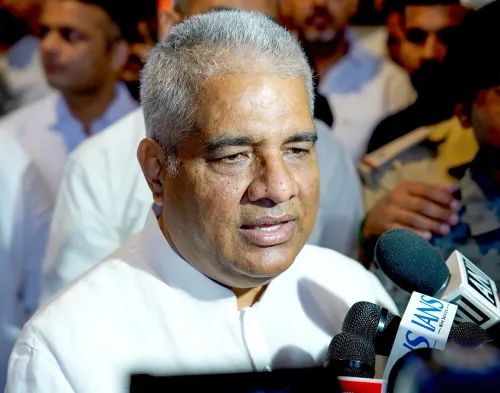
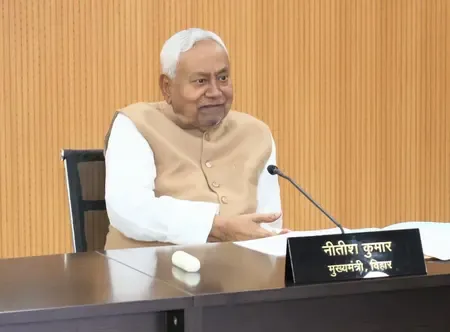
Senior Indian Administrative Service (IAS) officer Deepak Kumar was relieved of his duties as Principal Secretary to Bihar Chief Minister Samrat Choudhary on 30 September 2026 and appointed Vice-Chairman of the Bihar State Disaster Management Authority (BSDMA). The reshuffle ends a tenure that saw Kumar remain at the helm of the Chief Minister's Office (CMO) for nearly five-and-a-half years — including a continuation well past his formal retirement.
From the CMO to Disaster Management
A 1984-batch IAS officer, Kumar retired from government service on 20 March 2021, only to be entrusted with the Principal Secretary's role the very next day, on 21 March 2021. His continuation post-retirement underscored the significance the CMO placed on his administrative experience. The Principal Secretary's role involves critical coordination between the Chief Minister's Office and various departments of the state government.
The BSDMA Vice-Chairmanship had fallen vacant after Uday Kant Mishra completed his tenure in the post. Kumar's appointment fills that gap at a time when Bihar continues to grapple with recurrent floods, heavy rainfall, and allied natural disasters.
A Career Spanning Thirteen Districts and Two National Bodies
Kumar's administrative record spans both field and policy roles. He served as District Magistrate in around 13 districts, including Buxar, Nalanda, Hazaribagh, and Motihari. At the state level, he worked across departments including Health, Urban Development, General Administration, Cabinet, Tourism, and Information and Public Relations.
His central deputation assignments were equally significant. He served as Director General of the Employees' State Insurance Corporation (ESIC) and as Chairman of the National Highways Authority of India (NHAI) — both roles with substantial policy and operational responsibilities.
What the BSDMA Does
The Bihar State Disaster Management Authority is the nodal body for strengthening disaster preparedness, coordinating inter-departmental response, and overseeing mitigation, relief, and recovery operations across the state. Its mandate covers floods, droughts, cyclones, heavy rainfall, and other emergencies.
Flood management is a perennial challenge in Bihar, where several districts face seasonal inundation during the monsoon. Key responsibilities include monitoring river levels, reinforcing embankments, preparing relief camps, and ensuring timely delivery of assistance to affected populations.
What This Means Going Forward
Kumar's appointment as Vice-Chairman places a highly experienced administrator at the head of an institution whose importance is only growing as climate-linked disasters intensify. His combination of field-level district experience and national-level policy exposure makes him a substantive choice for a role that demands both ground-level coordination and strategic oversight. How quickly he reshapes the BSDMA's operational priorities will be closely watched as Bihar enters its post-monsoon assessment phase.
Point of View
Yet the authority has often operated below its mandate. Whether Kumar's national-level experience at ESIC and NHAI translates into meaningful reform of disaster preparedness, or whether the appointment is a dignified post-retirement sinecure, will be the real test.
NationPress
30 Sept 2026
Frequently Asked Questions
Why was Deepak Kumar removed as Bihar CM's Principal Secretary?
Deepak Kumar was relieved of his role as Principal Secretary to Bihar Chief Minister Samrat Choudhary on 30 September 2026 and appointed Vice-Chairman of the Bihar State Disaster Management Authority. No specific reason for the change was cited in official communications; the move follows a tenure of approximately five-and-a-half years in the CMO.
Who is Deepak Kumar and what is his background?
Deepak Kumar is a 1984-batch IAS officer who retired from government service on 20 March 2021 but was immediately retained as Principal Secretary to the Bihar Chief Minister the following day. He has served as District Magistrate in around 13 districts, Director General of ESIC, and Chairman of NHAI.
What does the Bihar State Disaster Management Authority (BSDMA) do?
The BSDMA is the nodal body responsible for disaster preparedness, inter-departmental coordination, and overseeing mitigation, relief, and response operations across Bihar. Its work covers floods, droughts, cyclones, and other emergencies, with flood management being a recurring priority given Bihar's vulnerability.
Why did the BSDMA Vice-Chairman post fall vacant?
The position became vacant after Uday Kant Mishra completed his tenure as Vice-Chairman of the Bihar State Disaster Management Authority. Deepak Kumar has been appointed to fill the vacancy.
How significant is the BSDMA role for Bihar?
Bihar is among India's most flood-prone states, with several districts experiencing recurrent inundation during the monsoon season. The BSDMA's work — monitoring river levels, reinforcing embankments, and managing relief camps — directly affects millions of residents, making the Vice-Chairman's role a consequential administrative position.