CM Rekha Gupta: No Place for Terror or Tyranny in Delhi
Synopsis
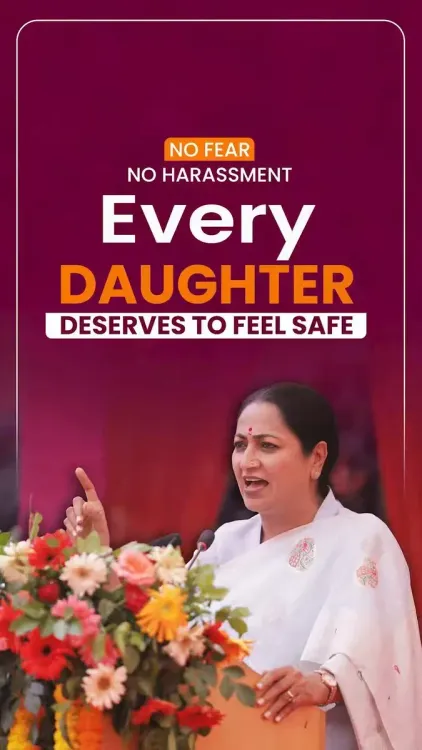
Delhi Chief Minister Rekha Gupta issued a blunt zero-tolerance warning against fear, terror, and tyranny on September 30, promising punishment severe enough for future generations to remember — a sharp governance signal from the BJP leader.
Key Takeaways
Delhi CM Rekha Gupta declared on September 30, 2026 that there is 'no place for fear, terror, or tyranny' in Delhi.
She warned that anyone who dares to act otherwise 'will not be spared' and will face consequences remembered by generations.
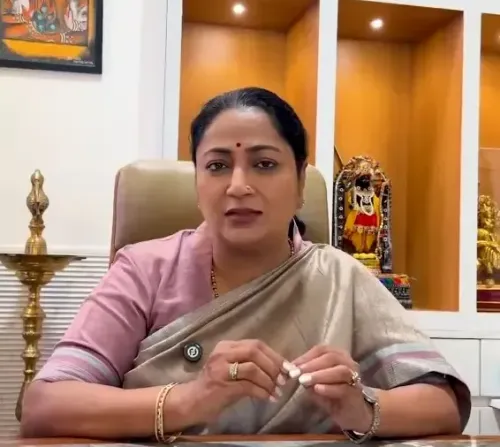
The statement was posted with a video, suggesting it was delivered as a public address, not just a social media post.
Delhi Police operates under the Union Home Ministry , not the state government — giving the CM's law-and-order posture both political and institutional dimensions.
The BJP has consistently framed zero tolerance on terrorism and internal security as a core governance identity.
Analysts and citizens will watch for follow-up administrative or security announcements to back the warning with action.
A sharp warning echoed out of Delhi on Wednesday, September 30 — and it was not aimed at a rival party. Delhi Chief Minister Rekha Gupta drew a hard line against fear, terror, and oppression in the capital, promising consequences so severe that, in her words, future generations would remember them as a lesson.
Posting on X, CM Gupta declared in Hindi: 'Hamare shehar mein na dar ke liye koi jagah hai, na aatank ke liye koi jagah hai, na atyachar ke liye koi jagah hai' — 'In our city, there is no place for fear, no place for terror, no place for tyranny.' She went further, warning anyone who dares to act otherwise: 'They will not be spared. The punishment they receive will be such that generations to come will remember what the consequences of such audacity are.'
The Language of Exemplary Deterrence
The statement is notable for its deliberate framing around generational memory — a rhetorical device that signals not just enforcement, but the intent to make punishment itself a cultural deterrent. The choice of the word dussahas (audacity or recklessness) positions potential offenders not merely as criminals but as those who challenge the established social contract of a safe capital city.
The post was accompanied by a video, suggesting the remarks may have been delivered as a public address rather than a scripted social media statement — lending them additional weight as a governance signal to both citizens and law enforcement.
Delhi's Law-and-Order Fault Lines
Delhi has long sat at the intersection of political contestation over policing. Delhi Police operates under the jurisdiction of the Union Home Ministry, not the state government — a structural tension that has historically complicated accountability between elected city administrations and ground-level law enforcement. CM Gupta's statement, framed entirely around the city's administration and its values, steps into that contested space with a tone of ownership and resolve.
BJP-led governments at the Centre and in states have consistently positioned zero tolerance for terrorism and internal security threats as a defining policy identity. Gupta's remarks align squarely with that tradition — but the specificity of the warning, directed at anyone who might 'dare' to act, suggests the statement may be responding to a concrete security context rather than routine political rhetoric.
What Follows a Warning This Sharp
Strong public statements of this nature from sitting chief ministers typically precede or accompany operational announcements — enhanced security deployments, intelligence-sharing protocols, or administrative directives. Delhi residents and security agencies will be watching for any follow-up action that translates Gupta's unambiguous public pledge into institutional muscle.
The message to Delhi is clear: the Chief Minister has put her administration's credibility on the line. Now comes the harder part — delivering on it.
Point of View
A tactic that goes beyond law enforcement into the realm of governing narrative. For a BJP leader whose party's brand is built on strong-state security credentials, the rhetoric is both ideologically consistent and electorally calculated. The structural wrinkle is real: Delhi Police answers to the Centre, not the CM, meaning the force behind this warning is partly borrowed authority. Whether this speech is a standalone signal or the opening act of a concrete security push will define whether it is remembered as governance or performance.
NationPress
30 Sept 2026
Frequently Asked Questions
What did Delhi CM Rekha Gupta say about law and order on September 30?
Rekha Gupta declared that there is no place for fear, terror, or tyranny in Delhi and warned that anyone who dares commit such acts will face punishment severe enough for future generations to remember.
Who controls Delhi Police — the CM or the Centre?
Delhi Police operates under the jurisdiction of the Union Home Ministry, not the Delhi state government, which has been a longstanding point of political tension between Delhi administrations and the Centre.
Is Rekha Gupta the current Chief Minister of Delhi?
Rekha Gupta is the Chief Minister of Delhi and a senior BJP leader; she made this statement on September 30, 2026.
What does 'dussahas' mean in Rekha Gupta's post?
'Dussahas' is a Hindi word meaning audacity or extreme recklessness; CM Gupta used it to describe anyone who would dare to spread fear or terror in Delhi.
What follow-up actions are expected after CM Gupta's warning?
Analysts are watching for concrete follow-up measures such as enhanced security deployments, intelligence-coordination directives, or administrative orders that would translate the CM's public warning into operational action.