Did NIA Charge Two More Individuals in the Vizianagaram Terror Conspiracy Case?
Synopsis
In a significant development, the NIA has charged two more individuals in the Vizianagaram terror conspiracy case, highlighting ongoing efforts to combat terrorism in India. The investigation reveals deep-rooted connections to ISIS ideology and attempts to radicalize youth through social media. Stay informed on this evolving situation.
Key Takeaways
The NIA charged two more individuals in the Vizianagaram terror case.
Arif Hussain was arrested while attempting to flee the country.
Imran Akram remains absconding and involved in terror funding.
The case reveals the use of social media for radicalization.
Continued NIA investigations are crucial for national security.
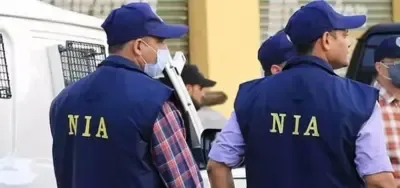
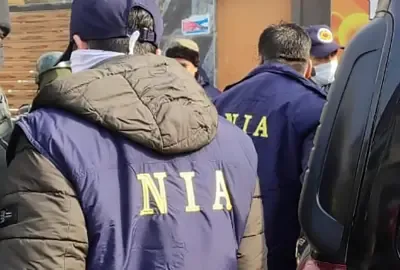
Visakhapatnam, Feb 20 (NationPress) The National Investigation Agency (NIA) has officially filed charges against two more individuals in relation to the 2025 Vizianagaram ISIS terror conspiracy case. One of the individuals charged is currently absconding.
A supplementary chargesheet was submitted on Friday at the NIA Special Court in Visakhapatnam, identifying Arif Hussain, also known as Abu Talib, and Imran Akram, who face charges under multiple sections of the Unlawful Activities (Prevention) Act, BNS, Explosive Substances Act of 1908, and the Arms Act.
The investigation originally began at the Vizianagaram Police Station, leading to the arrest of Siraz Ur Rahiman and Syed Sameer.
These two were charged in November 2025 after the NIA took over the investigation. Evidence gathered revealed that Imran Akram, who remains at large, was involved in supplying funds for terrorist activities, aiding Siraz Ur Rahiman and Syed Sameer in obtaining explosive materials.
Arif Hussain was apprehended by NIA agents on August 27, 2025, while attempting to leave the country from New Delhi Airport. His involvement included conspiracy with Siraz to provide weapons for terrorist actions and illegal cross-border weapon transport. He was also implicated in promoting extremist ideologies via social media.
The NIA continues its investigation into the matter.
Siraz Ur Rahiman, from Vizianagaram in Andhra Pradesh, and Syed Sameer from Hyderabad in Telangana, were detained by the Andhra Pradesh Police on May 16 and May 17, 2025, respectively.
The chargesheet issued in November 2025 implicated them in radicalizing youth across India using social media to incite terrorist acts in Andhra Pradesh, Telangana, and beyond.
Siraz Ur Rahiman and Syed Sameer have also been charged under various sections of the BNS, Explosive Substances Act, and Unlawful Activities (Prevention) Act.
The NIA, having taken over the investigation from Andhra Pradesh Police, has gathered significant evidence showing the accused were inspired by ISIS ideology and were actively disseminating radical content through social media channels, targeting vulnerable youth across India to incite them towards violent jihad and anti-national activities.
Point of View
The charge sheet filed by the NIA against two more individuals in the Vizianagaram case underscores the persistent threat of terrorism in our country. It highlights the need for vigilant counter-terrorism efforts and the importance of addressing radicalization, particularly through digital platforms targeting youth.
NationPress
30 Sept 2026
Frequently Asked Questions
What is the Vizianagaram terror conspiracy case?
The Vizianagaram terror conspiracy case involves individuals charged with planning terrorist activities inspired by ISIS, including radicalizing youth and procuring explosive materials.
What role does the NIA play in this case?
The NIA, or National Investigation Agency, is responsible for investigating terrorism-related offenses in India, including this case, which was initially handled by local police.
Who are the main accused in this case?
The main accused include Arif Hussain, Imran Akram, Siraz Ur Rahiman, and Syed Sameer, with charges ranging from terrorism to illegal weapons procurement.
What evidence has been collected by the NIA?
The NIA has gathered substantial evidence indicating that the accused were involved in financing terrorism and radicalizing youth through social media.
What are the implications of this case for national security?
This case highlights ongoing threats from radicalization and terrorism in India, emphasizing the need for robust security measures and public awareness.