Harmanpreet should stay T20I captain, says ex-India pacer Niranjana
Synopsis
Despite India's second straight T20 World Cup group-stage exit, former pacer Niranjana Nagarajan says Harmanpreet Kaur should stay captain — and the real fix isn't a leadership change but finding two middle-order power hitters who can bat between overs 7 and 15. It's a structural diagnosis that shifts the blame away from the skipper and toward a gap in India's talent pipeline.
Key Takeaways
Former India pacer Niranjana Nagarajan has backed Harmanpreet Kaur to continue as India's T20I captain after the 2026 Women's T20 World Cup group-stage exit.
India failed to reach the semi-finals for the second consecutive edition , reigniting a leadership debate.
Nagarajan identified the absence of middle-order power hitters between overs 7 and 15 as India's core T20 structural problem.
Injuries to Amanjot Kaur , Kashvee Gautam , and Shreyanka Patil disrupted team balance; seamers claimed only 5 wickets across 5 matches .
Harmanpreet will be 39 by the time the 2028 Women's T20 World Cup arrives, with selectors yet to signal a succession plan.
Nagarajan urged the BCCI to protect fast bowlers' fitness ahead of the Women's Asia Cup , Asian Games , and tours of Zimbabwe and South Africa .
Former India pacer Niranjana Nagarajan has thrown her weight behind Harmanpreet Kaur continuing as India's T20I captain, even after the side's second consecutive group-stage exit at the 2026 Women's T20 World Cup. Speaking on 16 July, Nagarajan argued that Harmanpreet has not underperformed as a leader and identified a structural gap — the absence of middle-order power hitters — as the real reason for India's T20 struggles.
The Case for Harmanpreet
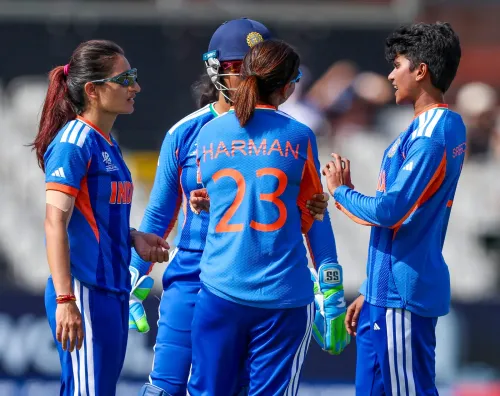
The debate over India's T20I leadership had grown sharper following the team's failure to reach the semi-finals for the second straight edition, an exit that came just a fortnight before India's historic Test victory over England at Lord's. With Harmanpreet set to turn 39 by the time the 2028 Women's T20 World Cup arrives, calls for a leadership transition have grown louder.
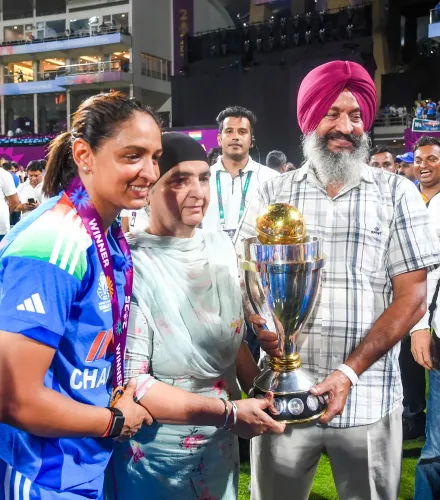
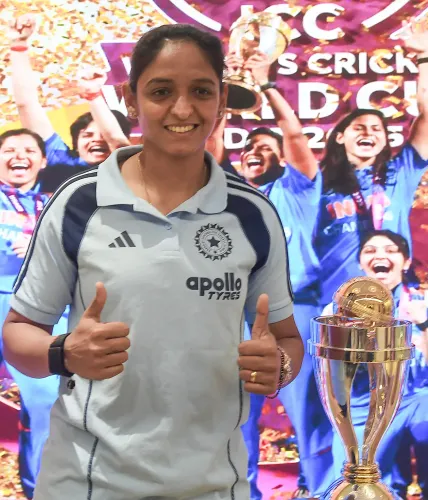
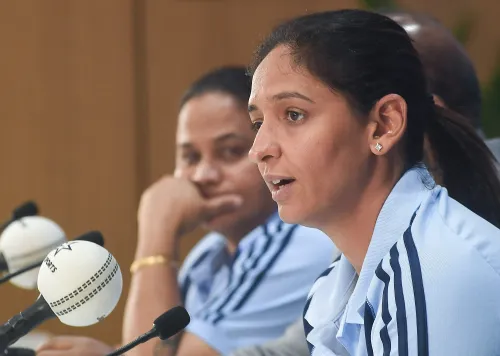
Nagarajan, however, pushed back firmly. 'I think Harman is doing a good job. I don't think one World Cup loss should bother so much. This is the problem — one loss and everything comes up. The same Harman, who won the ODI World Cup, why not just back her for one off tournament? Give her that space. At the end of the day, they are all going through the same thing. We are all humans and make mistakes,' she said.
'She has stood up as a captain for India over the last 7-8 years. She has never underperformed as a captain. Even against Australia, she was the one who stood up. The captaincy is not affecting her. Even the coach is quite happy with her captaincy,' Nagarajan added.
The Real Problem: Middle-Order Power Hitting
Nagarajan rejected suggestions that India carry a mental block in T20 cricket or have fallen behind the pace of the modern game. Instead, she pointed to a clear structural deficiency in the batting unit.
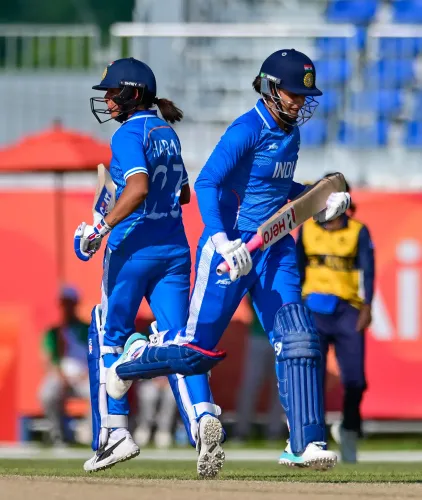
'See, in my perspective, I think we need a couple of more big hitters in the middle order. When she comes out to bat, probably it is always 60/2 in 7, 8 overs or 10 overs. She is not able to take the risks immediately because we are losing wickets at a stretch. So, there we need a player who probably can support and release the pressure off Harman,' she explained.
Nagarajan argued that having reliable hitters between overs 7 and 15 could push India's totals from 150 to 180 or even 180 to 195, giving Harmanpreet the platform to accelerate later in the innings rather than being forced into premature risk-taking.
Injury Disruptions and Bowling Concerns
India's campaign was further undermined by pre-tournament injuries to emerging all-rounders Amanjot Kaur and Kashvee Gautam, and the mid-tournament exit of Shreyanka Patil due to an ankle injury. The disruptions were visible in India's bowling combinations — the side used a different seam attack and new-ball pairing in each of their five matches.
The seamers collectively struggled, with Renuka Singh Thakur, Kranti Gaud, Arundhati Reddy, and Nandni Sharma sharing only five wickets between them. Nagarajan said Renuka's experience, particularly in swinging conditions, could have been used more effectively, and acknowledged that the absence of all-rounders cost the side the balance needed to field a settled eleven.
Road Ahead: Asia Cup, South Africa Tour and Domestic Season
With a packed calendar ahead — including the Women's Asia Cup, the Asian Games, a home series against Zimbabwe, and a multi-format tour of South Africa — Nagarajan urged the Board of Control for Cricket in India (BCCI) to prioritise the physical management of fast bowlers through domestic structures and elite camps.
'The fast bowlers first should be preserved and taken care of because a lot of tournaments which are coming up will be requiring the services of fast bowlers,' she said, praising the BCCI's Centre of Excellence (CoE) camps and India A tours as part of an ongoing and effective talent identification process.
She noted that the core team would largely remain intact, with places up for grabs to be decided on domestic performances when the season resumes in October. How India's selectors respond — on the captaincy question and the middle-order gap — will set the tone for the next World Cup cycle.
Point of View
A gap that has existed across multiple World Cup campaigns. Backing the captain without a credible plan to address that gap is not a solution — it is a deferral. The BCCI's CoE work is encouraging, but the pipeline needs to produce match-ready power hitters, not just promising names on A-tour lists.
NationPress
15 Oct 2026
Frequently Asked Questions
Why did Niranjana Nagarajan back Harmanpreet Kaur as T20I captain?
Niranjana Nagarajan argued that Harmanpreet has not underperformed as a captain and that India's T20 struggles stem from a structural batting gap — specifically the lack of middle-order power hitters — rather than poor leadership. She pointed to Harmanpreet's consistent record over 7-8 years and noted that the team's coach is also satisfied with her captaincy.
How did India perform at the 2026 Women's T20 World Cup?
India exited at the group stage of the 2026 Women's T20 World Cup, failing to reach the semi-finals for the second consecutive edition. The campaign was disrupted by injuries to Amanjot Kaur, Kashvee Gautam, and Shreyanka Patil, and India used a different bowling combination in each of their five matches.
What structural problem did Niranjana Nagarajan identify in India's T20 batting?
Nagarajan said India needs two or three middle-order power hitters who can score big between overs 7 and 15, reducing the pressure on Harmanpreet Kaur. She noted that Harmanpreet often walks in at a difficult juncture — such as 60 for 2 in 8 overs — and is unable to take risks because wickets are falling regularly.
How did India's seamers perform at the 2026 Women's T20 World Cup?
India's seam attack — comprising Renuka Singh Thakur, Kranti Gaud, Arundhati Reddy, and Nandni Sharma — shared only five wickets across five matches. Nagarajan noted that Renuka's experience could have been utilised more effectively, particularly in swinging conditions.
What cricket is coming up next for the India women's team?
India's upcoming schedule includes the Women's Asia Cup, the Asian Games, a home series against Zimbabwe, and a multi-format tour of South Africa. The domestic season is also set to resume in October, which Nagarajan said will play a key role in determining squad selections for the next World Cup cycle.