What impact does NMC's withdrawal of permission to Shri Mata Vaishno Devi medical institute have on J&K?
Synopsis
The recent decision by the NMC to revoke SMVDIME's permission has triggered intense debates in Jammu and Kashmir, highlighting issues of meritocracy and religious bias in medical admissions.
Key Takeaways
NMC's decision to revoke permission has significant implications.
Political tensions have escalated due to the controversy.
The need for merit-based admissions is highlighted in this scenario.
The future of medical education in J&K is now uncertain.
Public sentiment reflects a push for inclusive policies .
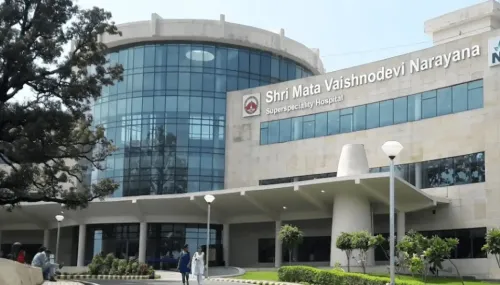
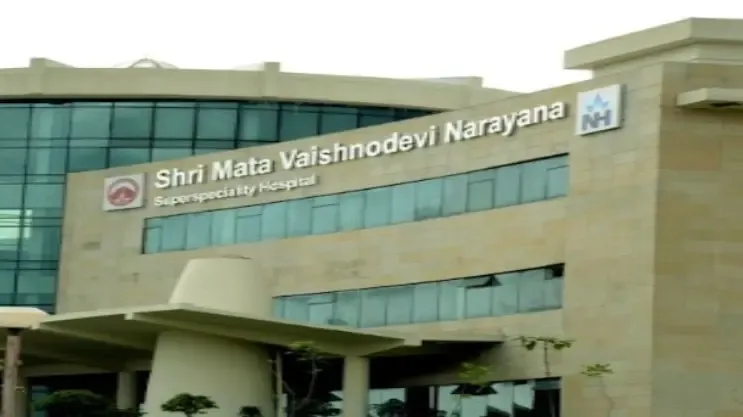
Jammu, Jan 7 (NationPress) The National Medical Commission (NMC) has made a significant move by revoking the permission for the Shri Mata Vaishno Devi Institute of Medical Excellence (SMVDIME) to commence its MBBS course, igniting a heated debate within both political and public spheres in Jammu and Kashmir.
Chief Minister Omar Abdullah has criticized the Sangharsh Samiti for initiating protests against the admission of non-Hindu candidates into the medical college.
“These students were chosen based on merit, not through any bias. The actions of the Sangharsh Samiti are perilous. If Jammu separates from J&K, the local populace will endure the same hardships faced by Ladakh post-separation,” Omar Abdullah remarked during a media briefing on the protests led by right-wing groups against the inclusion of non-Hindus in the medical program.
In its decision to withdraw support from SMVDIME, the NMC cited a recent inspection revealing a lack of adequate faculty and infrastructure.
The NMC has mandated that students enrolled in the MBBS program at this institution be reassigned to other medical colleges.
Among those admitted were thirteen Muslim and one Sikh candidates, which triggered the agitation from the right-wing Sangharsh Samiti.
Omar Abdullah has consistently stated that SMVDIME is not a minority institution and is, in fact, receiving funding from the J&K government.
Paradoxically, the Sangharsh Samiti has called for either the exclusion of non-Hindu candidates or the revocation of the college's permission to conduct the MBBS program.
As a result of the protests and the NMC's decision, the college will not be able to launch the MBBS course while ensuring that the selected candidates can secure placements in other medical institutions.
The revocation of SMVDIME's recognition is perceived by many as a setback for the advancement of the medical profession in the union territory.
“How can the de-recognition of this institution be interpreted as a triumph for anyone? It lacks rationale. We cannot select doctors based on religion, disregarding the overall merit of candidates. This contradicts the progress of the medical field in J&K,” expressed Girdhari Lal Daftari, a retired government official.
The Valley's residents are already expressing dissatisfaction with the decision as it jeopardizes the opportunities for deserving candidates from the predominantly Muslim community to gain admission if such actions are dictated purely by religious considerations.
Point of View
It is essential to recognize the implications of the NMC's decision on the educational landscape in Jammu and Kashmir. Upholding meritocracy while ensuring equitable access for all communities remains a fundamental principle. The situation underscores the need for dialogue and understanding among diverse groups to foster a more inclusive society.
NationPress
28 Sept 2026
Frequently Asked Questions
Why did the NMC revoke SMVDIME's permission?
The NMC cited inadequate faculty and infrastructure following a recent inspection as reasons for revoking SMVDIME's permission to start the MBBS course.
What was the reaction from political leaders?
Chief Minister Omar Abdullah criticized the Sangharsh Samiti for their protests against non-Hindu candidates, emphasizing the importance of merit in admissions.
How many candidates were admitted to the MBBS program?
Thirteen Muslim and one Sikh candidate secured admission to the MBBS course before the revocation.
What is the public sentiment regarding this decision?
Many residents view the revocation as a setback for the medical profession's growth in the union territory and are concerned about the implications for merit-based admissions.
What steps will be taken for the admitted students?
The NMC has directed that the students admitted for the MBBS course at SMVDIME must be reassigned to other medical colleges.