NSG leads 'Ex Sarvatra Pratighat-I' across 12 Mumbai sites in major counter-terror drill
Synopsis
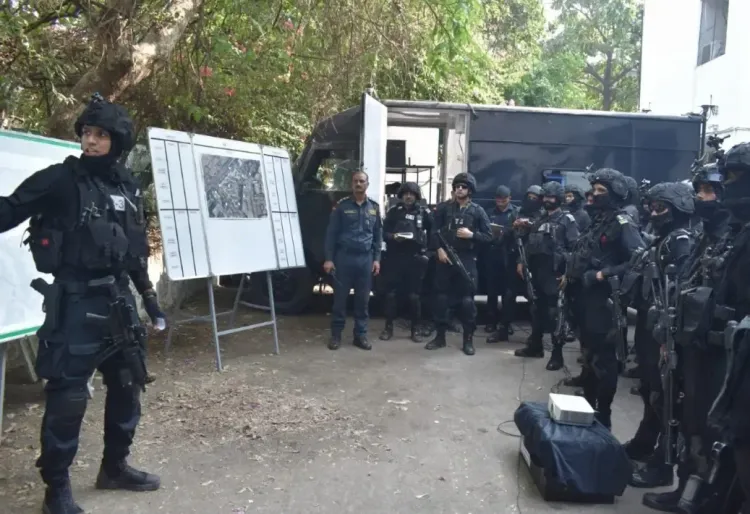
India's elite NSG led a sweeping counter-terrorism drill — 'Ex Sarvatra Pratighat-I' — across 12 simultaneous locations in Mumbai and Navi Mumbai, pulling in the Army, Navy, Air Force, Coast Guard, CISF, ATS and local police. The '-I' suffix signals this is the first in a planned series, raising the bar for urban security preparedness in India's financial capital.
Key Takeaways
The NSG conducted 'Ex Sarvatra Pratighat-I' across 12 locations in Mumbai and Navi Mumbai on 6 November 2026 .
At least 10 agencies participated, including the Indian Army , Indian Navy , Indian Air Force , Coast Guard , CISF , and Maharashtra ATS .
The drill tested simultaneous and sequential deployment at multiple sites, simulating complex, multi-point terror scenarios.
Focus areas included operational readiness, inter-agency coordination, and interoperability among central and state security forces.
The '-I' designation suggests this is the first exercise in a planned series under the Sarvatra Pratighat framework.
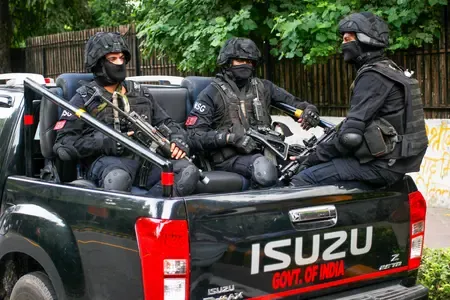
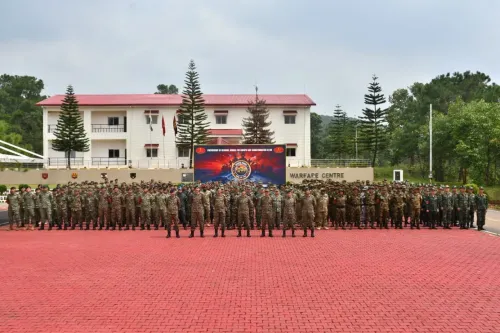
The National Security Guard (NSG) on 6 November 2026 conducted a large-scale multi-agency counter-terrorism exercise, 'Ex Sarvatra Pratighat-I', spanning 12 locations across Mumbai and Navi Mumbai. The drill was designed to evaluate and reinforce the preparedness of security forces in responding to complex, simultaneous terror threats across a dense urban landscape.
Agencies Involved
The exercise was led by the NSG in close coordination with the Mumbai Police, Maharashtra Police, Indian Army, Indian Navy, Indian Air Force, Indian Coast Guard, Central Industrial Security Force (CISF), Maharashtra Anti-Terrorism Squad (ATS), and multiple emergency response services. The breadth of participation underscored the unified approach India's security establishment is pursuing for urban counter-terrorism.
What the Drill Tested
According to officials, the exercise involved the simultaneous and sequential deployment of counter-terrorism forces at different sites, simulating scenarios that would demand coordinated, rapid intervention by multiple agencies. It tested operational readiness, inter-agency coordination, and interoperability — three metrics that security planners say are critical when threats unfold at several locations at once.
The drill also assessed the effectiveness of existing response mechanisms and coordination protocols under pressure. Officials stated that the exercise provided a live-environment opportunity to identify gaps in communication and tactical synchronisation between central and state forces.
Why Mumbai Was Chosen
Mumbai and Navi Mumbai's status as India's foremost financial and commercial hubs makes them high-value targets in any adversarial calculus. The choice of these two cities is not incidental — the 26 November 2008 terror attacks, which paralysed Mumbai for over 60 hours and claimed 166 lives, remain a defining reference point for urban counter-terrorism planning in India. Exercises of this scale are periodically conducted to ensure that the lessons of that attack are institutionally embedded and that response frameworks keep pace with evolving threat vectors.
Key Outcomes and Takeaways
The NSG said the exercise reinforced the collective commitment of all participating agencies to national and urban security while sharpening their ability to respond to evolving threats. Officials emphasised that seamless coordination and operational synergy among security forces are non-negotiable for a swift, effective, and integrated emergency response. The multi-agency format also highlighted that no single force can address a complex, multi-point terror scenario in isolation.
Details on specific outcomes, identified gaps, or future follow-on exercises have not been disclosed, as is standard practice for operational security drills of this nature. Further exercises under the 'Sarvatra Pratighat' series are likely, given the '-I' suffix in the drill's designation.
Point of View
But their real value lies in what happens after — whether identified gaps are actually plugged. India has conducted large-scale urban drills since 26/11, yet inter-agency friction, communication silos, and jurisdictional overlaps have surfaced in post-incident reviews repeatedly. The involvement of ten-plus agencies is a strength on paper; in practice, it also multiplies coordination failure points. The '-I' suffix is encouraging — it implies a series with iterative improvement — but the proof will be in whether findings from this drill translate into doctrine, not just press releases.
NationPress
6 Nov 2026
Frequently Asked Questions
What is 'Ex Sarvatra Pratighat-I'?
'Ex Sarvatra Pratighat-I' is a major multi-agency counter-terrorism exercise led by the National Security Guard (NSG), conducted across 12 locations in Mumbai and Navi Mumbai on 6 November 2026. It was designed to test coordinated responses to complex, simultaneous terror threats in an urban setting.
Which agencies participated in the Mumbai counter-terrorism drill?
The exercise included the NSG, Mumbai Police, Maharashtra Police, Indian Army, Indian Navy, Indian Air Force, Indian Coast Guard, CISF, Maharashtra ATS, and other emergency response services — representing a broad coalition of central and state security agencies.
Why was the exercise held in Mumbai and Navi Mumbai?
Mumbai and Navi Mumbai are India's foremost financial and commercial centres, making them high-priority targets for security planners. The cities also carry the institutional memory of the 26 November 2008 terror attacks, which remain the benchmark reference for urban counter-terrorism preparedness in India.
What did the drill specifically test?
The exercise evaluated operational readiness, inter-agency coordination, and interoperability among participating forces. It simulated simultaneous and sequential terror scenarios at multiple locations to assess how quickly and effectively agencies could mount a unified, integrated response.
Will more exercises under this series be conducted?
The '-I' designation in 'Ex Sarvatra Pratighat-I' suggests this is the first in a planned series of exercises. Officials have not announced a schedule for follow-on drills, but the naming convention indicates further exercises are intended under the same framework.