Steven Chu: Nuclear Energy Pivotal for India's Energy Sovereignty
Synopsis
In an insightful interview, former US Energy Secretary Steven Chu discusses how nuclear power can be the backbone of India's energy independence, especially amidst rising geopolitical tensions and market vulnerabilities. Explore his thoughts on future collaboration and the benefits of innovative reactor technologies.
Key Takeaways
Nuclear power is crucial for India's energy independence.
Geopolitical tensions expose vulnerabilities in fuel markets.
International collaboration on nuclear technology is essential.
India is focusing on breeder reactors for improved sustainability.
Innovative methods for nuclear waste disposal are being developed.
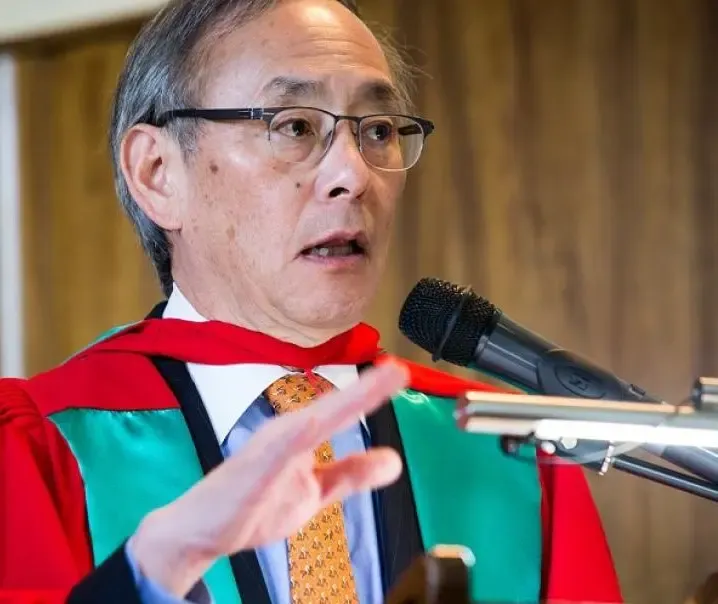
Stanford, April 18 (NationPress) Nuclear power could serve as a cornerstone for India's energy autonomy, stated former US Energy Secretary and Nobel Laureate Steven Chu, who cautioned that global geopolitical tensions are revealing weaknesses in fuel markets.
Chu, who spearheaded US energy policies during a time of increasing clean energy collaboration with India, noted that the partnership had been robust and centered on sustainability objectives.
“During my tenure as energy secretary, I built very close relationships with my Indian counterparts,” he shared in an interview with IANS. “They were genuinely committed to sustainability and combating climate change back then.”
He expressed optimism that this momentum would persist despite recent policy changes. “I hope that India continues to uphold these principles. There may have been a slight setback in the United States, but I remain hopeful we will recommit to them.”
Chu underscored the necessity for major economies to collaborate in tackling global challenges. “It’s crucial that all leading nations globally — the EU, US, India, China — unite to drive progress for the future.”
Regarding potential areas for future collaboration, he highlighted nuclear energy and innovative reactor technologies. “India is progressing with breeder reactors, which I find remarkable,” he stated. “These fast reactors effectively utilize much of the fuel used in traditional fission reactors.”
He connected current conflicts to a heightened focus on domestic energy security. “Recent conflicts in Ukraine and Iran have intensified the need for energy security within national borders,” he remarked.
Chu indicated that nuclear power presents a significant advantage for ensuring a stable energy supply. “Nuclear allows you to store fuel domestically, facilitating compact energy generation that lasts for years,” he explained. “In contrast, natural gas supplies are limited to weeks or, at most, months.”
When asked if nuclear energy could facilitate India’s energy independence, Chu affirmed, “Yes, provided they can successfully construct reactors within budget and on schedule.”
He cited China's efficient reactor construction as a model. “China has mastered this process, completing dozens of reactors on time and within budget, benefiting from a consistent workforce,” he noted. “This is the path forward, and I believe the world should take note of this example.”
Chu also addressed concerns regarding nuclear waste disposal, asserting that it is manageable through technological advancements. “The waste issue is solvable,” he stated.
He elaborated on new methods being explored. “I’m advising a group investigating techniques similar to those used in oil drilling to create deep boreholes and deposit nuclear waste in unmanned canisters,” he shared.
Such innovations could lower costs and enhance storage options. “This approach could open many more geological locations for waste storage,” he explained, emphasizing its cost-effectiveness.
“The difference between manned and unmanned approaches in space exploration is stark,” he added. “If we can manage waste disposal without extensive tunneling or ventilation, it would be revolutionary.”
Chu expressed enthusiasm for a resurgence in nuclear energy. “I am keenly interested in witnessing a new renaissance for nuclear power,” he stated.
On fossil fuels, he acknowledged the USA's increasing role in global supply but advised against overestimating its impact. “The United States has indeed become a major fossil fuel supplier globally,” he observed.
Simultaneously, he emphasized the interconnectedness of global markets. “The rise of the US as a significant player doesn’t negate the influence of the Middle East, Russia, and other suppliers,” he noted. “We need greater stability worldwide.”
Addressing the situation in the Gulf, Chu cautioned of potential long-term economic repercussions. “I hope the blockade ends soon, as it serves no beneficial purpose,” he commented.
He pointed out that even minor disruptions can lead to lasting effects. “If infrastructure for oil and gas production is damaged, it would be catastrophic,” he warned.
“Even without such destruction, the economy will take time to recuperate,” he added. “Oil, gasoline, and diesel prices aren’t likely to decline rapidly.”
“While they may decrease over a six-month period, there’s always a delay,” he cautioned, underscoring the delayed relief for consumers.
Chu highlighted the necessity of stable trade flows. “This situation illustrates how critical it is to maintain established trade patterns that have contributed significantly to global prosperity,” he stated.
India stands as one of the fastest-growing major energy consumers, with demand surging due to industrial expansion and urban development. The nation is diversifying its energy portfolio, incorporating renewables and nuclear power to mitigate reliance on imports and enhance long-term energy security.
Point of View
It is clear that Steven Chu's insights on nuclear energy and its role in India's energy strategy highlight the importance of sustainable solutions in addressing global energy challenges. His emphasis on the need for international cooperation reflects a forward-thinking approach that prioritizes energy security and environmental responsibility.
NationPress
19 Sept 2026
Frequently Asked Questions
How can nuclear energy contribute to India's energy independence?
Nuclear energy can provide a stable and long-term energy supply, reducing reliance on imported fossil fuels and enhancing energy security, as outlined by Steven Chu.
What are breeder reactors?
Breeder reactors are advanced nuclear reactors designed to generate more fissile material than they consume, enabling efficient fuel use.
What challenges does India face in nuclear energy development?
India must ensure reactors are built on time and within budget while addressing public concerns about safety and waste disposal.
Why is geopolitical stability important for energy security?
Geopolitical stability helps maintain consistent energy supply chains and prevents disruptions that can lead to market vulnerabilities.
What innovative technologies are being explored for nuclear waste disposal?
New techniques include creating deep boreholes for waste storage, which can significantly reduce costs and expand potential sites.