Odisha's Chief Minister Declares State Set to be Naxal-Free by March 31 with Just 15 Maoists Active

Synopsis
Odisha's Chief Minister Mohan Charan Majhi disclosed that only 15 Maoists are currently operational in the state, with a goal to eradicate their presence by March 31, 2026. The government is implementing rehabilitation programs for surrenders while addressing past violence.
Key Takeaways
Only 15 active Maoists remain in Odisha.
The state government aims for a Naxal-free state by March 31, 2026.
96 Maoists have surrendered in the last two years.
Rehabilitation programs are in place for surrendered Maoists.
15 civilians and 5 government personnel lost their lives to Naxal violence in the past five years.
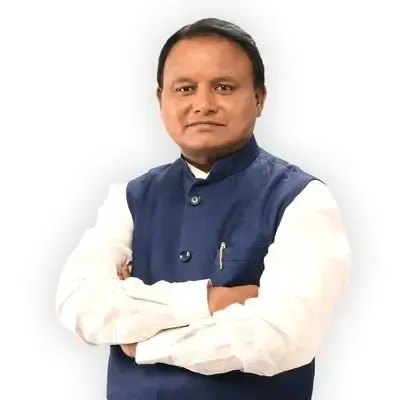
Bhubaneswar, March 23 (NationPress) Odisha's Chief Minister Mohan Charan Majhi announced on Monday that there are currently only 15 active Maoist cadres operating in various regions of the state.
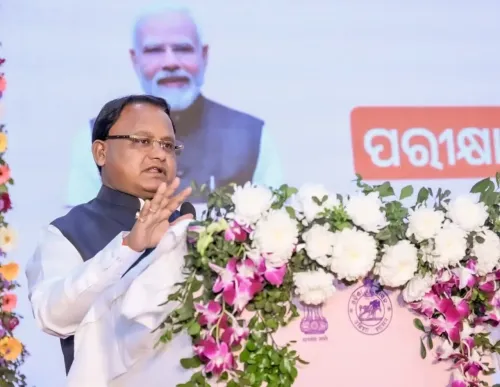
In response to a query in the state Assembly, Majhi stated that, under the Central Government’s Security Related Expenditure (SRE) scheme, only Kandhamal district is categorized as a Maoist-affected district (LWE Affected District), while eight additional districts—Boudh, Balangir, Kalahandi, Koraput, Malkangiri, Nabarangpur, Nuapada, and Rayagada—are classified as Legacy and Thrust (L&T) Districts.
“In actuality, aside from the presence of approximately 15 Maoists in border areas of Kandhamal, Kalahandi, and Rayagada districts, there is no Maoist activity elsewhere in the state,” highlighted CM Majhi.
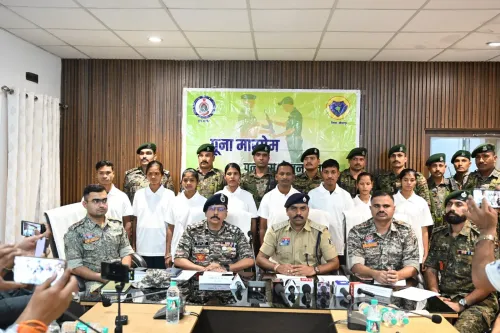
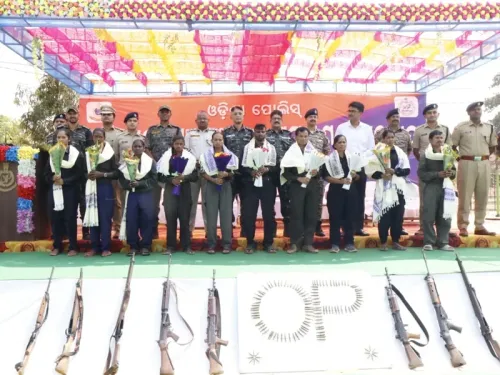
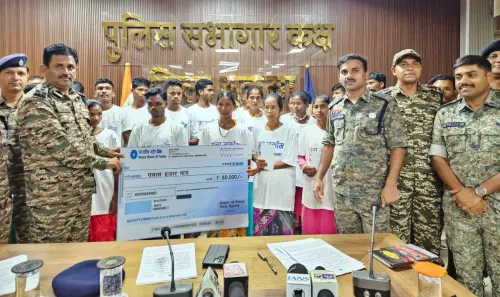
He also reported that from 2024 until March 15, 2026, a total of 96 Maoist ultras have surrendered to authorities in the state.
The Chief Minister emphasized that to facilitate the reintegration of Maoists into society, the state government is implementing a “Surrender and Rehabilitation” policy, which offers financial aid, housing, monthly stipends, vocational training for up to 36 months, marriage assistance, health cards, and ration cards to ensure a seamless transition.
In response to another inquiry, Majhi noted that over the past five years (2021 to March 15, 2026), 15 civilians and five government personnel, including security forces, have lost their lives due to Naxal-related violence across the state.
During this timeframe, security personnel neutralized 50 Maoists in encounters, arrested 78 Naxals, and saw 125 members of the Maoist party surrender between 2021 and March 15, 2026.
CM Majhi reiterated the government’s goal to achieve a Maoist-free Odisha by March 31, 2026, asserting that ongoing operations, along with rehabilitation efforts, are consistently reducing the number of active Maoist cadres in the state.
Point of View
The ongoing efforts to reduce Maoist influence in Odisha reflect a significant shift towards enhancing security and stability in the region. The government's focus on rehabilitation and integration of former Maoists is a noteworthy approach that may foster long-term peace.
NationPress
23 Sept 2026
Frequently Asked Questions
How many Maoists are currently active in Odisha?
Currently, there are only 15 active Maoist cadres in Odisha.
What measures is the Odisha government taking for Maoist rehabilitation?
The government is providing financial assistance, housing, vocational training, and health support under its 'Surrender and Rehabilitation' policy.
When does the Odisha government aim to achieve a Naxal-free state?
The government aims to make Odisha completely Naxal-free by March 31, 2026.
How many Maoists have surrendered in the last two years?
A total of 96 Maoist ultras have surrendered in the state from 2024 to March 15, 2026.
What was the impact of Naxal violence in the last five years?
Over the past five years, 15 civilians and five government personnel have lost their lives due to Naxal violence in Odisha.