Nepal's Former PM Oli: The Interwoven Uprisings of His Political Journey
Synopsis
Explore the compelling political saga of Khadga Prasad Sharma Oli, Nepal's former Prime Minister, whose career is marked by two pivotal uprisings. Uncover how his rise from a youthful activist to the highest office was challenged by a new wave of youth activism.
Key Takeaways
Oli’s political journey began with the Jhapa uprising.
He served as Nepal’s Prime Minister four times.
His tenure was marked by significant controversies.
The Gen Z movement played a crucial role in his political decline.
Oli's leadership style has been debated for its effectiveness.
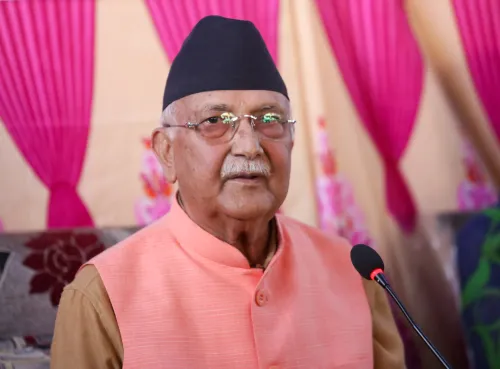
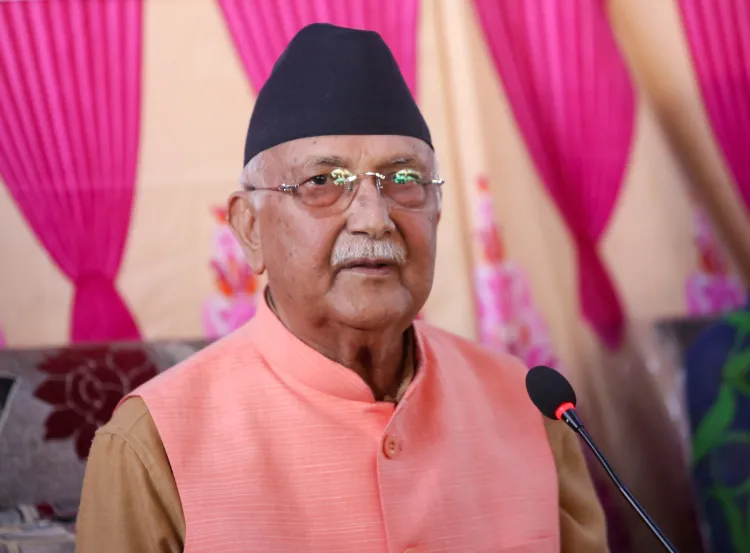
Kathmandu, March 6 (NationPress) The journey of Nepal’s former Prime Minister Khadga Prasad Sharma Oli is marked by two significant uprisings separated by more than fifty years.
The 74-year-old politician's identity was shaped long before he ascended to the prime ministership. He first gained national prominence as a youthful activist during the Jhapa uprising, a radical Leftist movement in the early 1970s that confronted local landlords and the state authority in eastern Nepal, which borders India.
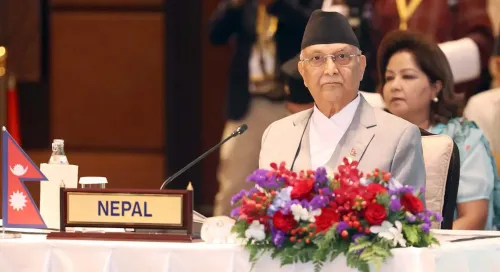
Over the years, he transitioned from an activist to a prominent party figure, earning a reputation within the then Communist Party of Nepal; his rise through party ranks culminated in several national leadership roles, eventually leading him to serve as Nepal's prime minister on four separate occasions.
His time in office featured notable policy initiatives that solidified his nationalist image.
When allied with the Maoists, he accused India of instigating a border blockade in 2015. Tensions with New Delhi further escalated with the release of a political map that included Limpiyadhura and Lipulekh.
His controversial statement in Parliament in 2020, where he claimed that the “Chinese virus was preferable to the Indian virus,” marked a pivotal moment.
Recently, his participation in China’s contentious Belt and Road Initiative drew criticism.
Supporters view Oli as 'Ba' – a paternal figure. In contrast, critics argue that he undermined intra-party democracy and ignored corruption, as summarized by a Kathmandu Post report prior to the Thursday election.
“Now Oli appears to be engaged in his final confrontation against Balen,” the report noted, adding, “While supporters perceive him as decisive and a fervent nationalist, detractors label him a power-hungry politician intolerant of opposition.”
Analysts and critics have suggested that his leadership approach favored loyalty and control, sometimes at the cost of intra-party democracy and institutional safeguards.
Supporters, however, argue that a strong leadership style was essential to overcome political stagnation and drive development.
Nonetheless, numerous controversies surrounding governance and accountability arose. Allegations ranged from enabling corruption within party ranks to employing state mechanisms against dissent.
Such claims, whether validated or disputed, contributed to a narrative among younger critics who felt that the political framework had become unresponsive and self-serving.
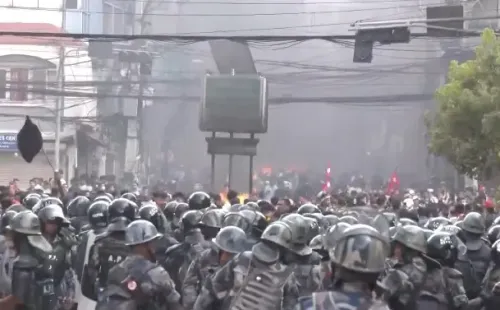
The decline in Oli’s political fortunes coincided with the Gen Z movement of 2025, when a surge of youth-led protests centered on issues like corruption, nepotism, unemployment, and social media restrictions.
These mass demonstrations, which at times escalated into violence, resulted in a political crisis following a police shooting that claimed at least 19 young lives and left many others injured.
This led to Oli’s resignation and the formation of an interim government. Media narratives and retrospectives directly linked the uprising to a loss of credibility for several high-ranking leaders, with Oli particularly singled out due to his government’s handling of the protests.
Commentaries observed that Oli's attempts to regain control within his party and to frame the uprising as a result of external interference or elite opportunism yielded mixed outcomes.
While some party loyalists remained steadfast, a broader public discourse regarding generational renewal and accountability continued to diminish the automatic advantages of incumbency.
The pressing question for Oli and his allies became whether organizational discipline and a nationalist narrative could translate into renewed electoral legitimacy.
The political rise and fall of the current Chairman of the Communist Party of Nepal (Unified Marxist–Leninist) thus encapsulates the journey of a young radical from Jhapa who reached the pinnacle of power, only to be challenged decades later by a new wave of popular, unarmed mobilization.
For the time being, his rise and fall remain a striking chapter in Nepal’s contemporary political saga – linking the insurgent movements of the 1970s to the youth-driven digital activism of the 2020s.
Point of View
The rise and fall of Khadga Prasad Sharma Oli reflects the dynamic and often tumultuous nature of Nepalese politics. His journey illustrates the challenges of leadership amid changing societal expectations, particularly from the youth. The narrative emphasizes the need for accountability and responsiveness in governance.
NationPress
12 Oct 2026
Frequently Asked Questions
What were the key events in Oli's political career?
Oli's political career was marked by his involvement in the Jhapa uprising, his multiple terms as Prime Minister, and his controversies surrounding governance, nationalism, and relations with India and China.
How did the Gen Z movement impact Oli's career?
The Gen Z movement of 2025, characterized by youth-led protests against corruption and governance issues, significantly undermined Oli's political standing and led to his resignation.
What accusations did Oli face during his tenure?
Oli faced accusations regarding corruption, a lack of intra-party democracy, and authoritarian tendencies, which fueled public dissent.
How did Oli's leadership style affect his political party?
Oli's leadership style prioritized loyalty and control, which some argue stifled democracy within the party and led to internal dissent.
What is the significance of the Jhapa uprising?
The Jhapa uprising was a radical Leftist movement in the early 1970s that marked the beginning of Oli's political journey and significantly influenced the political landscape of Nepal.