Pakistan tax reform push intensifies ahead of FY27 Budget

Synopsis
With Pakistan's FY27 budget approaching, foreign investors and business chambers are demanding a structural overhaul of the tax system — not another round of short-term levies. The OICCI, backed by $209 billion in cumulative foreign investment, is pushing for digital compliance tools and a broader tax net, warning that the status quo is driving businesses toward informality.
Key Takeaways
Pakistan faces renewed industry pressure for structural tax reforms ahead of the FY2026-27 national budget.
The Overseas Investors Chamber of Commerce and Industry (OICCI) , representing 196+ foreign firms from 30+ countries , has submitted formal taxation proposals to the government.
Cumulative foreign investments represented by OICCI members exceed $209 billion in Pakistan.
Stakeholders argue Pakistan has one of the narrowest tax bases in the region, with compliance costs discouraging formalisation.
The chamber recommends e-invoicing , electronic payments, and data-linked compliance systems to reduce undocumented economic activity.
Critics say successive governments have prioritised short-term revenue collection over structural reform, leaving core weaknesses unresolved.
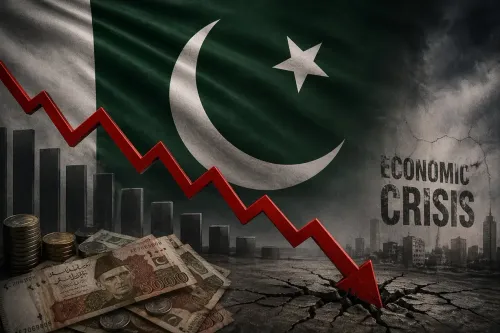
As Pakistan prepares its national budget for fiscal year 2026-27, business chambers and industry stakeholders are mounting fresh pressure for structural tax reforms, arguing the country can no longer rely on short-term revenue measures and annual fiscal adjustments to restore economic growth and investor confidence. The push reflects deepening frustration with a tax system that critics say has long penalised compliant businesses while leaving the informal economy largely untouched.
Key Demands from Industry
At the forefront of the campaign is the Overseas Investors Chamber of Commerce and Industry (OICCI), which has submitted a new set of taxation proposals to the government ahead of the budget. The chamber has called for broadening the tax base horizontally, simplifying compliance procedures, and integrating the tax framework with Pakistan's growing digital economy. According to the proposals, sustainable revenue growth cannot come from repeatedly imposing higher taxes on already-documented sectors of the economy.
The OICCI represents more than 196 foreign-invested companies from over 30 countries, with cumulative investments exceeding $209 billion in Pakistan. Member companies collectively contribute a significant share of the government's tax revenues, giving the chamber considerable weight in budget discussions.
The Structural Problem
Business stakeholders have highlighted that Pakistan continues to operate with one of the narrowest tax bases in the region. Documented businesses, they argue, face rising compliance costs and regulatory burdens, creating a perverse environment where tax compliance becomes a competitive disadvantage compared to operating informally. Successive governments, critics contend, have largely prioritised short-term revenue collection over long-term economic restructuring, leaving fundamental weaknesses in the tax architecture unresolved.
This comes amid broader fiscal stress, weak industrial competitiveness, slowing investment activity, and declining investor confidence — a combination that has made structural reform more urgent than in previous budget cycles.
Digitisation as the Way Forward
The OICCI has placed strong emphasis on digitisation as a central mechanism for improving revenue collection and economic documentation. Specific recommendations include wider adoption of electronic payments, e-invoicing, transaction traceability systems, and data-linked compliance frameworks. The chamber argues these tools can reduce undocumented economic activity without resorting to punitive taxation — a model that has shown results in comparable emerging economies.
What Happens Next
Pakistan's budget for FY2026-27 is expected to be presented in the coming weeks. Whether the government incorporates structural reforms or again leans on incremental revenue measures will be closely watched by foreign investors and multilateral lenders alike. Industry bodies have signalled that without credible reform, investor confidence is unlikely to recover meaningfully.
Point of View
Government delivers incremental adjustments, and the informal economy grows another year larger. The OICCI's $209 billion investment footprint gives its proposals real leverage, but leverage alone has not translated into reform in previous cycles. The deeper problem is political: broadening the tax net means taxing constituencies — traders, landlords, informal businesses — that have historically been shielded. Until that political calculus changes, digitisation tools and compliance simplification remain necessary but insufficient. The FY27 budget will reveal whether this government sees structural reform as an opportunity or a threat.
NationPress
24 Sept 2026
Frequently Asked Questions
Why is Pakistan facing pressure for tax reforms ahead of the FY27 budget?
Business chambers and foreign investors argue that Pakistan's tax system disproportionately burdens documented businesses while leaving the informal economy untaxed, creating a compliance disadvantage. They say short-term revenue measures have repeatedly failed to deliver sustainable growth or restore investor confidence.
What is the OICCI and what has it proposed?
The Overseas Investors Chamber of Commerce and Industry (OICCI) represents over 196 foreign-invested companies from more than 30 countries, with cumulative investments exceeding $209 billion in Pakistan. It has proposed broadening the tax base, simplifying compliance, and adopting digital tools such as e-invoicing and electronic payments to improve revenue collection.
What structural weaknesses have been identified in Pakistan's tax system?
Pakistan is reported to have one of the narrowest tax bases in the region, with documented businesses facing rising compliance costs while informal operators face little scrutiny. Successive governments are accused of prioritising short-term revenue collection over long-term restructuring.
How does digitisation help with tax reform in Pakistan?
The OICCI recommends e-invoicing, electronic payments, transaction traceability, and data-linked compliance systems to bring undocumented economic activity into the formal tax net. This approach aims to expand the revenue base without imposing additional burdens on already-compliant businesses.
When will Pakistan's FY2026-27 budget be presented?
Pakistan's national budget for fiscal year 2026-27 is expected to be presented in the coming weeks. The government's response to industry reform proposals will be closely monitored by foreign investors and multilateral lenders.