IMF Delays $1 Billion Loan as Pakistan Struggles with Tax Collection
Synopsis
Negotiations for a $1 billion loan from the IMF to Pakistan have stalled due to the country's ongoing tax collection issues and concerns about budget credibility. The IMF's concerns about Pakistan's tax system highlight ongoing fiscal challenges.
Key Takeaways
The IMF is withholding a $1 billion loan due to tax collection issues.
Pakistan's tax-to-GDP ratio is among the lowest globally.
Significant parts of the economy remain untaxed or poorly taxed.
Public sector enterprises are a major financial burden.
Energy sector circular debt poses severe economic risks.
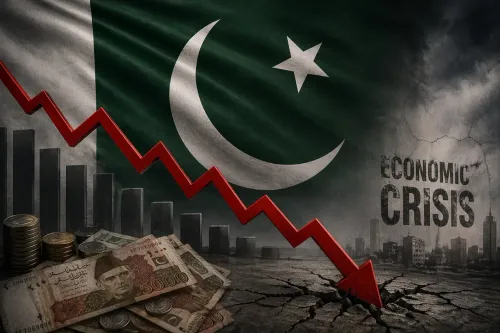
New Delhi, March 15 (NationPress) Negotiations between Pakistan and the International Monetary Fund (IMF) regarding the release of a $1 billion installment have reportedly hit another snag due to the country's insufficient tax collection and concerns regarding the integrity of the current budget, according to reports.
The IMF has once again criticized Pakistan’s tax system, suggesting that it is improbable that revenue targets will be met, as detailed in an article from the Karachi-based Business Recorder.
"The concern is valid. Pakistan’s tax framework has consistently underperformed. The country’s tax-to-GDP ratio remains around 9–10 percent, one of the lowest among similar emerging economies. The tax base is limited, the informal economy is extensive, and compliance rates are low," the article noted.
For decades, each IMF program has insisted that Pakistan enhance tax administration, widen the tax base, and elevate revenue targets. Despite these consistent demands, the outcomes have been modest, with the reasons being well understood.
The formal sector continues to shoulder the majority of the tax burden, while significant portions of wealth, particularly in retail, agriculture, and others, remain lightly taxed or entirely outside the system.
The informal economy, often believed to comprise 40 percent of GDP, remains largely unregulated.
Pakistan’s fiscal challenges are not solely due to inadequate revenue collection; substantial financial leakages persist within the public sector without decisive reform, the article highlighted.
A glaring example is the ongoing drain from loss-making public sector enterprises. Entities like Pakistan International Airlines and Pakistan Steel Mills have racked up enormous losses over the years. Their liabilities are ultimately covered by the national treasury through subsidies, guarantees, and debt restructuring.
These organizations persist mainly because governments are reluctant to face the political repercussions of restructuring or privatization. Yet, their financial losses amount to hundreds of billions of rupees, quietly depleting public resources annually.
Interestingly, while IMF programs frequently stress precise revenue targets, the urgency surrounding the reform of public sector enterprises appears less compelling. Plans for privatization progress slowly, restructuring deadlines are neglected, and fiscal support for failing entities continues, the article lamented.
An even larger financial drain exists in Pakistan’s energy sector. The notorious circular debt—a complicated web of unpaid obligations within the electricity framework—has escalated to trillions of rupees.
The IMF has repeatedly called for increased electricity tariffs to bridge the financial gap. However, simply raising tariffs will not resolve a system plagued by inefficiency and poor management. Without comprehensive restructuring of power distribution companies and enhanced governance, the circular debt will perpetuate.
Another aspect that rarely receives thorough examination is excessive or unproductive public spending. Federal and provincial budgets continue to carry substantial administrative costs, poorly targeted subsidies, and politically motivated development initiatives with minimal economic benefit. Fiscal discipline cannot depend solely on increasing revenue; it must also involve rigorous evaluation of public expenditure, the article concluded.
Point of View
The ongoing struggles between Pakistan and the IMF signify a critical moment for the country's fiscal policy. With persistent tax collection challenges and substantial public sector losses, there's an urgent need for systemic reform to restore credibility and financial stability.
NationPress
24 Sept 2026
Frequently Asked Questions
Why has the IMF withheld the loan to Pakistan?
The IMF has withheld the loan due to Pakistan's weak tax collection performance and concerns regarding the credibility of its current budget.
What are the major issues in Pakistan's tax system?
Pakistan's tax system faces challenges such as a low tax-to-GDP ratio, a narrow tax net, and significant portions of the economy operating informally.
How does the circular debt affect Pakistan's economy?
The circular debt in Pakistan's energy sector creates a chain of unpaid obligations, contributing to financial instability and necessitating urgent reform.
What impact do public sector enterprises have on the economy?
Loss-making public sector enterprises in Pakistan drain resources through subsidies and liabilities, worsening fiscal challenges.
What reforms are needed in Pakistan's fiscal policy?
Pakistan needs to reform its tax administration, broaden its tax base, and improve public spending practices to enhance fiscal discipline.