Sheikh Hasina won't return in December, only winter: Dhaka
Synopsis
“Only winter will come.” Bangladesh's junior foreign minister mocked reports of Sheikh Hasina's planned Victory Day homecoming. He insisted she will return only in handcuffs through extradition, while Hasina says she is ready to face arrest or worse. The extradition question now sits with New Delhi.
Key Takeaways
Bangladesh State Minister for Foreign Affairs Humaiun Kobir said on 26 November that Sheikh Hasina will not return in December: “only winter will come.” Kobir said Hasina can return only through the extradition treaty , in handcuffs or under strict surveillance.
Dhaka has asked India to hand over Hasina and others accused of crimes, according to UNB .
Hasina reportedly wishes to return to Dhaka on a state aircraft on 16 December , Bangladesh's Victory Day .
Hasina has said the risk of arrest, imprisonment or death will not stop her from returning.
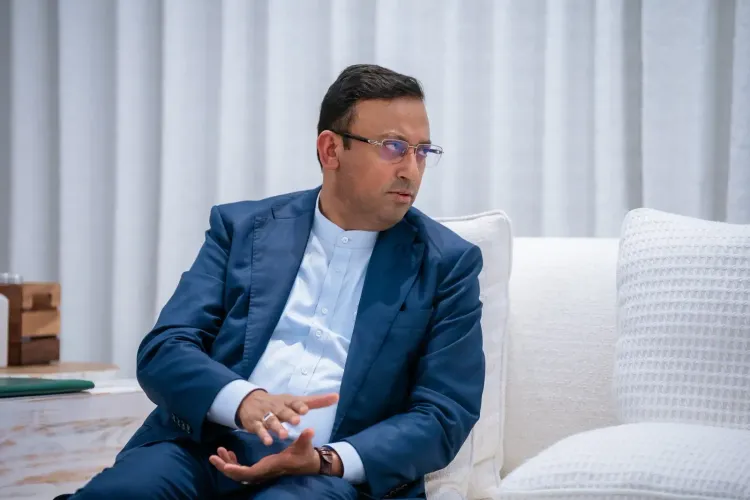
Bangladesh's State Minister for Foreign Affairs Humaiun Kobir on Thursday, 26 November, said former Prime Minister Sheikh Hasina will not return to the country in December. In a sarcastic remark to reporters in Dhaka, he said “only winter will come.” Kobir added that Hasina can return only through the extradition treaty with India, according to local media reports.
His comments came days after reports that Hasina, currently living in exile in India, wishes to fly back to Dhaka on a state aircraft on 16 December. The date is Bangladesh's Victory Day.
Key Developments
Kobir spoke to reporters at Bangladesh's Ministry of Foreign Affairs. He referred to a statement he had made earlier in Sylhet. “I have already said at a meeting in Sylhet that Sheikh Hasina will not come in December...nobody will come in December; only winter will come,” he said, as quoted by United News of Bangladesh (UNB).
The minister said a formal handover was the “only way” Hasina could return. He said she would have to be brought back in handcuffs or under strict surveillance.
According to UNB, Kobir said Dhaka wants New Delhi to hand over Hasina and others accused of crimes under the existing extradition treaty. He added that Bangladesh has already sent the requests to the relevant authorities.
A Repeated Hard Line From Dhaka
Thursday's remarks were the second time this week that Kobir commented on Hasina's possible return. On Tuesday, he said that if she wanted to come back on 16 December, she would have to do so in handcuffs as a prisoner. He made those remarks while answering journalists' questions after briefing foreign diplomats at the foreign ministry in Dhaka.
The leading Bengali daily Prothom Alo quoted his response to a question about media reports on Hasina's planned return. “This news may be shown and shown by paying money. But we have to distinguish between reality and desire. The reality is that terrorists will be brought back to the country only to face justice,” Kobir said.
He continued: “Some may have a wish, some may have nightmares while lying in their bedroom, that they are coming to the airport, boarding a train. But they are not ordinary passengers. They can only be brought back to the country in handcuffs or to face justice. That is the point.”
What Sheikh Hasina Has Said
Earlier this month, Hasina said that the risk of arrest, imprisonment or death would not stop her from returning. She said she would rather die in her homeland than stay away from her people.
In a rare audio interview, she listed the risks she has weighed. “Look, I understand the risks very well. I may be arrested the moment I arrive. They may send me to prison. They may even try to kill me. I have considered all these possibilities. But, you know, I stopped worrying about my personal safety a long time ago,” she said.
She also pointed to her past returns. “I returned to Bangladesh in 1981, despite military rule. I returned again in 2007, knowing that the military-backed government might arrest me. I have faced imprisonment and repeated attempts on my life. Fear has never stopped me from doing what I believe is right,” she said.
Why It Matters for India-Bangladesh Ties
Dhaka's public demands put the extradition question at the centre of its relationship with New Delhi. Because Hasina is living in India, any decision on the extradition requests rests with Indian authorities. As a result, the issue is both a domestic political matter in Bangladesh and a diplomatic one between the two neighbours.
Hasina's reported wish to return on Victory Day carries strong symbolism, since the day marks Bangladesh's liberation from Pakistan. With 16 December about three weeks away, attention will be on how India responds to Dhaka's requests and whether Hasina goes ahead with her planned return.
Point of View
Dhaka is shifting the diplomatic burden onto India, which now hosts a former head of government that Bangladesh's leadership openly calls a terrorist. Hasina's invocation of 1981 and 2007 shows she is framing any return as a political homecoming, not a surrender. The real flashpoint is not the weather in December but whether India acts on, or quietly sits on, the extradition requests.
NationPress
26 Nov 2026
Frequently Asked Questions
What did the Bangladesh minister say about Sheikh Hasina's return?
State Minister for Foreign Affairs Humaiun Kobir said Sheikh Hasina will not return in December and that “only winter will come.” He said she can be brought back only through the extradition treaty, in handcuffs or under strict surveillance.
When does Sheikh Hasina reportedly want to return to Bangladesh?
Hasina reportedly wishes to return to Dhaka on a state aircraft on 16 December. The date is celebrated as Victory Day, marking Bangladesh's liberation from Pakistan.
Has Bangladesh asked India to extradite Sheikh Hasina?
Yes. Kobir said Bangladesh wants India to hand over Hasina and other accused individuals under the existing extradition treaty, and that requests have been made to the relevant authorities.
What has Sheikh Hasina said about returning to Bangladesh?
Hasina has said the risk of arrest, imprisonment or even being killed will not stop her from returning. She pointed to her returns in 1981 and 2007 despite threats to her safety.
Where is Sheikh Hasina currently living?
Sheikh Hasina, the former Prime Minister of Bangladesh, is currently living in exile in India.