MEA: Hasina extradition request separate from voluntary return
Synopsis
India has drawn a legal line between Dhaka's extradition request for Sheikh Hasina and any voluntary return on a travel document. The MEA said the request is under examination, even as Bangladesh officials insisted she can come back on 16 December only in handcuffs. Hasina has said arrest or death would not stop her from going home.
Key Takeaways
The MEA on 25 November said Dhaka's extradition request for former Bangladesh Prime Minister Sheikh Hasina is being examined under established processes.
Spokesperson Randhir Jaiswal said a voluntary return on a travel document is a separate matter from extradition.
Bangladesh State Minister Humaiun Kobir said Hasina would have to return in handcuffs if she came back on 16 December , Victory Day.
Advisor Zahed Ur Rahman said talks on her return would be with India, not with Hasina, and that she has been convicted.
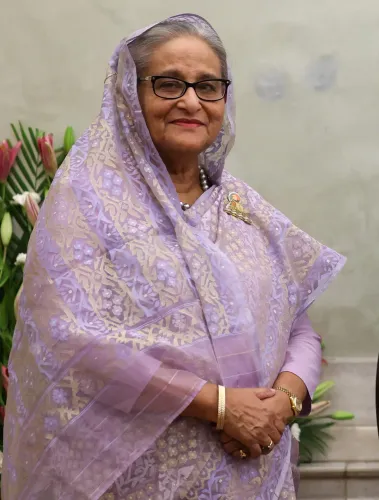
Hasina, living in exile in India, said arrest, prison or death would not stop her from returning home.
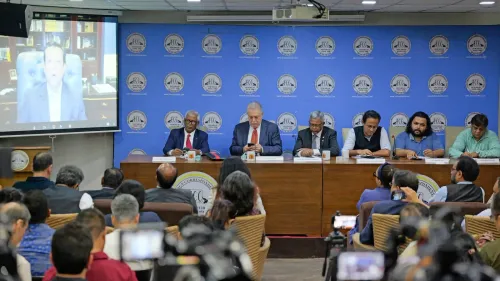
India on Wednesday drew a clear line between Dhaka's request for the extradition of former Bangladesh Prime Minister Sheikh Hasina and any voluntary return by her on a travel document, saying the two tracks are being treated as distinct. Ministry of External Affairs (MEA) spokesperson Randhir Jaiswal made the remarks at a bi-weekly media briefing in New Delhi on 25 November, as Bangladesh officials publicly insisted she could come back only in custody to face justice.
What the MEA said
Responding to a question on the extradition request submitted by the Bangladesh government and reports of Hasina's planned return next month, Jaiswal said: “The extradition request is being examined in line with our established processes. The case of a citizen willing to return voluntarily to her country on a travel document is a matter separate from the extradition request.”
The formulation keeps New Delhi's handling of the formal extradition file distinct from any scenario in which Hasina, who is currently living in exile in India, might travel back of her own accord. The MEA did not set a public timeline for completing its examination of Dhaka's request, nor did it confirm any travel arrangement.
Dhaka's line on a 16 December return
This comes amid a hardening public position in Bangladesh. On Tuesday, State Minister for Foreign Affairs Humaiun Kobir said Hasina would have to return to the country in handcuffs as a prisoner if she wished to come back on 16 December. He spoke after briefing foreign diplomats at the Ministry of Foreign Affairs in Dhaka.
Hasina, according to reports, wishes to return to Dhaka aboard a state aircraft on 16 December, a day observed as Victory Day, marking Bangladesh's liberation from Pakistan. Kobir rejected that framing. Bangladesh's leading Bengali daily Prothom Alo quoted him as saying: “This news may be shown and shown by paying money. But we have to distinguish between reality and desire. The reality is that terrorists will be brought back to the country only to face justice. Some may have a wish, some may have nightmares while lying in their bedroom, that they are coming to the airport, boarding a train. But they are not ordinary passengers. They can only be brought back to the country in handcuffs or to face justice. That is the point.”
Bangladesh Prime Minister's Advisor on Information and Broadcasting, Zahed Ur Rahman, separately ruled out any direct discussions with Hasina over her return, saying talks on the matter would be held with India. At a press conference at the Secretariat in Dhaka on Tuesday, Rahman said there was no legal impediment to her extradition, given that Hasina herself wanted to return to Bangladesh.
“Whether Sheikh Hasina will come or not is not a matter to be discussed with her. The discussion will be with India. A serious criminal is in India along with her associates. She has been convicted. So, whether she will come or not, whether she will travel on Biman Bangladesh Airlines or their aircraft, or come on foot, and how she will be handed over—these matters will be discussed with India,” Rahman was quoted as saying.
Hasina's public stance
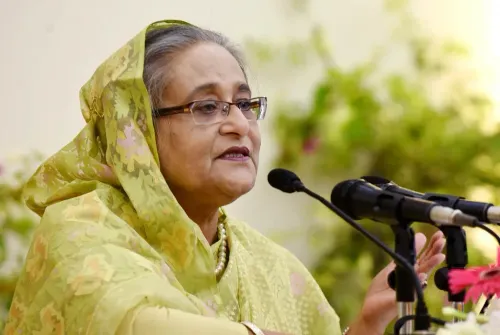
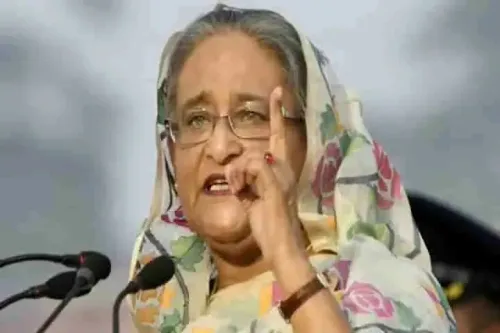
Earlier this month, Hasina asserted that the risk of being arrested, imprisoned or killed would not deter her from returning to Bangladesh, saying she would rather die in her homeland than remain away from her people. In a rare audio interview, she said fear had never stopped her from doing what she believed was right, recalling previous returns to Bangladesh despite political uncertainty and threats to her safety.
“Look, I understand the risks very well. I may be arrested the moment I arrive. They may send me to prison. They may even try to kill me. I have considered all these possibilities. But, you know, I stopped worrying about my personal safety a long time ago. I returned to Bangladesh in 1981, despite military rule. I returned again in 2007, knowing that the military-backed government might arrest me. I have faced imprisonment and repeated attempts on my life. Fear has never stopped me from doing what I believe is right,” she stated.
Why the distinction matters
The MEA's wording lands against two competing public scripts. Dhaka has described Hasina as convicted and as a serious criminal, spoken of a prisoner-style handover, and said any discussion will be with India rather than with her. Hasina has framed an intended homecoming around Victory Day symbolism and a willingness to accept arrest or worse. Notably, India has not publicly accepted either characterisation as deciding the legal path.
By treating a possible voluntary return on a travel document as distinct from the extradition file, New Delhi has signalled that two processes exist and that neither has been closed or conceded in public. How those tracks interact is now a bilateral question, because Hasina is in exile in India while Bangladesh has formally sought her extradition.
What happens next
Dhaka has indicated that modalities — including the airline, the manner of handover and whether she travels at all — will be discussed with India, not with Hasina. New Delhi has confined itself to saying the extradition request is under examination and that a voluntary return on a travel document is a separate question. Whether any movement is attempted around 16 December, and how India applies its established processes to Dhaka's request, will be watched closely in both capitals.
Point of View
A prisoner handover, talks only with India — dictate the legal characterisation of any travel. Victory Day as a chosen return date is a political claim on Bangladesh's founding narrative, which current authorities in Dhaka have answered by labelling Hasina a terrorist and a convict in the same breath. The test for India is whether established procedures actually constrain both the guest in exile and the government demanding her, or whether the file becomes another arena in which symbolism outruns the law.
NationPress
25 Nov 2026
Frequently Asked Questions
What did India say about Sheikh Hasina's extradition request?
India said Dhaka's extradition request for former Bangladesh Prime Minister Sheikh Hasina is being examined in line with established processes. MEA spokesperson Randhir Jaiswal added that a citizen willing to return voluntarily on a travel document is a separate matter from the extradition request.
Is Sheikh Hasina's possible return the same as extradition?
No. The MEA has stated that a voluntary return on a travel document is a matter separate from the extradition request. The formal request from Dhaka continues to be examined under India's established procedures.
When does Sheikh Hasina want to return to Bangladesh?
Hasina reportedly wishes to return to Dhaka aboard a state aircraft on 16 December, observed as Victory Day marking Bangladesh's liberation from Pakistan. Bangladesh officials have said that if she comes back that day she would have to do so in handcuffs as a prisoner.
What has Bangladesh said about Hasina coming back?
State Minister for Foreign Affairs Humaiun Kobir said she would have to return in handcuffs as a prisoner if she wished to come back on 16 December. Prime Minister's Advisor Zahed Ur Rahman said discussions on her return would be held with India, not with Hasina, and described her as a convicted serious criminal.
What did Sheikh Hasina say about the risks of returning?
Hasina said the risk of being arrested, imprisoned or killed would not deter her from returning to Bangladesh. In a rare audio interview she recalled returning in 1981 despite military rule and in 2007 despite the risk of arrest, adding that fear had never stopped her from doing what she believed was right.