MEA distances India from Sheikh Hasina's media remarks on Bangladesh
Synopsis
India's MEA has formally stepped back from Sheikh Hasina's New Delhi press conference, calling it a private event and refusing to endorse her attacks on Dhaka's current government — a carefully calibrated move as Bangladesh presses for her extradition and bilateral tensions mount.
Key Takeaways
The MEA on 7 August clarified that Sheikh Hasina 's virtual media interaction in New Delhi was organised by a private entity, not the Indian government.
Spokesperson Randhir Jaiswal said India does not endorse any remarks made at the forum, particularly those concerning Bangladesh's current government.
Hasina , in exile in India for two years, alleged Bangladesh remains in 'fear, terror and economic hardship' under the BNP after what she called a 'rigged election.' The BNP -led Dhaka government called Hasina an 'absconding convicted genocider' and urged India to extradite her.
Sajeeb Wazed Joy alleged foreign intelligence agencies including the ISI have an 'open hand' in Bangladesh; the MEA said India is 'closely' monitoring neighbourhood developments.
Hasina has indicated she plans to return to Bangladesh by year-end .
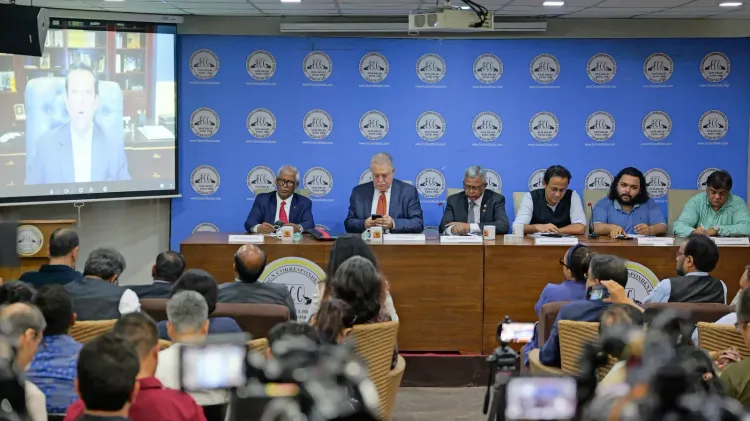
India's Ministry of External Affairs (MEA) on Friday, 7 August formally distanced the government from former Bangladesh Prime Minister Sheikh Hasina's virtual media interaction held in New Delhi on Wednesday, stating it had no role in organising the event and does not endorse any remarks made at the forum — particularly those directed at the current government in Dhaka.
What the MEA Said
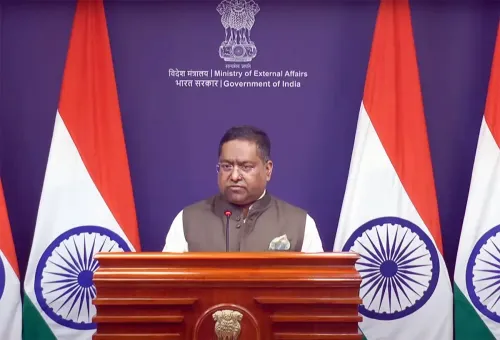
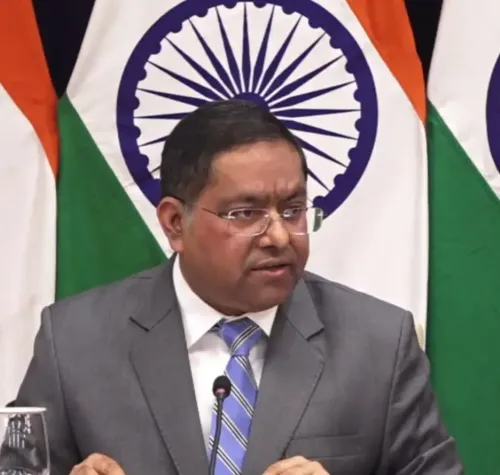
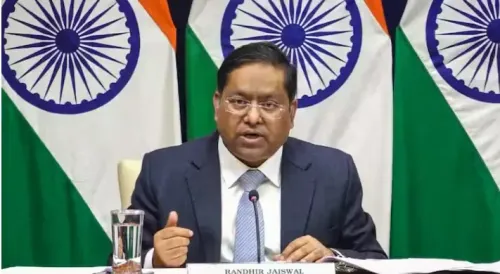
MEA spokesperson Randhir Jaiswal, addressing a bi-weekly press briefing in New Delhi, clarified that the programme was organised by a private media entity. 'The government had no role to play in what was an event by a private media entity and the government does not endorse anything said at the forum, especially with regard to the duly constituted government of Bangladesh,' Jaiswal said.
The clarification reiterates India's earlier position and comes amid heightened diplomatic friction between New Delhi and Dhaka following Hasina's public remarks.
What Hasina Said at the Event
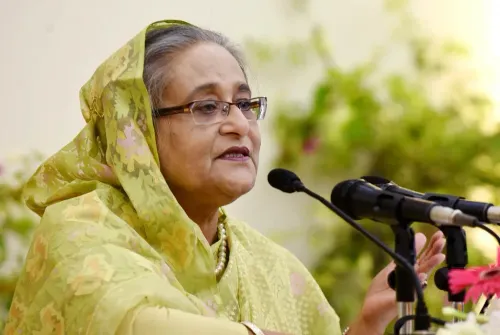
Sheikh Hasina, who has been living in exile in India for the past two years, addressed the press conference via an audio link from New Delhi on Wednesday. She claimed that Bangladesh's situation had deteriorated over the last two years, with citizens continuing to live in an atmosphere of 'fear, insecurity and economic distress' despite the Bangladesh Nationalist Party (BNP) assuming office following what she described as a 'rigged election.'
'Even after a rigged election brought the BNP to power, the situation did not change. Bangladesh remains in the grip of fear, terror, depression, economic hardship and deep insecurity,' Hasina said. She also indicated she intends to return to Bangladesh by year-end.
Dhaka's Sharp Response
The BNP-led Bangladesh government reacted strongly to Hasina's address, describing her as an 'absconding convicted genocider,' a 'mass murderer,' and the head of a 'mafia enterprise' — remarks made in the context of the anniversary of the 2024 July Revolution. Dhaka also formally urged New Delhi to extradite Hasina and termed the event an affront to Bangladesh's sovereignty.
Several former Bangladeshi ministers pushed back against the Tarique Rahman-led government's characterisation, calling the political rhetoric 'juvenile' and accusing the administration of abandoning diplomatic decorum in an attempt to suppress dissenting voices.
Sajeeb Wazed Joy's Allegations
Joining the interaction virtually from the United States, Hasina's son and former Advisor Sajeeb Wazed Joy thanked Prime Minister Narendra Modi, saying the Indian government had 'shown her the utmost respect and for that I'm eternally grateful.' Wazed also alleged that Bangladesh has become 'another Pakistan' on India's eastern front, claiming foreign intelligence agencies — including, he alleged, the ISI — have an 'open hand' in the country, with terror elements reportedly operating 'openly.'
Responding to Wazed's allegations, Jaiswal said India was 'closely' monitoring developments in its neighbourhood. 'We continue to closely follow developments that happen in our neighbourhood. Keeping in mind our national security interests and whatever measures have to be taken in that regard, we take those to secure our interests,' he said.
What Comes Next
India's careful distancing signals an effort to preserve diplomatic relations with Dhaka while managing the politically sensitive presence of Hasina on Indian soil. With Hasina signalling a return to Bangladesh by year-end and Dhaka pressing for her extradition, the bilateral dynamic between the two neighbours is likely to remain under close watch in the weeks ahead.
Point of View
Even by a private entity? The MEA's 'private event' framing is legally defensible but politically thin. Dhaka will read the episode as tacit tolerance regardless of the disclaimer. With Bangladesh pressing for extradition, ISI-influence allegations now on record, and Hasina signalling a return home, New Delhi faces a narrowing window to stabilise what was once its most predictable eastern relationship.
NationPress
21 Sept 2026
Frequently Asked Questions
Why did India's MEA issue a statement on Sheikh Hasina's media interaction?
The MEA issued the statement to formally distance the Indian government from Hasina's remarks after Dhaka protested the event and demanded her extradition. Spokesperson Randhir Jaiswal clarified that the Wednesday programme was organised by a private media entity and that the government does not endorse anything said at the forum.
What did Sheikh Hasina say at the press conference?
Speaking via audio link from New Delhi, Hasina claimed Bangladesh has deteriorated over the past two years, alleging citizens live in fear, insecurity, and economic distress despite the BNP assuming power through what she called a 'rigged election.' She also said she intends to return to Bangladesh by year-end.
How did the Bangladesh government respond to Hasina's remarks?
The BNP-led government in Dhaka described Hasina as an 'absconding convicted genocider' and a 'mass murderer,' urged India to extradite her, and called the event an affront to Bangladesh's sovereignty. Several former Bangladeshi ministers criticised this response as 'juvenile' and diplomatically improper.
What allegations did Sajeeb Wazed Joy make about Bangladesh?
Sajeeb Wazed Joy, Hasina's son and former Advisor, alleged that Bangladesh has become 'another Pakistan' on India's eastern front, claiming foreign intelligence agencies including the ISI have an 'open hand' in the country and that terror elements are operating openly.
What is India's position on its national security interests in Bangladesh?
MEA spokesperson Randhir Jaiswal said India is 'closely' monitoring developments in its neighbourhood and will take all necessary measures to protect its national security interests, without specifying any particular action in response to Wazed Joy's allegations.