Education Minister Pradhan flags Kamarajar Port terminal nod
Synopsis
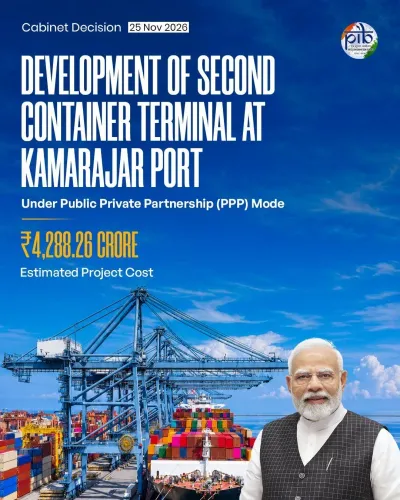
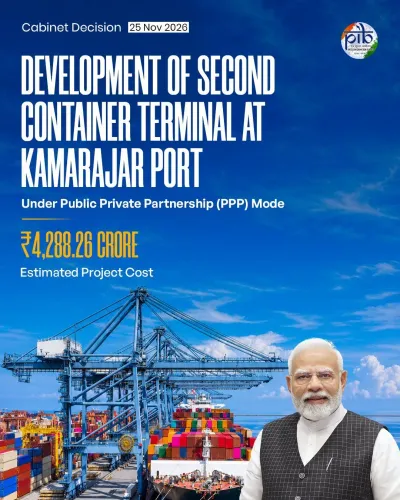
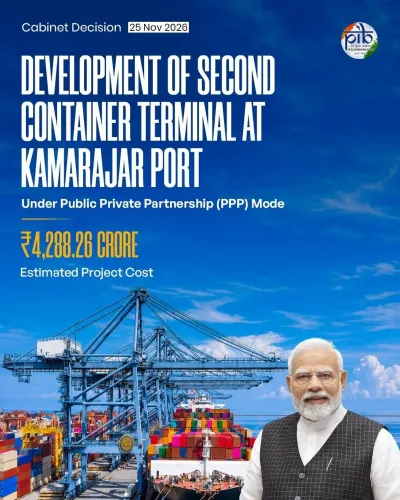
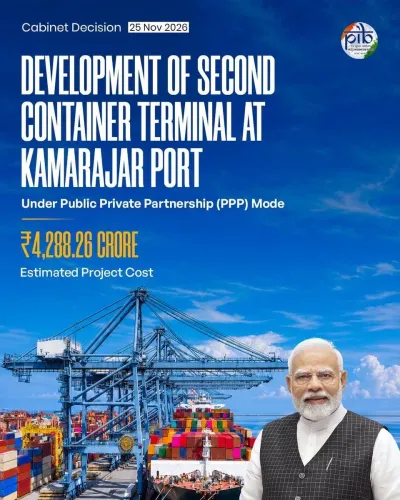
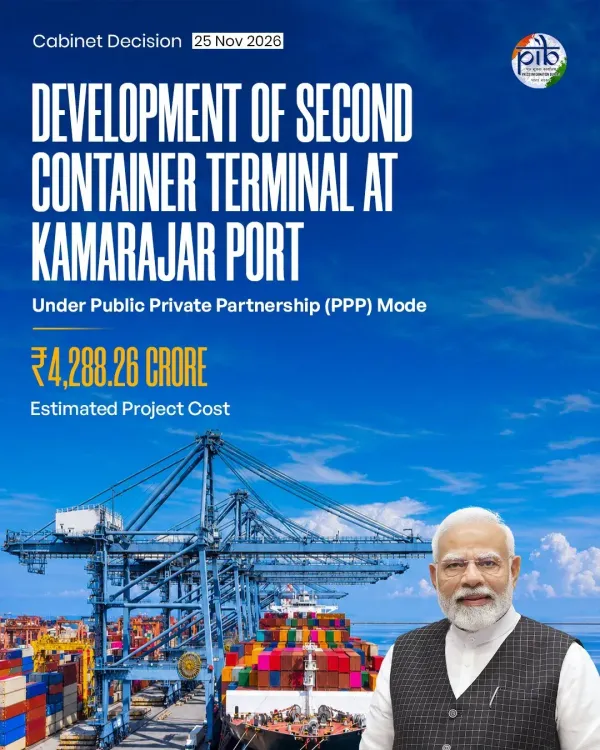
Dharmendra Pradhan said the Cabinet Committee on Economic Affairs has approved a second container terminal at Kamarajar Port, Tamil Nadu, at an estimated ₹4,288.26 crore. He said the 2 million TEU facility, with an 18-metre draft, will handle ships up to 400 metres and cut reliance on foreign transshipment hubs.
Key Takeaways
Union Education Minister Dharmendra Pradhan on 25 November 2026 said CCEA has approved a second container terminal at Kamarajar Port, Tamil Nadu.
He put the estimated project cost at ₹4,288.26 crore.
He said the terminal will have an annual capacity of 2 million TEUs and an 18-metre design draft.
The facility is designed to handle container vessels up to 400 metres in length and enable direct mainline calls.
Kamarajar Port, originally Ennore Port, has handled bulk cargo such as coal and iron ore since 2001.
Pradhan said the project will reduce dependence on foreign transshipment hubs and make maritime logistics more competitive.
Union Education Minister Dharmendra Pradhan on Wednesday, 25 November 2026, put a Cabinet green light for a second container terminal at Kamarajar Port in Tamil Nadu at the heart of India's push to berth the world's largest box ships at home. He said the Cabinet Committee on Economic Affairs has approved the project at an estimated ₹4,288.26 crore — a bet, in his telling, on direct mainline calls and leaner maritime logistics.
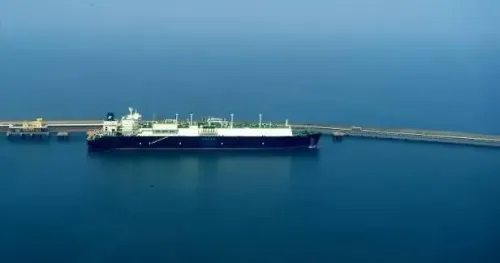
Pradhan wrote that the expansion of India's maritime infrastructure is vital to strengthening the country's position in global trade. The new facility, he said, will have an annual capacity of 2 million TEUs and an 18-metre design draft, equipped to handle some of the world's largest container vessels, including ships up to 400 metres in length.
Built for 400-metre mainline ships
Those specifications are the operational core. An 18-metre draft and a 400-metre berth are meant so the biggest container vessels can call India directly rather than drop boxes at a foreign hub for a feeder hop. Pradhan said the terminal will enable direct calls by larger mainline vessels, strengthen international shipping connectivity, reduce dependence on foreign transshipment hubs and make maritime logistics more efficient and competitive for the nation.
For exporters and shipping lines, that is the commercial hook: fewer extra handlings, a stronger east-coast liner option, and a bid to keep Indian cargo on Indian berths.
Kamarajar's shift from bulk to boxes
Kamarajar Port, originally developed as Ennore Port, has handled bulk cargo including coal and iron ore since commercial operations began in 2001. The Union government has approved successive phases of capacity expansion at the harbour. A second container terminal is the latest layer in that build-out, aimed at giving Tamil Nadu's northern coast a deeper stake in global liner trade.
The broader pattern is familiar. Successive central governments have prioritised deepening and mechanisation of existing ports so Indian cargo does not have to ride a feeder to another country's transshipment yard. The Kamarajar nod sits in that line — one more attempt to keep the box, and the value, on an Indian quay.
From Cabinet paper to a ship on the berth
A Cabinet approval is the starting gun, not the finish. The next markers are tendering, construction milestones, and any linked road-rail connectivity that will decide whether 2 million TEUs a year can actually move inland without choking the hinterland.
Until steel is in the water and a 400-metre ship is on the berth, the competitive gain remains a promise. The Cabinet has opened the door. The east coast now has to walk through it.
Point of View
Mechanise berths, and try to stop Indian boxes leaking to foreign transshipment hubs. Pradhan's intervention, coming from the education docket, shows how Cabinet infrastructure decisions are being amplified across the Union council as a national competitiveness story, not a shipping-ministry footnote. The figures he cited — 2 million TEUs, 18 metres of draft, 400-metre ships — are the operational test. If tenders and hinterland links keep pace, the east coast gains a genuine mainline option; if they lag, the transshipment problem simply changes address.
NationPress
25 Nov 2026
Frequently Asked Questions
What did the CCEA approve at Kamarajar Port?
According to Union Education Minister Dharmendra Pradhan, the Cabinet Committee on Economic Affairs has approved development of a Second Container Terminal at Kamarajar Port in Tamil Nadu. He put the estimated cost at ₹4,288.26 crore.
What is the planned capacity of the new Kamarajar container terminal?
Pradhan said the terminal will have an annual capacity of 2 million TEUs. He added it will have an 18-metre design draft and can handle container ships up to 400 metres in length.
Why is a second container terminal being built at Kamarajar Port?
Pradhan said the project will enable direct calls by larger mainline vessels, strengthen international shipping connectivity and reduce dependence on foreign transshipment hubs. The wider policy pattern has been to deepen Indian ports so cargo need not be transshipped abroad.
Where is Kamarajar Port located?
Kamarajar Port is a major port in Tamil Nadu, originally developed as Ennore Port. It has handled bulk cargo including coal and iron ore since commercial operations began in 2001.
When was the Kamarajar Port second terminal announced?
Union Education Minister Dharmendra Pradhan announced the CCEA approval on 25 November 2026. He described it as a significant step in expanding India's maritime infrastructure.