Sonowal: Cabinet okays Kamarajar second container terminal
Synopsis
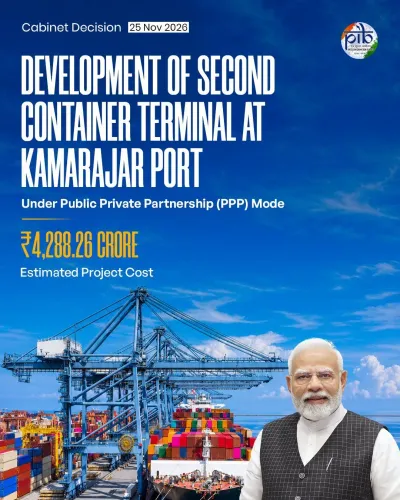
Union Ports and Shipping Minister Sarbananda Sonowal said the Cabinet chaired by Prime Minister Narendra Modi approved a second container terminal at Kamarajar Port under PPP. He cited an estimated ₹4,288.26 crore cost, 2.0 million TEUs across two phases, and an 18-metre draft to lift EXIM connectivity.
Key Takeaways
Union Ports and Shipping Minister Sarbananda Sonowal said the Cabinet chaired by Prime Minister Narendra Modi approved a second container terminal at Kamarajar Port .
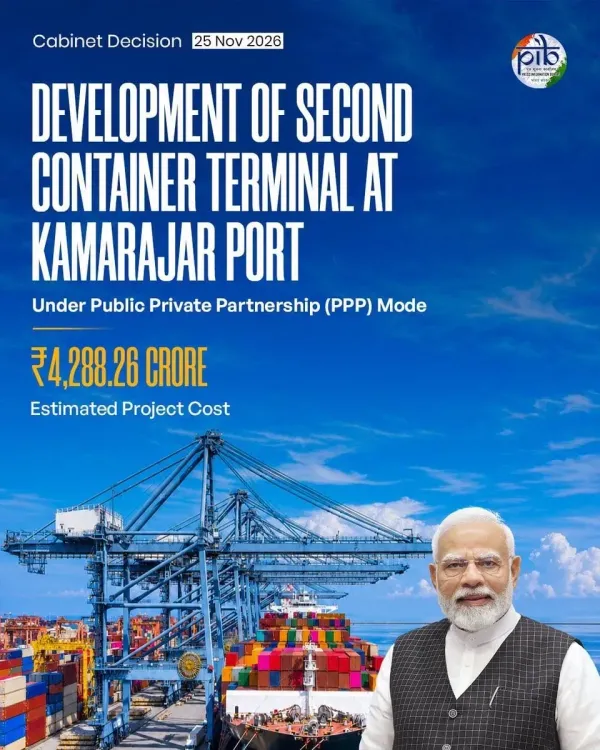
He said the project will be developed under PPP at an estimated cost of ₹4,288.26 crore .
Capacity cited: 2.0 million TEUs a year across two phases, with a 900-metre terminal and 18-metre design draft.
The minister said the terminal would improve connectivity, handle large container vessels and cut dependence on foreign deep-water hub ports.
Kamarajar Port at Ennore, Tamil Nadu, was developed to decongest Chennai Port and handle bulk and container cargo.
Next steps to watch include the PPP RFP, financial closure and integration with PM Gati Shakti .
India's east-coast container trade is set for a deep-water leap after Union Ports and Shipping Minister Sarbananda Sonowal on Wednesday, 25 November 2026, said the Cabinet chaired by Prime Minister Narendra Modi has approved a second container terminal at Kamarajar Port in Ennore, Tamil Nadu. The project, he said, will be built under public-private partnership.
The minister called it a 'major boost to India's maritime connectivity and EXIM trade'. He said development of the terminal is estimated at ₹4,288.26 crore.
The specifications he listed are built for bigger ships. 2.0 million TEUs of annual handling capacity across two phases. A 900-metre terminal. An 18-metre design draft. Those figures, he argued, mean improved international connectivity, the ability to handle large container vessels, and less reliance on foreign deep-water hub ports.
What the Ennore quay is meant to deliver
Sonowal also flagged extra capacity for growing container traffic and stronger logistics support for industries and manufacturing clusters. That is the EXIM logic in one line: more boxes, closer to factories, on ships large enough to skip a feeder stop.
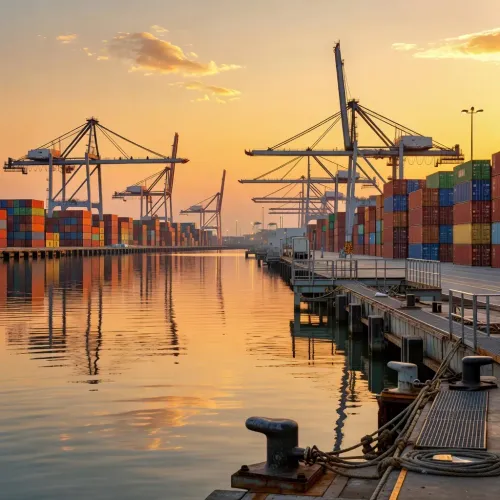
Kamarajar Port, the major port at Ennore, was developed to decongest neighbouring Chennai Port and to handle bulk and container cargo. A second dedicated container terminal would thicken that role on the Coromandel coast, where industrial corridors already push export cargo toward the Bay of Bengal.
Sagarmala, PPP and the foreign-hub problem
Public-private partnership terminals have been a Union government tool since the early 2000s. Sagarmala, launched in 2015, made port-led development and PPP berths a core of maritime infrastructure policy. The pattern since then is consistent: deeper drafts, more container slots, lower logistics costs, and a bid to pull mainline calls away from foreign trans-shipment hubs.
The minister's checklist maps onto that wager — large vessels, better connectivity, reduced dependence on overseas hubs. Container operators, EXIM traders and manufacturing clusters are the first in line to feel whether Ennore can actually absorb that cargo.
From Cabinet approval to concession
A Cabinet nod is not a crane on the quay. The practical sequence is an RFP for the PPP concession, financial closure by the winning bidder, and integration with PM Gati Shakti so rail, road and coastal shipping feed the new terminal rather than leaving it stranded.
That is the test Ennore now faces. The Cabinet has placed a deep-water bet on Kamarajar Port. The next question is who builds the berth — and how soon a large container vessel actually ties up.
Point of View
Add PPP container capacity, and claw box traffic back from foreign trans-shipment hubs. Sagarmala set that template in 2015; Gati Shakti is meant to stitch the hinterland to the quay. Politically, a second terminal at Kamarajar Port is an east-coast manufacturing play as much as a shipping play. The concession timeline, not the announcement, will show whether 18 metres of draft becomes 2 million TEUs of real cargo.
NationPress
25 Nov 2026
Frequently Asked Questions
What did the Cabinet approve at Kamarajar Port?
Union Ports and Shipping Minister Sarbananda Sonowal said the Cabinet chaired by Prime Minister Narendra Modi approved development of a second container terminal at Kamarajar Port under the public-private partnership mode.
How much will the Kamarajar Port second container terminal cost?
Sonowal said the estimated cost of the project is ₹4,288.26 crore.
What capacity will the new Kamarajar terminal have?
He said the terminal is planned for 2.0 million TEUs of annual handling capacity across two phases, with a 900-metre length and an 18-metre design draft.
Where is Kamarajar Port and why does it matter?
Kamarajar Port is a major port at Ennore in Tamil Nadu, developed to decongest Chennai Port and handle bulk and container cargo. A second container terminal would add east-coast box capacity closer to manufacturing clusters.
How is this linked to Sagarmala and Gati Shakti?
Sagarmala, launched in 2015, identified port-led development and PPP terminals as core parts of maritime infrastructure growth. After Cabinet approval, the practical test is the PPP concession and tying the quay into PM Gati Shakti logistics planning.