Sonowal: Cabinet clears Rameswaram-Paradip coastal highway
Synopsis
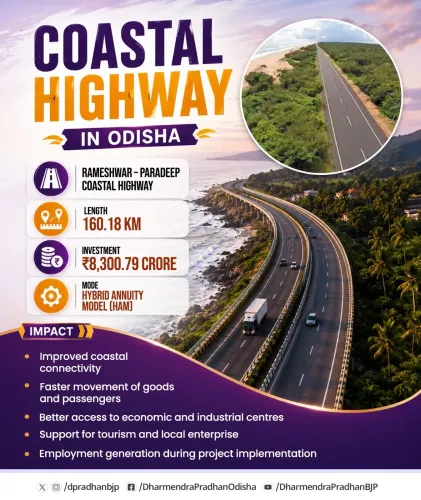
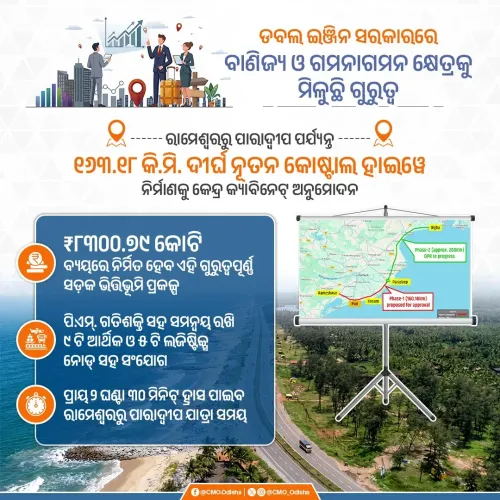
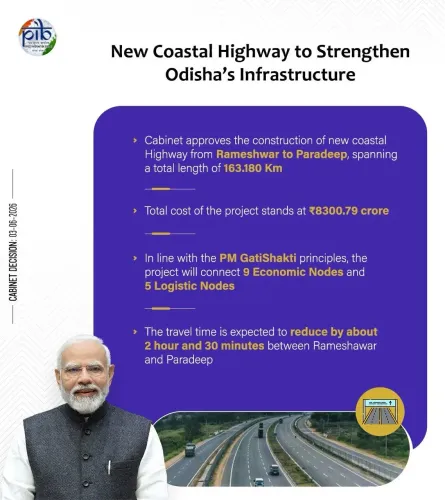
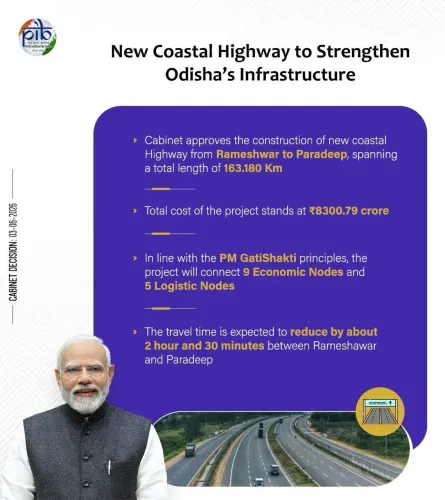
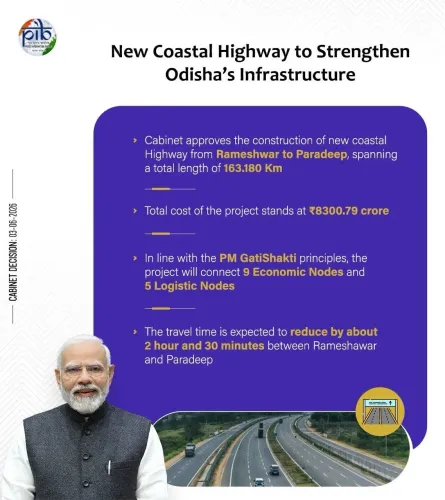
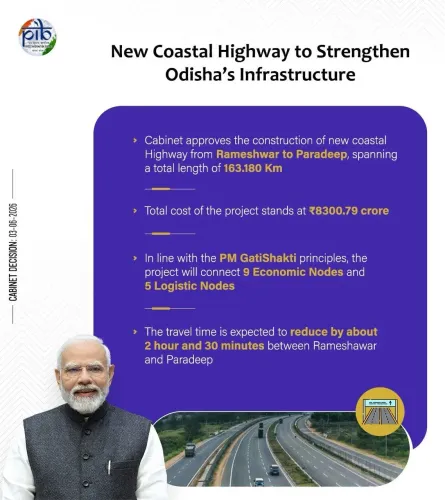
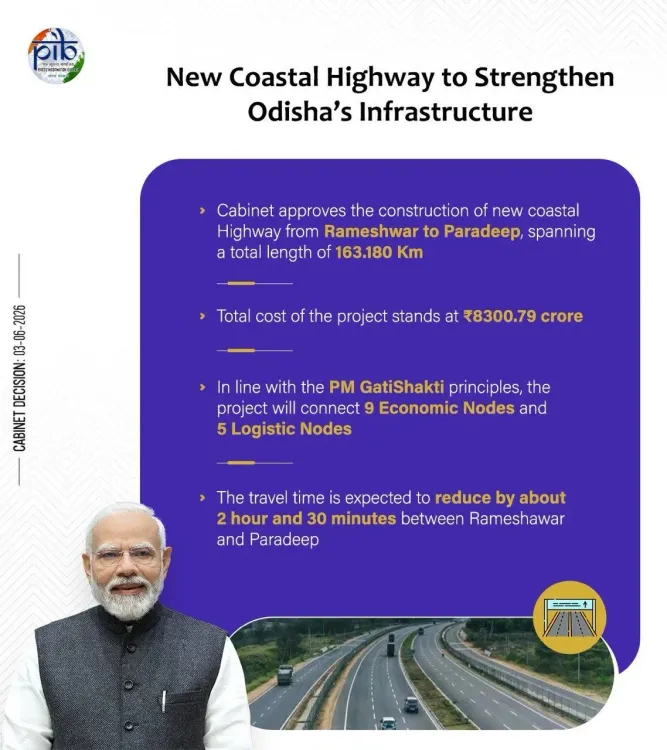
Union Ports and Shipping Minister Sarbananda Sonowal announced that the Union Cabinet has approved a new 163.180 km coastal highway from Rameswaram in Tamil Nadu to Paradip in Odisha at a cost of ₹8,300.79 crore, deepening India's port-led connectivity push along the eastern seaboard.
Key Takeaways
Union Cabinet approves new coastal highway from Rameswaram to Paradip, announced by Minister Sarbananda Sonowal.
Total length of the corridor is 163.180 km, linking Tamil Nadu and Odisha along the eastern coast.
Project cost pegged at ₹8,300.79 crore.
Aligns with Sagarmala (2015), Bharatmala (2017) and the National Logistics Policy (2022).
Expected to improve port-hinterland connectivity and lower freight costs for eastern ports including Paradip.
Next steps include detailed project reports, environmental clearances and land acquisition by Tamil Nadu and Odisha governments.
Union Ports and Shipping Minister Sarbananda Sonowal announced on Wednesday that the Union Cabinet, chaired by Prime Minister Narendra Modi, has approved the construction of a new coastal highway connecting Rameswaram in Tamil Nadu to Paradip in Odisha. The minister said the corridor will span 163.180 km at a total project cost of ₹8,300.79 crore, marking a fresh push for port-led connectivity along India's eastern seaboard.
Context
In his post on X, Sonowal wrote that the 'Cabinet chaired by Hon'ble PM Shri Narendra Modi ji approves the construction of a new coastal highway from Rameshwar to Paradeep'. He tagged the announcement under #CabinetDecisions, situating it within the latest batch of Union government clearances.
The proposed corridor links two strategically significant coastal anchors. Rameswaram is a major pilgrimage town on the Gulf of Mannar, while Paradip is one of India's largest cargo-handling ports on the Bay of Bengal. A direct coastal alignment would knit together stretches of Tamil Nadu, Andhra Pradesh and Odisha that currently rely on inland highways for north-south freight movement.
Policy backdrop
The approval extends a decade-long policy arc aimed at integrating India's ports with its road network. The Sagarmala Programme, launched in 2015, was conceived to drive port-led development and coastal road connectivity. The Bharatmala Pariyojana, cleared in 2017, folded port and coastal corridors into its broader highway framework.
The National Logistics Policy, unveiled in 2022, further emphasised multimodal coastal infrastructure as a lever to bring down logistics costs, which the government has been seeking to reduce as a share of GDP. The new Rameswaram-Paradip alignment is also expected to plug into the PM Gati Shakti national master plan, which maps infrastructure projects across ministries to avoid duplication and bottlenecks.
Stakeholders and impact
Port operators along the eastern coast stand to gain from improved hinterland access, particularly the cluster of ports between Chennai, Visakhapatnam and Paradip. Faster road links between port gates and industrial clusters typically translate into lower turnaround times for cargo and reduced reliance on congested national highways further inland.
Coastal communities, including fisherfolk and small traders, are the other constituency directly affected. While better roads can open up markets and tourism flows, alignment decisions in coastal stretches often trigger questions on land acquisition, livelihood displacement and coastal regulation zone clearances. The logistics sector, which has lobbied for dedicated freight-friendly coastal arteries, is likely to view the project as a structural addition rather than an incremental upgrade.
For the states involved, the highway offers a fresh axis of economic activity. Tamil Nadu and Odisha anchor the two ends, while Andhra Pradesh, with its long coastline, is the natural through-state for any continuous coastal alignment between the two.
What's next
The immediate focus will shift to detailed project reports, environmental and coastal clearances, and land acquisition coordination between the Ministry of Ports, Shipping and Waterways and the concerned state governments. The pace at which these procedural steps are completed will determine when ground-breaking can realistically begin.
For Sonowal, the announcement reinforces the ministry's positioning as a driver of large-ticket maritime infrastructure spending. If executed on schedule, the ₹8,300.79 crore corridor could become a template for similar coastal alignments on the western seaboard, deepening the government's bet that port-anchored highways are central to India's next phase of trade-led growth.
Point of View
300 crore to a dedicated coastal corridor, the government is signalling that port-led growth is no longer a stand-alone maritime story but an integrated highways and logistics bet. The political optics, with a senior BJP minister flagging the decision under #CabinetDecisions, also reinforce the Centre's framing of infrastructure spending as a continuing showcase. Execution risk, particularly around land and coastal clearances, will decide whether the announcement translates into a strategic asset or a long-gestation project.
NationPress
21 Oct 2026
Frequently Asked Questions
What is the new Rameswaram to Paradip coastal highway?
It is a new 163.180 km coastal highway approved by the Union Cabinet, connecting Rameswaram in Tamil Nadu to Paradip in Odisha along India's eastern seaboard.
What is the cost of the Rameswaram-Paradip coastal highway?
The total project cost is ₹8,300.79 crore, as announced by Union Ports and Shipping Minister Sarbananda Sonowal.
Who approved the coastal highway project?
The Union Cabinet, chaired by Prime Minister Narendra Modi, approved the project. The decision was announced by Union Minister Sarbananda Sonowal.
How does the project link to Sagarmala and Bharatmala?
The coastal highway extends the port-led development push under Sagarmala (2015) and the coastal connectivity components of Bharatmala (2017), and is expected to integrate with the PM Gati Shakti master plan.
Which states will the coastal highway pass through?
The corridor anchors Tamil Nadu at Rameswaram and Odisha at Paradip, with Andhra Pradesh as the natural through-state given its long eastern coastline.