Jitendra Singh: Cabinet clears Rameshwaram-Paradip coastal highway
Synopsis
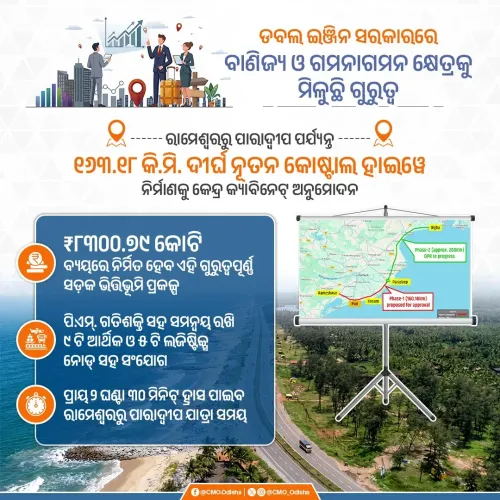
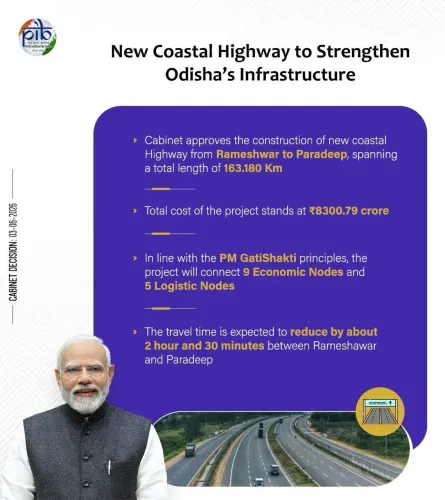
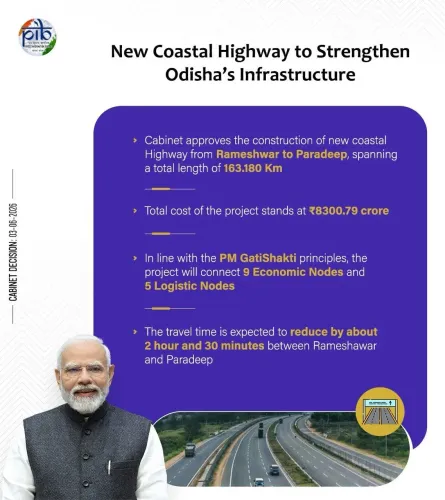
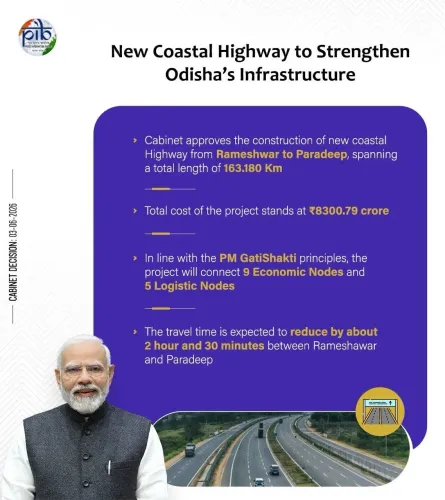
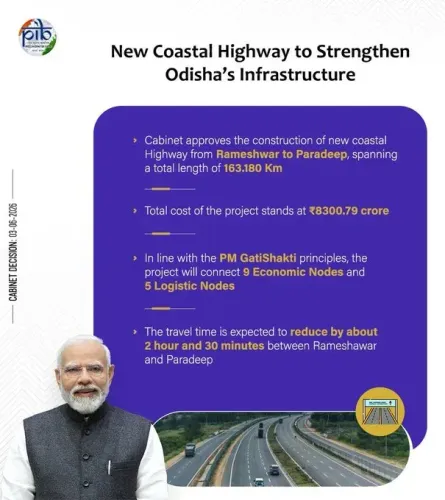
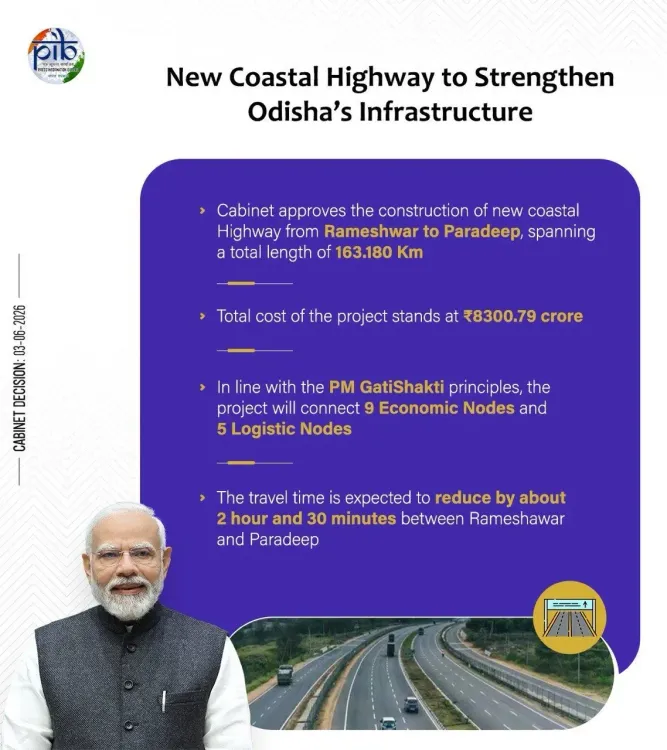
The Union Cabinet has approved a new coastal highway from Rameshwaram in Tamil Nadu to Paradip in Odisha, spanning 163.180 km at a cost of Rs 8,300.79 crore, Union Minister Dr. Jitendra Singh announced. The corridor aligns with the Centre's Bharatmala push to strengthen east-coast port and logistics connectivity.
Key Takeaways
Union Cabinet approved a new coastal highway from Rameshwaram to Paradip.
Total length of the project is 163.180 km.
Total project cost stands at Rs 8,300.79 crore.
Announcement was made by Union Minister Dr.
Jitendra Singh on X.
Project aligns with the Centre's east-coast connectivity push under Bharatmala Pariyojana.
Stakeholders include Tamil Nadu, Andhra Pradesh and Odisha governments and Paradip port authorities.
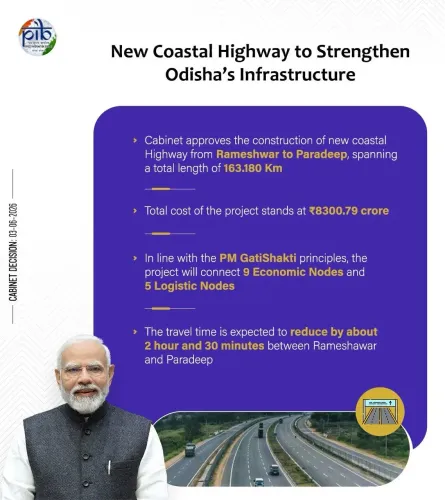
Union Science and Technology Minister Dr. Jitendra Singh on Wednesday, June 3, 2026 announced that the Union Cabinet chaired by Prime Minister Narendra Modi has approved the construction of a new coastal highway running from Rameshwaram in Tamil Nadu to Paradip in Odisha. The project will span a total length of 163.180 km at an outlay of Rs 8,300.79 crore, according to the minister's post on X.
Context
In his post tagged with '#CabinetDecisions', Dr. Singh wrote that the 'Cabinet under PM Sh @NarendraModi approves the construction of new coastal Highway from Rameshwar to Paradeep, spanning a total length of 163.180 Km' with a 'Total cost of the project' of 'Rs 8300.79 crore'.
The two end-points anchor the corridor in two of India's most strategically located coastal nodes. Rameshwaram is a pilgrimage and coastal town in Tamil Nadu at the southern tip of the eastern seaboard, while Paradip is one of India's busiest major ports on the Odisha coast, handling iron ore, coal and crude oil cargoes.
Policy backdrop
The approval fits within the central government's post-2014 push to build out east-coast connectivity and reduce logistics costs for port-led trade. Coastal and port-connectivity corridors have been a stated component of the Bharatmala Pariyojana, the umbrella road development programme cleared by the Cabinet in 2017, which itself subsumed coastal-road elements first articulated under the Sagarmala programme of 2015.
Successive Cabinet decisions in recent years have cleared similar coastal stretches in Maharashtra, Andhra Pradesh and Tamil Nadu under the same framework, aimed at integrating major and minor ports with hinterland highway networks. The Rameshwaram-Paradip alignment extends that logic to a stretch that traverses, in segments, the eastern littoral linking the Bay of Bengal ports.
Stakeholders and impact
The principal stakeholders include the coastal state governments of Tamil Nadu, Andhra Pradesh, and Odisha, port authorities at Paradip and other intermediate harbours, and logistics operators that move bulk and container cargo between the southern and eastern coasts.
For local economies, a dedicated coastal highway typically reduces truck turnaround times to ports, opens up tourism circuits along temple towns and beaches, and creates construction-phase employment. Fishing communities and coastal villages along the alignment will be among the directly affected populations during land acquisition and execution.
Dr. Singh, who holds independent charge of the Ministry of Science and Technology and of Earth Sciences and is also Minister of State in the Prime Minister's Office and Personnel, frequently communicates Union Cabinet decisions on his X handle as part of the government's outreach on policy announcements.
What's next
The next milestones to watch will be the issuance of detailed project reports and tender documents by the National Highways Authority of India, followed by environmental and Coastal Regulation Zone (CRZ) clearances from the Ministry of Environment, Forest and Climate Change. Land-acquisition notifications in the three coastal states will determine the project's execution timeline.
If implemented on schedule, the Rameshwaram-Paradip corridor would add another long-distance coastal artery to India's east-coast logistics grid, further tightening the connection between southern pilgrimage and fishing towns and the eastern port economy that the Centre has prioritised for over a decade.
Point of View
Announced via a minister's X post to project pace on infrastructure. The choice of Rameshwaram and Paradip as anchors is politically resonant, tying a Tamil Nadu pilgrimage town to an Odisha port city in a single visual narrative of national integration. The real test, as with earlier coastal stretches, will be CRZ clearances and land acquisition across three states. If executed, it deepens the Centre's bet that port-linked highways, not just expressways, will define the next phase of logistics reform.
NationPress
18 Oct 2026
Frequently Asked Questions
What is the new Rameshwaram to Paradip coastal highway?
It is a new coastal national highway approved by the Union Cabinet, running from Rameshwaram in Tamil Nadu to Paradip in Odisha, with a total length of 163.180 km. The project was announced by Union Minister Dr. Jitendra Singh on X.
What is the total cost of the Rameshwaram-Paradip highway project?
The total cost of the project stands at Rs 8,300.79 crore, as stated by Union Minister Dr. Jitendra Singh in his post on the Cabinet decision.
Which states will the new coastal highway pass through?
The corridor connects Rameshwaram in Tamil Nadu with Paradip in Odisha, and is expected to traverse coastal stretches including Andhra Pradesh, the three states that lie along the eastern seaboard between the two end-points.
How does this project fit with Bharatmala Pariyojana?
Bharatmala Pariyojana, approved by the Cabinet in 2017, explicitly includes coastal and port-connectivity corridors as one of its components. The Rameshwaram-Paradip highway extends that framework along the eastern coast linking major Bay of Bengal ports.
When will construction of the Rameshwaram-Paradip highway begin?
A start date has not been announced. The next steps typically include detailed project reports, tendering by the National Highways Authority of India, environmental and CRZ clearances, and land-acquisition notifications in the participating states.