Puri: Cabinet Clears Rameshwar-Paradip Coastal Highway in Odisha
Synopsis
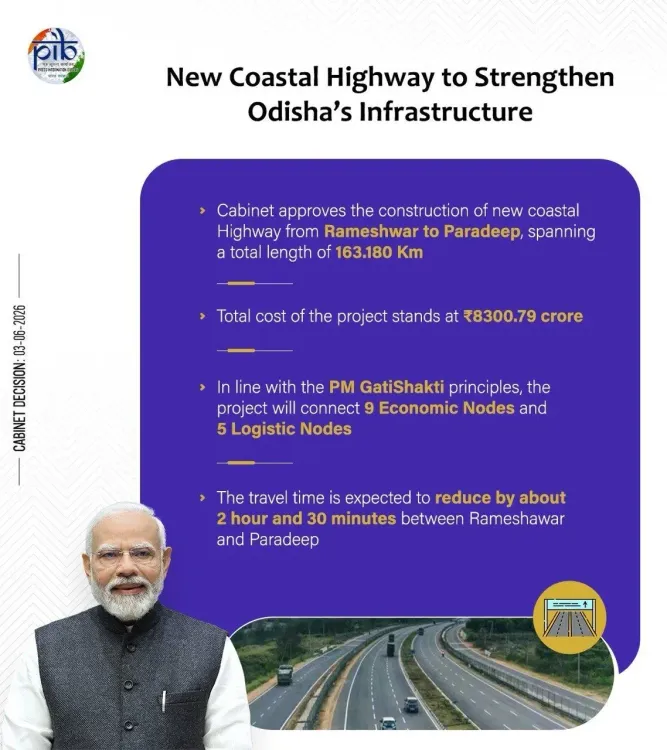
Union Petroleum Minister Hardeep Singh Puri announced that the Cabinet Committee on Economic Affairs has cleared a new coastal highway from Rameshwar to Paradip in Odisha under the Hybrid Annuity Model, split into two packages, promising faster passenger and freight connectivity along the eastern seaboard.
Key Takeaways
CCEA chaired by PM Narendra Modi cleared a new Rameshwar-Paradip coastal highway in Odisha.
The project will be built under the Hybrid Annuity Model across two packages.
Travel time between Rameshwar and Paradip is projected to fall by about 2 hours 30 minutes.
The corridor targets safer and faster passenger and freight movement to Paradip port.
The approval aligns with Bharatmala, Sagarmala and PM Gati Shakti coastal connectivity goals.
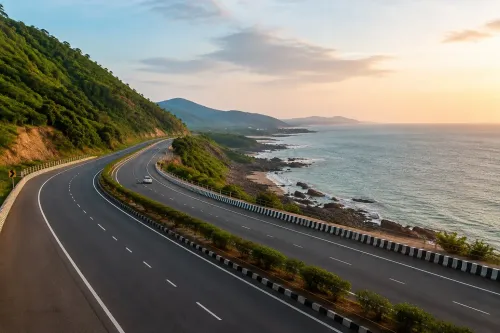
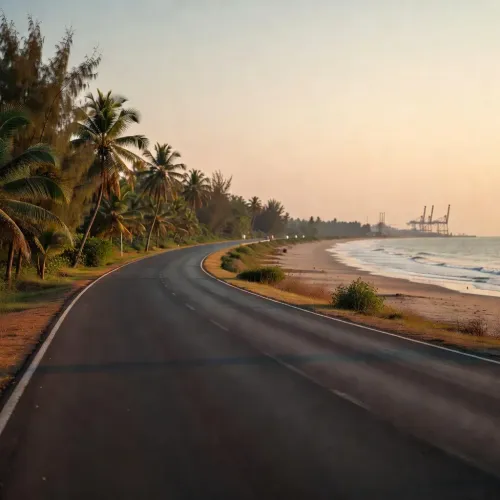
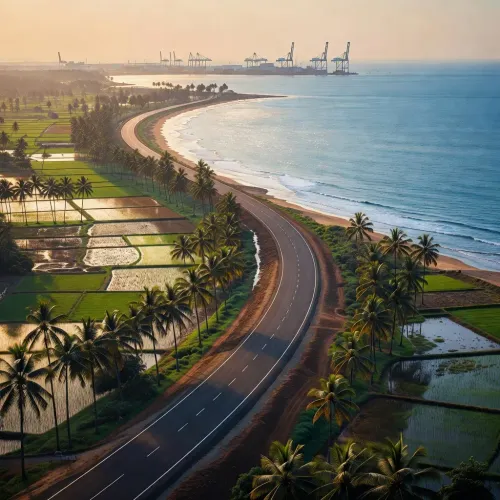
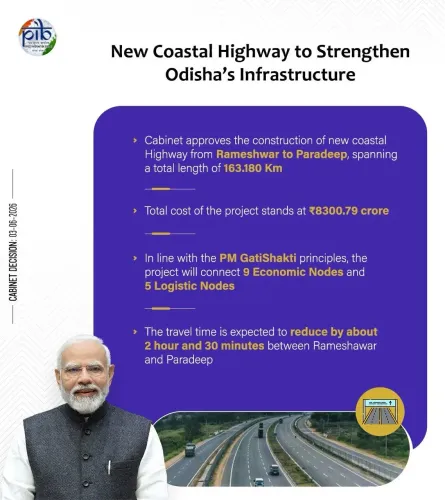
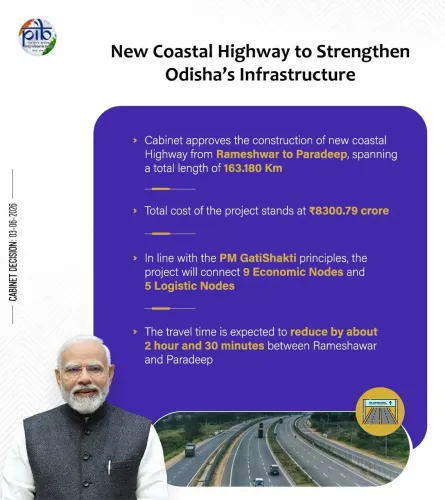
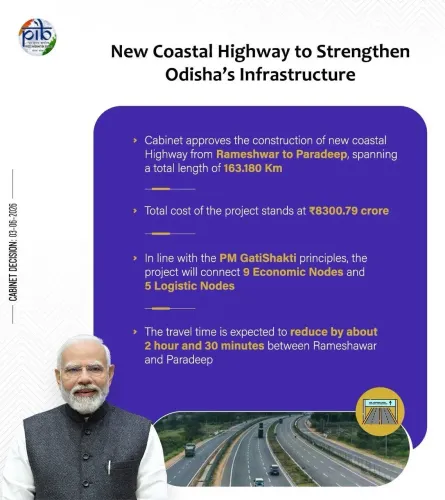
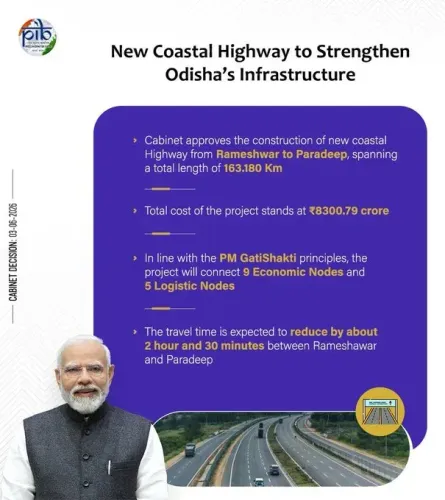
Union Petroleum Minister Hardeep Singh Puri announced on 3 June 2026 that the Cabinet Committee on Economic Affairs, chaired by Prime Minister Narendra Modi, has approved the construction of a new coastal highway from Rameshwar to Paradip in Odisha under the Hybrid Annuity Model. The stretch will be built across two packages and is aimed at cutting travel time and easing freight movement along the eastern seaboard.
In his post on X, the minister wrote that once completed, the project would reduce travel time between Rameshwar and Paradip by 'approximately 2 hours 30 minutes' and ensure 'safe, swift and seamless connectivity for both passengers and freight'. The announcement was tagged #CabinetDecisions.
Context
The Rameshwar-Paradip alignment links interior Odisha to one of India's busiest deep-water ports. Paradip Port handles a substantial share of bulk cargo on the east coast, including coal, crude and iron ore, and has long suffered from last-mile road bottlenecks that slow evacuation of freight to the hinterland.
Splitting the build into two packages is a standard execution strategy for the National Highways Authority of India, allowing parallel tendering and faster financial closure. Under the Hybrid Annuity Model, the central government funds 40 per cent of the construction cost upfront while the private concessionaire raises the balance and recovers it through annuity payments linked to performance.
Policy backdrop
Coastal highway investments along Odisha's shoreline sit at the intersection of two major central programmes. Bharatmala Pariyojana, approved in 2015, earmarked roughly 5,500 km of coastal and port-connectivity roads in its first phase. The Sagarmala programme, launched the same year, separately identified road links to ports such as Paradip as priority interventions for port-led industrialisation.
The Hybrid Annuity Model, adopted by the Centre in 2016, was introduced to revive stalled highway public-private partnerships after build-operate-transfer toll projects ran into traffic-risk and financing problems. HAM has since become the workhorse instrument for medium-sized national highway packages, balancing fiscal outgo with private execution discipline.
The latest approval also fits the broader PM Gati Shakti framework, which bundles road, rail, port and industrial corridor planning to reduce logistics costs. India's logistics expenditure as a share of GDP remains a stated policy concern, and coastal corridors are pitched as one of the levers to bring it down.
Stakeholders and impact
For residents of coastal Odisha, a faster road to Paradip means improved access to jobs, healthcare and markets in the port belt. Freight operators stand to gain from quicker turnaround between inland depots and the port, which could translate into lower per-tonne haulage costs for bulk shippers.
The state government in Bhubaneswar has consistently pushed for upgraded port hinterland roads, and the project will dovetail with ongoing capacity expansion at Paradip. Construction contractors and infrastructure financiers are likely to view the two HAM packages as bankable given the assured annuity stream.
What's next
Attention will now shift to the tendering of the two packages, environmental and Coastal Regulation Zone clearances, and the finalisation of detailed project reports. Any revision in cost estimates or alignment at the DPR stage will be closely watched by bidders and local stakeholders.
If executed on schedule, the Rameshwar-Paradip corridor could become a template for further HAM-led coastal links on the eastern seaboard, advancing the Centre's stated goal of seamless port-to-hinterland connectivity.
Point of View
Especially where traffic risk on toll-based PPPs is uncertain. Routing the announcement through a senior minister rather than the highways portfolio also signals the political weight attached to Odisha's coastal infrastructure ahead of the next round of state-level investment summits. Strategically, the Rameshwar-Paradip link plugs a known gap in port hinterland connectivity and dovetails with the larger east-coast corridor push under Bharatmala and PM Gati Shakti. Execution discipline at the DPR and clearance stage will determine whether the projected gains materialise on the ground.
NationPress
17 Oct 2026
Frequently Asked Questions
What did the Cabinet approve for Odisha's Paradip highway?
The Cabinet Committee on Economic Affairs approved a new coastal highway from Rameshwar to Paradip in Odisha, to be built in two packages under the Hybrid Annuity Model, as announced by Union Minister Hardeep Singh Puri.
How much travel time will the Rameshwar-Paradip highway save?
According to Union Minister Hardeep Singh Puri's post, travel time between Rameshwar and Paradip will reduce by approximately 2 hours 30 minutes once the project is completed.
What is the Hybrid Annuity Model in highway projects?
The Hybrid Annuity Model is a public-private partnership framework in which the central government funds about 40 per cent of construction costs upfront and the private developer raises the rest, recovering it through annuity payments linked to performance.
Why is Paradip port connectivity important?
Paradip is a major deep-water port on India's east coast handling large volumes of bulk cargo such as coal, crude and iron ore, and faster road links to the hinterland are seen as essential to cut logistics costs and ease freight evacuation.
How does the project fit into Bharatmala and Sagarmala?
Bharatmala Pariyojana includes thousands of kilometres of coastal and port-connectivity roads, while Sagarmala targets port-led industrialisation; the Rameshwar-Paradip highway advances both by strengthening last-mile road access to Paradip port.