PM Modi Hails Nod for Rameshwar-Paradip Coastal Highway in Odisha
Synopsis
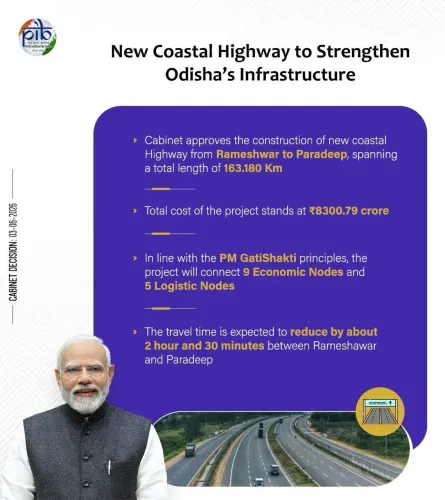
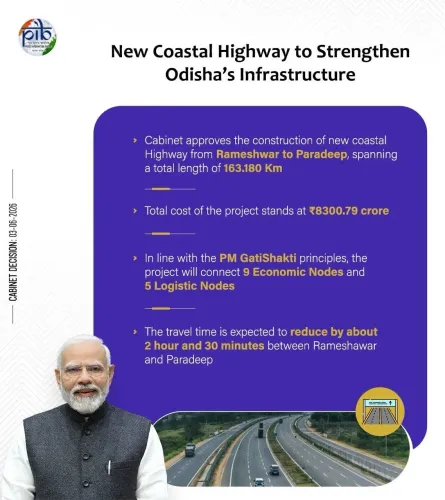
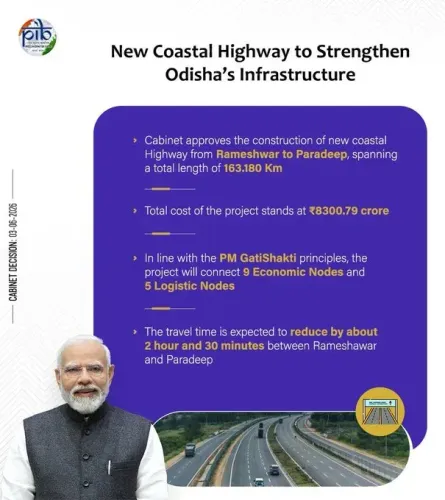
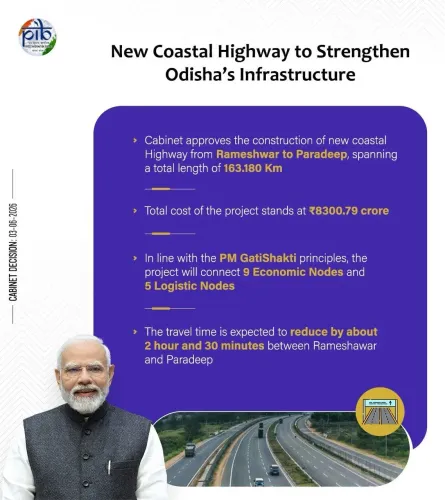
Prime Minister Narendra Modi welcomed approval of a new coastal highway from Rameshwar to Paradip in Odisha, saying it will boost connectivity across Khordha, Puri, Kendrapara and Jagatsinghpur, cut travel time and strengthen logistics, tourism and economic activity along the state's eastern seaboard.
Key Takeaways
PM Modi welcomed approval of a new Rameshwar-Paradip coastal highway in Odisha.
Project covers four districts: Khordha, Puri, Kendrapara and Jagatsinghpur.
Aims to cut travel time and improve port-hinterland connectivity to Paradip.
Fits within Bharatmala Pariyojana (2015) and PM Gati Shakti (2021) frameworks.
Expected to support logistics, coastal tourism and economic activity.
Next steps: detailed project report, land acquisition and environmental clearances.
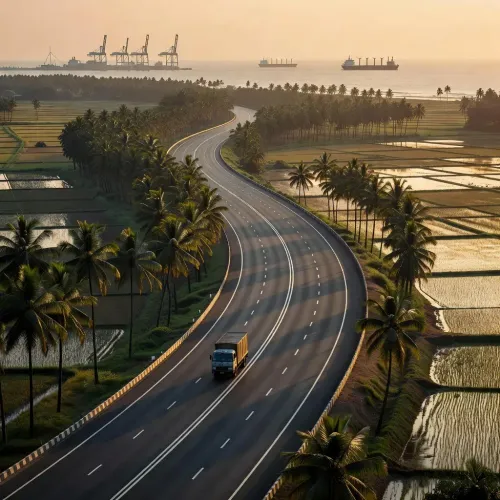
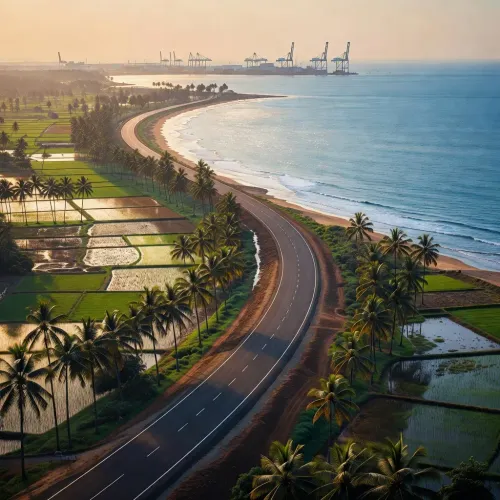
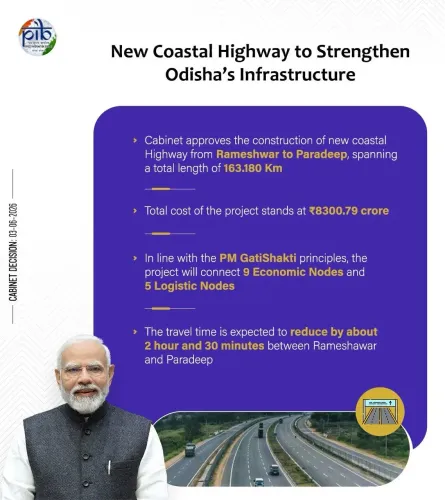
Prime Minister Narendra Modi on Wednesday welcomed the approval of a new coastal highway stretching from Rameshwar to Paradip in Odisha, saying the project will sharply improve connectivity across four coastal districts and shorten travel times along the state's eastern seaboard.
In a post on X written in Odia, the Prime Minister said the approval for the new coastal highway will bring 'improvement in connectivity' across Khordha, Puri, Kendrapara and Jagatsinghpur districts, and that travel time will be 'reduced considerably'. He added that the 'modern project' (ଆଧୁନିକ ପ୍ରକଳ୍ପ) will strengthen logistics and support tourism and economic activity in the region.
Context
The corridor links Rameshwar on the Odisha coast with Paradip, one of eastern India's busiest deep-water ports in Jagatsinghpur district. Paradip is a critical node for petroleum, coal and container traffic and feeds into the industrial belt around Cuttack and Bhubaneswar.
The four districts named in the post — Khordha, Puri, Kendrapara and Jagatsinghpur — together host the state capital region, the Jagannath Temple at Puri, the Bhitarkanika ecosystem and a cluster of fishing harbours. A continuous coastal alignment is expected to ease the existing dependence on inland arterial routes that loop back through Bhubaneswar.
Policy backdrop
The announcement fits into a decade-long central push to build out coastal road infrastructure on the eastern seaboard. Bharatmala Pariyojana, approved in 2015, set a target of roughly 34,800 km of highway development and explicitly included coastal and port-connectivity corridors in Odisha.
Layered on top is the PM Gati Shakti National Master Plan, launched in 2021, which seeks to integrate road, rail and port planning through a single multimodal framework. Similar coastal highway segments have been cleared or commissioned in Tamil Nadu, Maharashtra and Gujarat under the same broad architecture.
Stakeholders and impact
For residents of the four districts, the most immediate gain flagged by the Prime Minister is reduced travel time between coastal towns that currently rely on a mix of state highways and district roads. A dedicated coastal route also opens up direct freight movement between Paradip's port gates and downstream consumers without crowding urban arteries.
The tourism sector along the Puri–Konark–Bhitarkanika arc stands to benefit if the alignment runs close to beach and pilgrimage circuits. Logistics operators, fisheries clusters and small industry along the coast are the other named beneficiaries, in line with the Prime Minister's framing of the project as a booster for 'logistics, tourism and economic activity'.
What's next
The key subsequent milestones will be the detailed project report, land acquisition notifications across the four districts, and the financial outlay confirmed by the Ministry of Road Transport and Highways. Environmental clearances will be closely watched given the proximity of the alignment to ecologically sensitive coastal stretches and mangrove zones in Kendrapara.
If executed on schedule, the Rameshwar-Paradip corridor would add another link in the slowly emerging eastern coastal highway network, with implications for how Odisha balances port-led industrial growth against its pilgrimage and ecological economy.
Point of View
With Paradip's strategic port and Puri's religious economy, is a natural fit for that template, already deployed along the western and southern coasts. The political signal is equally pointed — coastal connectivity is becoming a recurring frame for the BJP's outreach in a state where it now governs. The hard tests will lie in land acquisition pace and how the alignment negotiates ecologically sensitive stretches in Kendrapara.
NationPress
18 Oct 2026
Frequently Asked Questions
What is the Rameshwar to Paradip coastal highway project?
It is a newly approved coastal road in Odisha running from Rameshwar to the port town of Paradip. PM Modi said it will improve connectivity across Khordha, Puri, Kendrapara and Jagatsinghpur districts and cut travel time.
Which districts will benefit from the new Odisha coastal highway?
Four districts have been named: Khordha, Puri, Kendrapara and Jagatsinghpur. These cover the state capital region, the Jagannath pilgrimage town of Puri and the Paradip port belt.
Is the coastal highway part of Bharatmala Pariyojana?
Coastal stretches in Odisha fall within the broader Bharatmala Pariyojana framework approved in 2015, which targets around 34,800 km of highway development including port-connectivity and coastal corridors.
How will the project help Paradip port?
A dedicated coastal alignment is expected to allow freight to move directly between Paradip's port gates and surrounding districts without routing through congested inland highways, supporting petroleum, coal and container traffic.
What are the next steps for the Rameshwar-Paradip highway?
The detailed project report, land acquisition in the four districts, financial outlay and environmental clearances are the key milestones to watch, especially given ecologically sensitive coastal stretches in Kendrapara.