Sonowal: Cabinet clears Revised Captive Policy for Major Ports
Synopsis
The Union Cabinet approved the Revised Captive Policy for Port Dependent Industries at Major Ports on 31 July 2026, allowing existing captive users 30-year concession extensions, direct CPSU waterfront access and new capacity through competitive bidding — all at zero cost to the exchequer.
Key Takeaways
Cabinet approval on 31 July 2026: The Union Cabinet chaired by PM Modi cleared the Revised Captive Policy for Port Dependent Industries at Major Ports.
30-year concession extensions: Existing captive users can expand by adding new berths and terminals with concession periods extended by up to 30 years.
Direct waterfront access for CPSUs/SPSUs: Eligible government entities gain direct waterfront access to strengthen national infrastructure.
Right of First Refusal (RoFR): Existing concessionaires retain a RoFR when new capacity is bid out through competitive tendering.
Zero government expenditure: The entire reform is structured to carry no financial burden on the exchequer.
Policy lineage: The approval builds on the Sagarmala Project (2015) and the Major Port Authorities Act (2021), continuing a decade of port liberalisation.
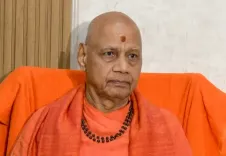
India's 12 major ports just got a sweeping policy upgrade. The Union Cabinet chaired by Prime Minister Narendra Modi on 31 July 2026 approved the Revised Captive Policy for Port Dependent Industries at Major Ports — a reform that Union Minister of Ports, Shipping and Waterways Sarbananda Sonowal says will unlock private investment, cut logistics costs and generate large-scale employment, all without a single rupee of additional government spending.
What the revised policy actually changes
At its core, the reform does three things. First, it allows existing captive users — industries that operate berths exclusively for their own cargo — to expand capacity by adding new berths and terminals, with concession extensions of up to 30 years. That is a significant runway for long-term private capital commitment. Second, it grants direct waterfront access to eligible government entities, specifically Central Public Sector Undertakings (CPSUs) and State Public Sector Undertakings (SPSUs), to anchor national infrastructure priorities on the waterfront. Third, it opens fresh capacity through transparent competitive bidding while protecting incumbents with a Right of First Refusal (RoFR) — a clause that lets existing concessionaires match the best competing bid before losing their slot.
Sonowal framed the approval as part of Prime Minister Modi's 'Reform Express', calling it 'a historic step towards boosting private investment in the maritime sector and accelerating port-led development.' The policy is explicitly designed to carry zero financial burden on the government, relying instead on private operators and public sector enterprises to fund expansion.
A decade of port liberalisation reaches a new milestone
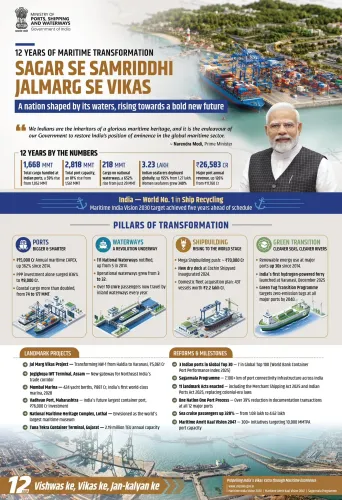
This approval does not arrive in a vacuum. India's port reform arc stretches back to the Sagarmala Project launched in 2015, which set the template for port-led development — modernising berths, improving hinterland connectivity and drawing private capital into what had long been a state-dominated sector. The Major Port Authorities Act of 2021 then gave the 12 centrally governed ports greater operational autonomy and a cleaner framework for public-private partnerships.
The Revised Captive Policy is the next logical layer: rather than building new ports, it sweats existing waterfront assets harder. Concession extensions give private operators the long-term certainty they need to justify large capital expenditure. Competitive bidding for fresh capacity keeps the process open and contestable. And the RoFR provision balances investor protection with market discipline — incumbents cannot simply sit on underutilised berths and block new entrants.
The logistics cost equation — and what comes next
India's logistics costs as a share of GDP have historically run higher than those of major trading peers, and reducing that gap is central to the government's competitiveness agenda. Port efficiency — turnaround times, berth utilisation, cargo dwell time — is a direct input into that equation. By unlocking additional berth capacity at major ports and aligning incentives for both private and public operators, the policy targets the supply-side constraint that keeps port costs elevated.
The immediate watchpoints are the rollout of concession extension agreements, the timeline for new competitive bids on fresh capacity, and early data on berths commissioned and jobs created at the 12 major ports over the next 12 to 18 months. If the framework translates into actual steel and concrete on the waterfront, it will materially advance India's stated ambition of becoming a premier global maritime and logistics hub.
A policy that costs the exchequer nothing but promises to reshape the waterfront — the pressure now is entirely on execution.
Point of View
The Major Port Authorities Act gave ports the legal autonomy to execute PPPs, and this policy now locks in the commercial incentives — long concessions, competitive bids, RoFR — that private capital actually needs before committing to berth infrastructure. The 'zero government expenditure' framing is politically important: it lets the Centre claim a major infrastructure push without adding to the fiscal deficit, a message that travels well both domestically and with sovereign credit rating agencies. The real test will be whether the concession extension pipeline moves quickly enough to show tangible berth additions before the next election cycle, or whether the reform remains a well-structured policy on paper.
NationPress
15 Sept 2026
Frequently Asked Questions
What is the Revised Captive Policy for Port Dependent Industries?
It is a Cabinet-approved framework that allows industries operating dedicated berths at India's 12 major ports to expand capacity, receive concession extensions of up to 30 years, and compete for new waterfront slots through transparent bidding, all without direct government funding.
What is a Right of First Refusal (RoFR) in port concessions?
A Right of First Refusal allows an existing port concessionaire to match the best competing bid for new or renewed capacity before that capacity is awarded to a new entrant, giving incumbents a protected opportunity to retain their position.
Which ports are covered under this policy?
The policy applies to India's 12 centrally governed major ports, which handle bulk and container cargo and are administered under the Major Port Authorities Act of 2021.
What is the Sagarmala Project and how does it relate to this reform?
The Sagarmala Project, launched in 2015, is India's flagship port-led development initiative aimed at modernising ports, improving hinterland connectivity and reducing logistics costs. The Revised Captive Policy is a downstream reform that deepens Sagarmala's private investment objectives.
How will the revised captive policy reduce logistics costs in India?
By unlocking additional berth capacity at major ports and improving utilisation of existing waterfront assets, the policy aims to reduce cargo dwell times and port congestion, which are key drivers of India's relatively high logistics costs as a share of GDP.