Education Minister Pradhan flags India Post Cabinet nod
Synopsis
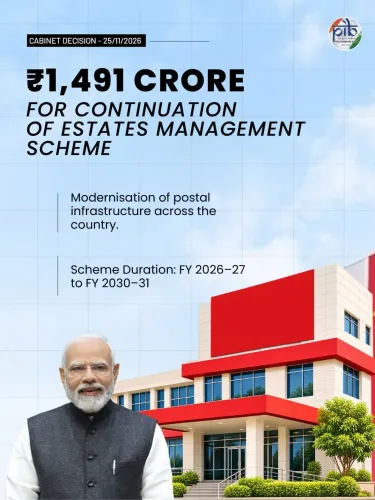
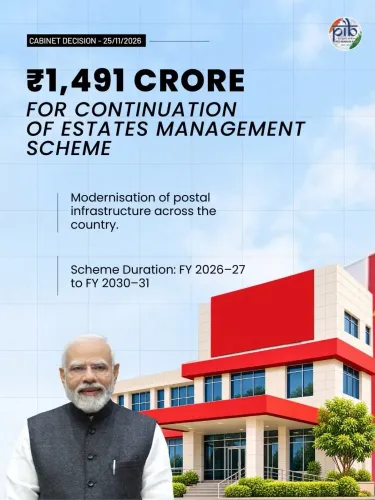
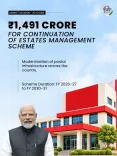
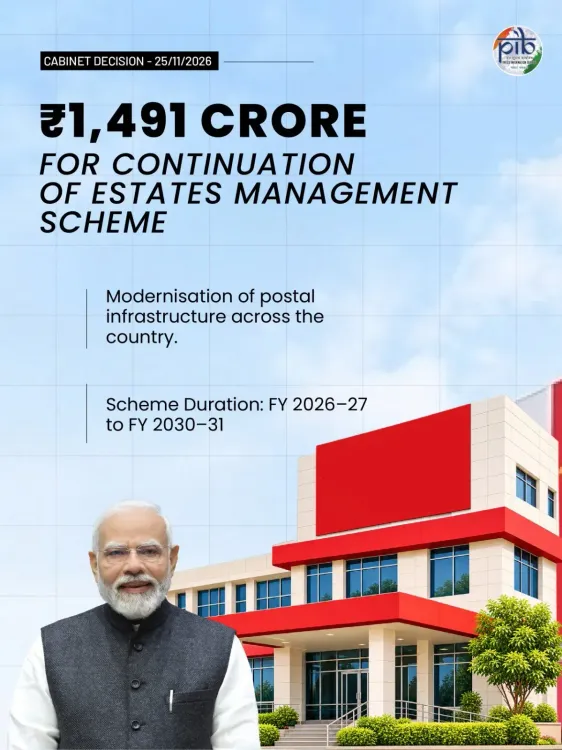
Education Minister Dharmendra Pradhan said the Union Cabinet, chaired by Prime Minister Narendra Modi, approved continuation of the Estates Management Scheme with a ₹1,491 crore outlay for 2026–27 to 2030–31. The plan covers renovation of 2,550 sub-post offices, upgrades to 2,500 rented offices, preservation of 20 heritage buildings, and stronger technology, accessibility and sustainability.
Key Takeaways
Union Education Minister Dharmendra Pradhan on 25 November 2026 highlighted a Union Cabinet decision on India Post infrastructure.
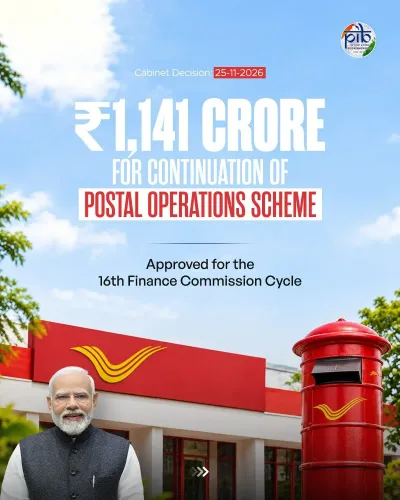
He said the Cabinet, chaired by Prime Minister Narendra Modi , approved continuation of the Estates Management Scheme .
Pradhan stated the outlay is ₹1,491 crore for 2026–27 to 2030–31 .
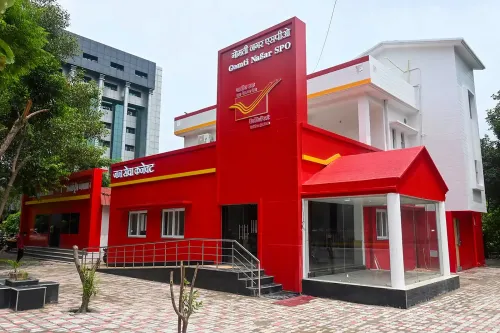
Targets he cited: renovate 2,550 Sub-Post Offices , upgrade 2,500 rented post offices , preserve 20 heritage postal buildings .
He said the scheme would also strengthen technology, accessibility and sustainability across the network.
Pradhan called India Post an essential link between citizens and public services, especially in rural areas.
The Indian state still often meets its citizens at a village post office counter. On Wednesday, Union Education Minister Dharmendra Pradhan flagged a Union Cabinet decision in New Delhi, chaired by Prime Minister Narendra Modi, to continue the Estates Management Scheme and rebuild that network from the ground up.
He called India Post an essential link to public services, especially in rural India, and set out a five-year brick-and-mortar, heritage and technology push.
₹1,491 crore for post offices from 2026–27 to 2030–31
In his post, Pradhan said the Cabinet had approved continuation of the scheme with an outlay of ₹1,491 crore for 2026–27 to 2030–31. He listed three physical targets: renovating 2,550 Sub-Post Offices, upgrading 2,500 rented post offices, and preserving 20 heritage postal buildings.
He wrote that India Post is 'far more than a postal network' and 'an essential link between citizens and a wide range of public services, particularly in rural parts of the country.' The same note said the drive would strengthen technology infrastructure and improve accessibility and sustainability across the network.
Rural counters, not just letter boxes
India Post remains one of the few Union government networks with a physical counter in remote tehsils and villages. That density is why an estates decision is more than a buildings file: every citizen service that still rides on the post office depends on those rooms remaining usable, accessible and wired.
The Cabinet note, as framed by Pradhan, packages renovation, rented-office upgrades, heritage conservation and digital plumbing as one mandate. A renewed infrastructure base, he argued, would help India Post remain a dependable, accessible and future-ready public service institution.
The 2026–31 test for 2,550 sub-post offices
The announcement is only the starting gun. Delivery will be measured in whether those 2,550 sub-post offices are actually renovated on schedule, whether 2,500 rented offices are upgraded, and whether 20 heritage postal buildings are conserved without freezing the network in the past.
For a service that still stitches the state to rural India, the bricks will either keep that promise or expose it.
Point of View
Not only by the parent department.
NationPress
25 Nov 2026
Frequently Asked Questions
What did Dharmendra Pradhan say about the India Post Cabinet decision?
Union Education Minister Dharmendra Pradhan said the Union Cabinet, chaired by Prime Minister Narendra Modi, approved continuation of the Estates Management Scheme. He presented it as a push to modernise post office buildings, technology, accessibility and sustainability, especially for rural citizens.
What is the Estates Management Scheme for India Post?
It is a central scheme focused on managing and modernising postal buildings, including renovation, upgrades of rented offices and heritage preservation. Pradhan said the Union Cabinet has approved its continuation for 2026–27 to 2030–31.
How much money has been announced for the India Post estates plan?
Pradhan said the approved outlay is ₹1,491 crore for 2026–27 to 2030–31. He linked that sum to modernising infrastructure and keeping India Post a dependable public service institution.
How many post offices will be renovated or upgraded?
According to Pradhan, the plan will renovate 2,550 Sub-Post Offices and upgrade 2,500 rented post offices. He also said 20 heritage postal buildings would be preserved.
Why does India Post infrastructure matter in rural areas?
Pradhan described India Post as an essential link between citizens and a wide range of public services, particularly in rural parts of the country. A stronger building and technology base is meant to keep that last-mile network accessible and future-ready.